

Tess Duke believes some jobs will never be replaced by a computer.
“When someone’s sick, I think they want that human connection,” says the second-year medical student at Trinity College Dublin.
“They want the support someone else can give them and I don’t think that can ever really be fully replaced by a computer.”
Duke is one of thousands of young people training for a career in the professions as rapidly advancing artificial intelligence (AI) threatens traditional jobs. Despite talk of the great job displacement from AI, Duke remains confident. Like many of her peers, she believes the new technology is going to help her do her job rather than make her role redundant.
RM Block


“I think there are big benefits to it,” she says. “It already seems to be cutting the number of false positives and false negatives around mammograms, diagnosing cancers in general, it is helping us spot them much earlier. There is a lot of potential for it to help diagnose other conditions too – endometriosis, for example – at a much earlier stage.
“But AI makes mistakes too and I think people will always want a human involved in reviewing its findings. Or when you go for a scan, you need there to be a human connection too.
“There are other concerns around ethics and bias but there’s so much research going into AI at the moment I think there will be a lot of improvements and it will play a big part in medicine,” she says.
Duke says she would like to get into the area of obstetrics and gynaecology. “While I’m sure it will be used in scans, looking at ultrasounds, I think there are aspects of that work in relation to mothers and babies that I just can’t see changing.”
In its 2024 report titled Artificial Intelligence: Friend or Foe?, the Department of Enterprise concluded two-thirds of people working as “professionals” would be in highly exposed roles but “are the most likely to be able to integrate AI applications into their jobs in a complementary way – increasing productivity. This is contingent on these workers being equipped with the skills to use AI as a supporting technology.”
To an outsider, accountancy might be regarded as the sort of occupation AI was created to do. Recruitment firm Morgan McKinley said last year it was already having an impact on graduate recruitment. A large-scale piece of research by Tufts University in the US suggested 8 per cent of accountants could lose their jobs.
Within the profession, however, there seems to be considerable confidence about the technology, although it varies according to age. A survey by Chartered Accountants Worldwide last year found 80 per cent of accountancy students and the youngest workers in the field believed they would be able to use AI to their advantage, compared with just 47 per cent of over-55s.
Nifemi Roberts, a 27-year-old graduate of UCD who trained with PwC, falls firmly into the first group. Having worked for a little over a year now at Irish fintech Fenergo in Dublin, she says she can feel the impact AI is having on the job, the company and profession and believes it is a positive.

“Four years ago when I started studying accountancy it was barely being talked about but I definitely see its impact now, just in terms of getting rid of things I’d rather not do. When I was at PwC there’d be meetings and it would take me so much time afterwards to summarise them, explain to people what happened. AI is great for things like that - manual, low-value tasks, but still needed tasks,” she says.
“There are a lot of other uses ... I might ask it about Revenue regulations and it will summarise them for me. It’s just a tool, a starting point, and you have to remember it’s not always right but it gives you information to build on. There is a big emphasis here on integrating it into our work, and on certain tasks it does save us a lot of time.”
Roberts does not see that as leading inexorably to job losses. “In the work I’m doing now, I’m actually communicating a lot more with people,” she says. “When they have questions, I’m looking to give them well thought-out answers but I realise I’m only able to do that now because I don’t have to do a lot of manual stuff any more. My work is more value-added, more strategic, more centred around interpreting the data rather than assembling it.
“I don’t think AI is here to take my job, I think it’s here to make it better.”
Chartered Accountants Ireland chief executive Rosemary Keogh says Roberts’ confidence is very much the norm. “AI-generated efficiencies are allowing members to act as trusted advisers and strategists from an earlier stage in their careers,” she says. “Our research shows two-thirds of member respondents feel AI will impact positively on their career, with only 9 per cent believing it will have a negative impact.”
Céline Dakik, a trainee solicitor with Mason Hayes and Curran, feels much the same way. She can, she says, still remember the first time somebody mentioned AI to her and told her it could be useful for finding cases. “I thought it was strange because there are very specific platforms for that but now I use it all the time.”
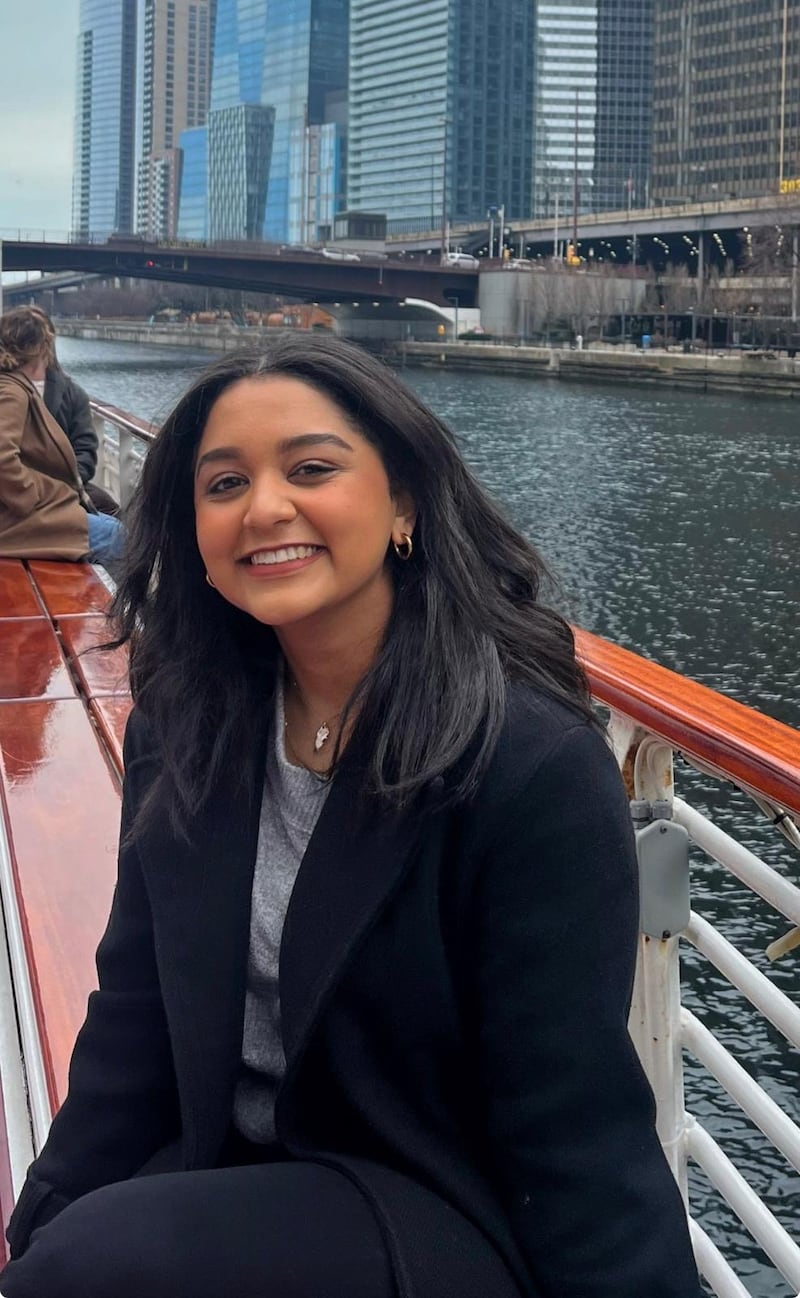
Amid all the stories about made-up cases being cited in court, there are strict guidelines across the profession and within the firm where she works. “But at Blackhall Place [law classes], they weren’t saying ‘you can’t use AI’, they were saying ‘we’re going to teach you how to use it safely and professionally, taking account of confidentiality and transparency’.”
“I can’t speak for other professions,” she says, “but I can’t see it replacing lawyers. I think it will just be a very effective tool for them, like a very efficient assistant. I know a lot of people are saying: ‘AI is coming for my job’, but I’m not worried by it at all.”
Jeanne Kelly, a partner at Browne Jacobson Ireland, which has sought to embrace the technology, agrees, saying: “It frees up lawyers more than it replaces them.
“We don’t use it for legal research – it wouldn’t have the fluency with regard to Irish law, particularly judge-made law – but an awful lot of legal work is not pure legal research and it can do a lot of that much faster than human beings.
“You always have to have the human oversight, the guardrails, the protections and permissions around client information, but AI can take a lot of the drudgery out of aspects of the work. I think we will get to the stage where young lawyers who have used the high-quality legal AI tools will be asking in interviews whether a firm has them.”
Despite suggestions that early-career hiring has been hit, Kelly insists there is still a lot of demand among firms.
Doctors, meanwhile, look set to be in short supply for many years. Dr Austin Byrne, a general practitioner based in Tramore who is on the Irish Medical Organisation’s GP committee, says he would be excited by the potential of AI to change medicine for the better if he were starting out now – although he has some reservations about how it is being implemented in real time.
[ Patrick Freyne: Here’s why AI is making us dumber and more lonelyOpens in new window ]
“I think for many GPs right now, AI is a solution looking for a problem,” he says. Many, he suggests, have adopted clinical note-taking applications but, having used that technology himself, he has reservations.
He talks about AI’s diagnostic capabilities more enthusiastically, but suggests this may well generate a need for more tests and more demand to see clinicians, and therefore it may be taken up first within private medicine. “And our problem isn’t a lack of testing on people who can afford testing, our problem is a lack of capacity to deal with those who can least afford access,” he says.
“For young people coming out, though, I’d be overwhelmingly positive about AI as a learning tool, as a decision-support aid, all of that. And for patients as well. In the long term, I think it’s going to drive quality.”


