Democrats have emerged from their sweeping US midterm victories buoyed by the scale of their success and determined to preserve their political momentum.
“We’ve got work to do in Congress to maintain our trust with the American people,” Ken Martin, the chair of the Democratic National Committee, said. “Candidates matter, the mood of the electorate matters.”
“But this should be a massive warning sign to Republicans and a massive opportunity for Democrats. We’ve got new territory that we can compete in if we’re willing to do it,” he added.
Democratic candidates were able to win races in traditionally conservative areas in rural and southern states from Texas to Kansas and South Carolina, which was won by paediatrician Annie Andrews, that had seemed out of reach for the party for decades.
RM Block


The party would “fight to make sure that we make this country affordable for every single American” and deliver “dramatic change”, promised Hakeem Jeffries, the New York congressman who is set to be the next Speaker of the House and Donald Trump’s leading antagonist on Capitol Hill, as supporters celebrated on Tuesday night.
Jeffries will be charged with maintaining party unity among what could be an unruly coalition of rank-and-file lawmakers that spans vast ideological differences.
They range from Alexandria Ocasio-Cortez and newly elected democratic socialist firebrand Darializa Avila Chevalier of New York on the left to the more centrist Marie Gluesenkamp Perez of Washington state.
While his predecessor in the role, Nancy Pelosi, was highly effective in keeping her members in line during presidencies spanning George W Bush, Barack Obama and Trump, Jeffries is relatively untested.
The scale of the party’s win will help. “Large majorities mean the centre can and will hold; leftists can scream and yell at the fringes, but the Democrats will still be able to govern,” says Paul Begala, a veteran Democratic strategist.
Chuck Schumer, another Brooklyn-born New Yorker, is expected to be the majority leader in the upper chamber, allowing Democrats to present a united front in dealing with Trump and the White House.
The scale of the Senate majority will also give the party leeway to withstand dissent within the chamber, including from figures such as John Fetterman, the Pennsylvania senator who is one of its biggest internal critics.
The biggest faultlines within the party are likely to be over affordability legislation, including how far Trump’s tariffs should be rolled back, and whether to bolster government healthcare programmes and subsidies.
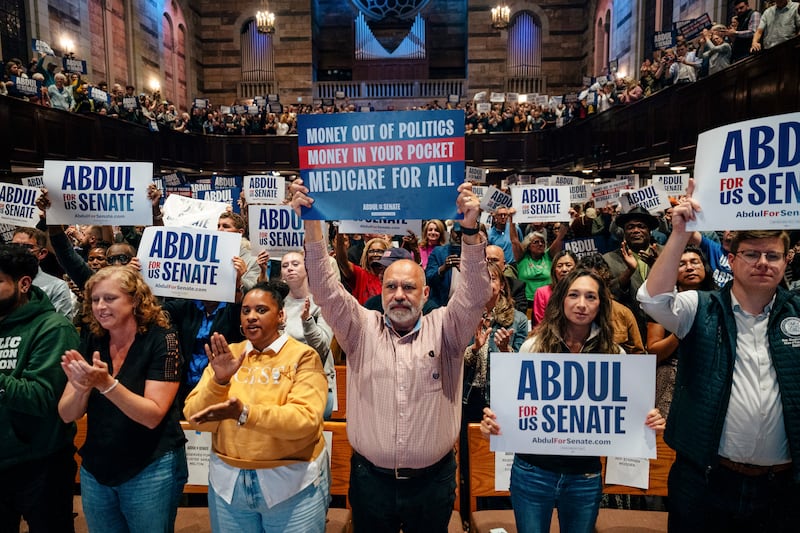
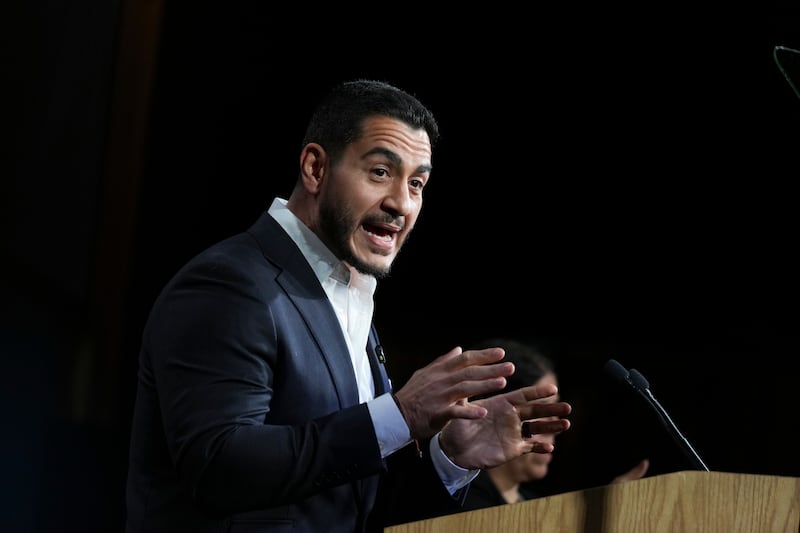
Many candidates, including Abdul El-Sayed, who won the Senate race in Michigan, have campaigned on Medicare for All, a dramatic restructure of the US healthcare system. Other Democrats disagree.
The party is also divided over the extent and scope of investigations into allegations of corruption by members of the Trump administration, including cabinet officials and the president’s family.
“Accountability means holding hearings into the massive alleged corruption, holding cabinet officers like Pete Hegseth, Robert F Kennedy Jr, Todd Blanche and Kash Patel accountable,” said Begala.
“But they should not even begin impeachment proceedings against president Trump,” he added. “Impeachment would signal that, just like Trump, we’re more concerned with our political party getting even than your family getting ahead.”
Some Democrats have signalled they want to take a more aggressive strategy on impeachment while others agree with Begala that it risks backfiring.
There are also questions over the extent to which different parts of the party will be willing to compromise with Trump on trade, healthcare or budgetary issues should the White House decide it wants to co-operate with a Democratic Congress – although it is unclear whether the administration will be looking for any substantive deals.
“This was a massive, massive mandate that the Americans sent to the Democratic Party and a massive message they sent to Donald Trump,” said Martin from the DNC.
“The real question is: will Donald Trump receive that message, and will he actually look to find common ground with Democrats as we move an agenda forward that’s going to help the American people?”
Against this backdrop, powerful Democratic figures – from governors Gavin Newsom of California, JB Pritzker of Illinois and Josh Shapiro of Pennsylvania to lawmakers ranging from Ocasio-Cortez of New York to Jon Ossoff of Georgia – will begin weighing possible 2028 presidential bids.
Ossoff, who claims he has “zero interest” in the presidency, told supporters in his victory speech in Atlanta: “This moment is an opening not for restoration, but for reformation.”
With his typical towering rhetoric, he added, “We must acknowledge that the underlying crisis gripping our republic remains and that therefore our most vital work lies ahead.” – Copyright The Financial Times Limited 2026
[ US midterm elections: Results from the House and SenateOpens in new window ]