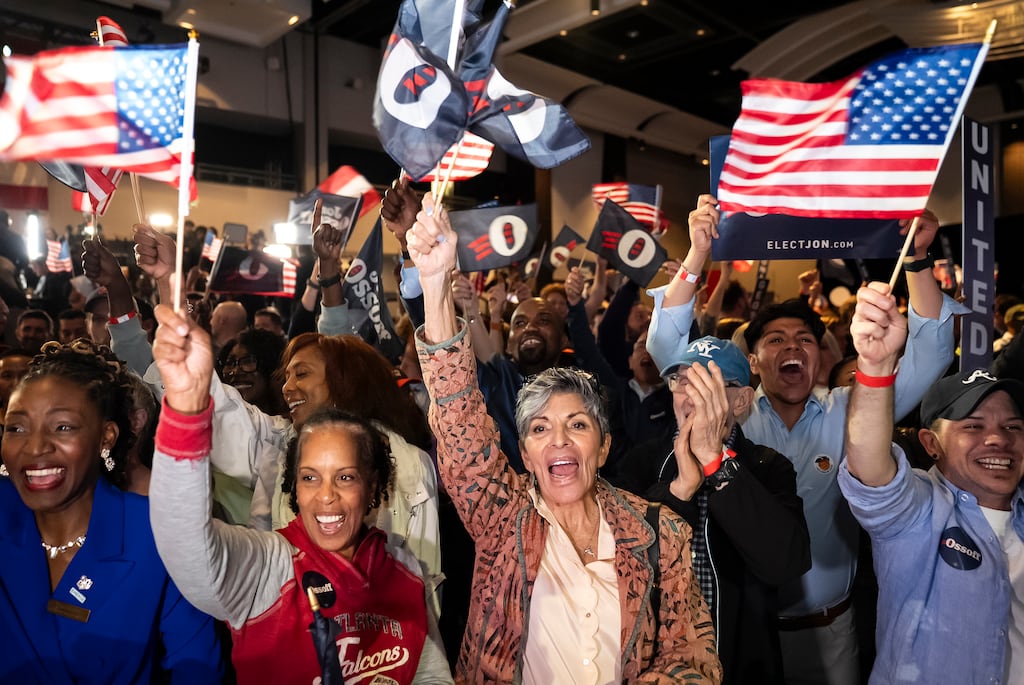
Democrats are still toasting the midterm results, but the US political class is already setting its sights on the next electoral battle: the 2028 race for the White House.
With president Donald Trump constitutionally barred from a third term in office, both major parties will be seeking a candidate for the presidency.
Some of the most successful White House campaigns launched soon after the midterms. Trump’s winning 2024 bid was launched in November 2022 from Mar-a-Lago, and Barack Obama’s 2008 campaign began in February 2007.
This means that candidates will, in the coming weeks, start sounding out donors, visiting primary states and getting advice from pollsters and strategists about their viability.
For Democrats the race is very much an open field. The party will hope its sensational midterms performance banishes memories of the disastrous 2024 campaign when president Joe Biden withdrew from the race only four months before election day.
On the Republican side, the question for presidential hopefuls will be whether to distance themselves from Trump after the disastrous midterms – or stick with him, betting that a possible endorsement could deliver them the nomination.
Republicans

JD Vance
The pollsters’ favourite to succeed Trump. The vice-president (42), comes from Maga’s populist non-interventionist faction, which attracts younger conservatives, and he has the backing of prominent tech investors among a wealth of other donors.
But for primary voters, he risks being tainted by the administration’s decision to go to war with Iran and its failure to reduce inflation. On the morning after the midterms, he directly laid the blame for the defeat on the war. “If you’d like to argue it was worth it, that losing the Senate for the next 6 years was worth it, then do so,” he wrote in a post on X.
Vance can be an awkward campaigner; a stilted exchange with doughnut shop employees became a viral moment in the 2024 election. He will certainly be aware of the dismal record of sitting vice-presidents convincing voters to give them the top job. Only one, George HW Bush, has managed it in the past 190 years.
However, Vance will still have a natural edge going into 2028 In terms of fundraising and name recognition that will be hard to overcome for any rivals.
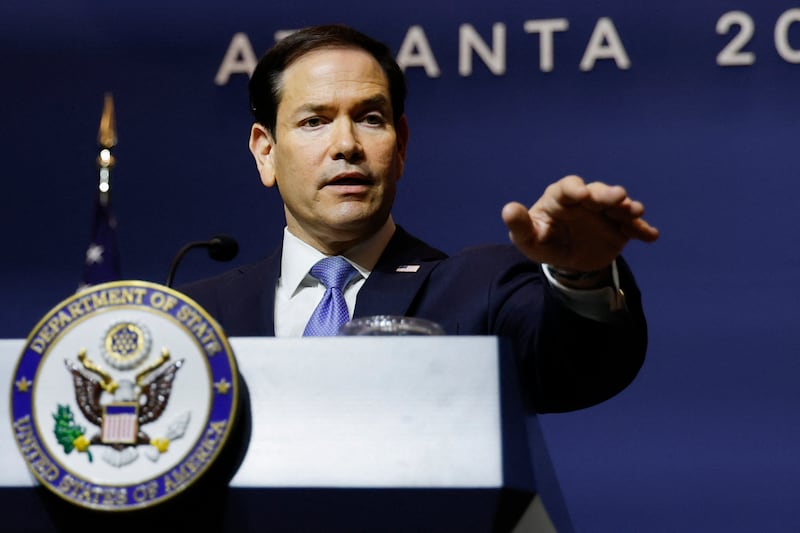
Marco Rubio
The most likely – and most popular – alternative to Vance. Rubio has certainly endeared himself to the Maga base through his loyalty to Trump, but is still seen as closer to traditional Republican values than the vice-president, which would make him more appealing to older conservative voters and establishment donors.
Trump derided Rubio repeatedly as “little Marco” on the 2016 campaign trail when they were rivals. But he has come to rely on him heavily during his second term, tapping him to be secretary of state and national security adviser – and putting him at the heart of all his biggest foreign policy decisions.
Like Vance, his role in an unpopular administration could weigh against his bid. But Rubio would have the advantage of being able to step down from his job to prepare his candidacy.
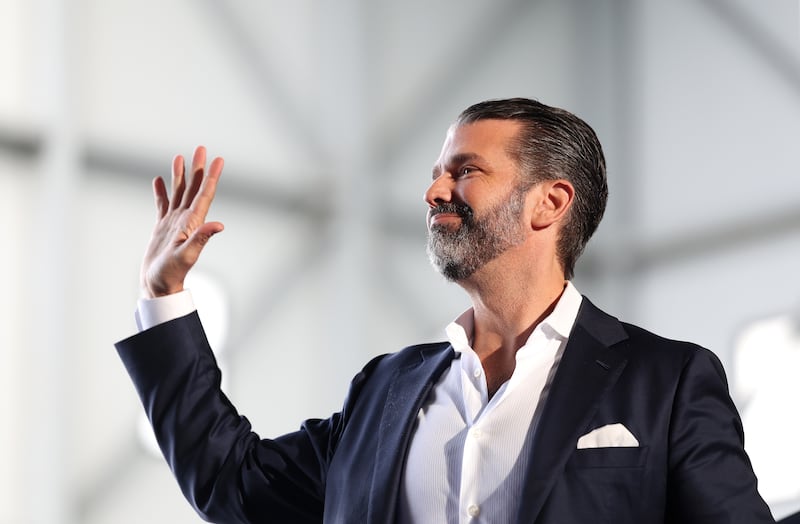
Donald Trump Jr
If Trump decides he wants to keep the Maga sceptre within the family, his eldest son might be the most likely heir.
The 48-year-old has mainly been travelling the world pursuing financial opportunities during his father’s second term, but he spent more time than his other siblings on the 2024 campaign trail, and has cultivated plenty of potential donors with his myriad business interests. Recent opinion polls show him running a close third to Rubio.
But while Don Jr wouldn’t have any trouble with name recognition, he doesn’t have his father’s raw political charisma. And though Americans have been drawn to dynastic power in the past – including the Bushes and the Kennedys – a continuation of Trumpism from within the family might be a tough sell to voters who seem to be tiring of Trump.
Ron DeSantis
The Florida governor was the great hope of anti-Trump republicans during the early stages of the 2024 primaries.
With his second term in office about to end, he is seen as a potential dark horse contender if Republican voters decide it is time to turn their backs on Trump and the Maga movement and revert to traditional conservatism. On the eve of the midterms, he criticised the Trump administration in a radio interview for not doing enough to tackle political corruption.
But DeSantis was unable to translate his popularity and success in Florida into broader national appeal two years ago, a limit that would threaten to dog him in 2028 as well.
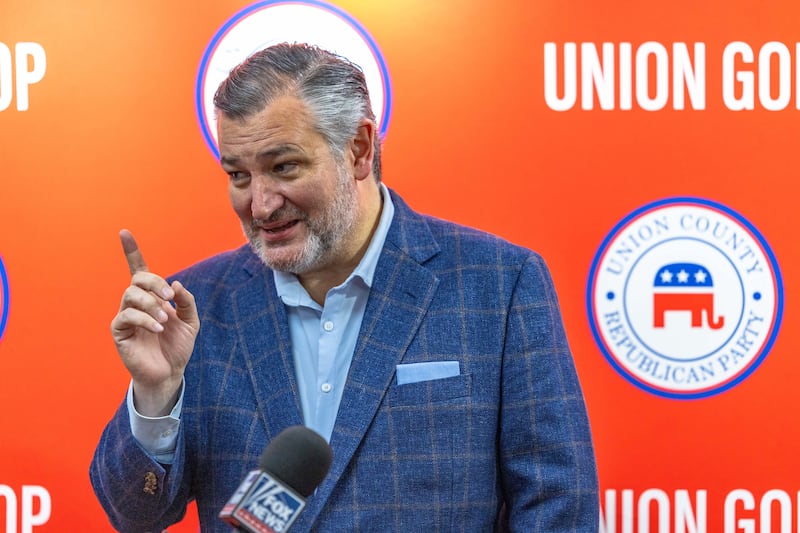
Ted Cruz
The Texas senator is frequently mentioned by Trump as a possible Supreme Court nominee if another vacancy opens during his second term. But otherwise, the 55-year-old could attempt to mount another White House run after failing to beat Trump in 2016, then declining to challenge him in 2024.
Unlike Rubio, Cruz has kept some distance from Trump so might find it easier to be critical of the administration if the president’s approval ratings continue to plummet in 2027. But he is not as close to the younger generation of Republican voters bred during the Maga years as Vance is, which could make it harder for him to break out.
Other republicans:
Pete Hegseth: The defence secretary has told friends he is considering a 2028 run. But his controversial record in office could limit his chances.
Robert F Kennedy Jr: The health and human services secretary rules the “Maha” faction of the Republican base. Vance has the higher profile, though.
Democrats

Gavin Newsom
The outgoing California governor presented himself as Trump’s chief Democratic antagonist during the first year of his second term, trolling the president with social media posts and attacking him at every turn.
He has made little secret of his ambitions and may well be among the first out of the gate In terms of positioning himself for the presidency after the midterms. In an interview with late-night comedy host Jimmy Kimmel last week, Newsom forecast the “blue tsunami” that ended up sweeping across the country.
But the 59-year-old has failed to emerge as the clear front-runner for 2028 in recent months, perhaps a sign that Democrats are looking for a candidate who transcends the image of a coastal liberal that hurt Kamala Harris in 2024.

Jon Ossoff
One of the Democratic Party’s most effective politicians during this year’s midterms, the Georgia senator comfortably cruised to re-election in a battleground state.
He gave Obama-style speeches on the stump, railing against Trump’s enrichment while in office, his failure to tame inflation and the blunders of the Iran war. He mixed it up with viral takedowns of the president – including a jab at Natalie Harp, his close aide, that rankled the White House.
Despite Ossoff’s insistence that he has “zero interest” in a White House run, he is currently the Democratic favourite with bookmakers to win in 2028.
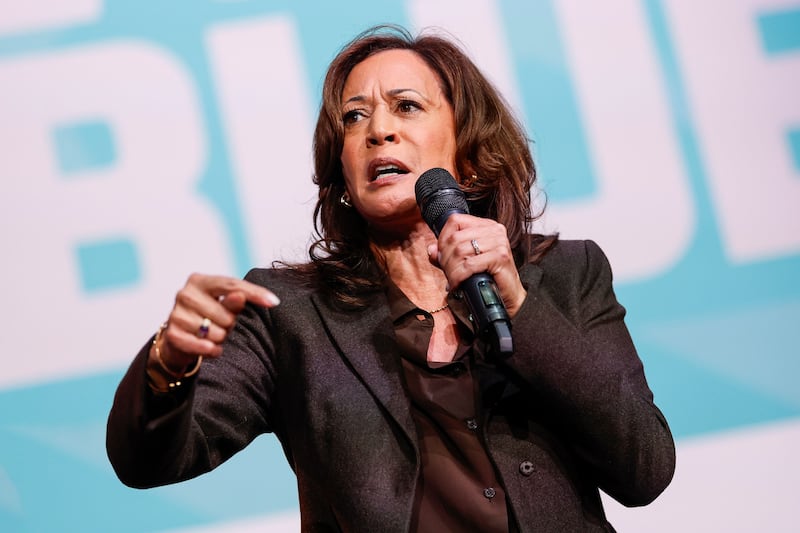
Kamala Harris
Despite her loss to Trump two years ago, polls show that the former vice-president still has substantial support within the party.
Her bid for the White House in 2024 was hampered by being only hastily cobbled together following Biden’s decision to pull out of the race.
But she would risk running into many of the same problems that dogged her then: stances on both economic and foreign policy that failed to resonate with voters, and her struggle to defend Biden’s record. Her 2020 campaign also fizzled out before the primaries even began.
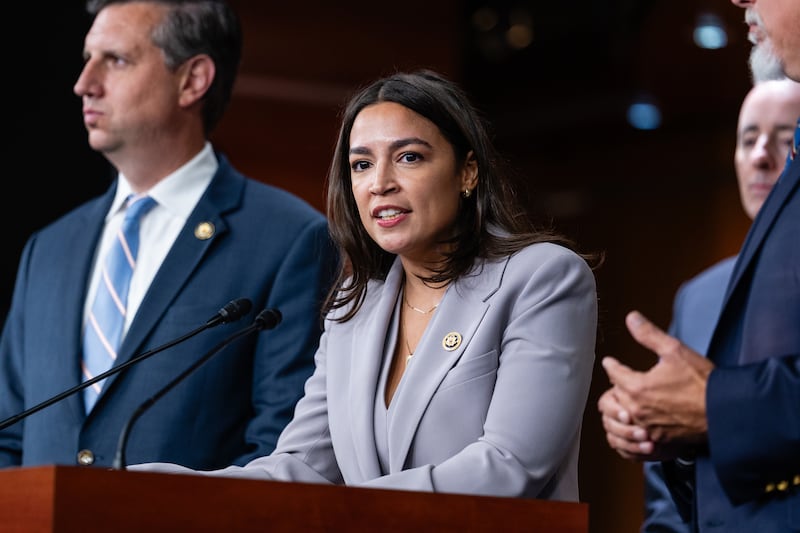
Alexandria Ocasio-Cortez
“AOC” has been a rising star on the left ever since she won a seat in the House of Representatives in 2018 and could succeed Bernie Sanders as the Democratic Party’s progressive standard bearer in the primaries.
The New York native has clearly signalled she has broader national ambitions, campaigning aggressively for progressive candidates including Michigan’s Abdul El-Sayed, and somewhat moderating some of her positions to broaden her appeal.
But she has time on her side. At 37, she is six years younger than John F Kennedy was when he became the youngest elected president in US history. An alternative option for Ocasio-Cortez might be to run for a Senate seat in New York – if Chuck Schumer, the 75-year-old party leader in the upper chamber, can be persuaded to vacate it in 2028.

Josh Shapiro
One of the most popular Democratic governors in the country easily secured re-election in the vital swing state of Pennsylvania this week.
If he decides to make a run for the White House, Shapiro would represent the moderate, centrist wing of the Democratic Party and likely clash with progressives both on economic policy and regulatory issues as well as foreign policy, where he is known for his pro-Israel views.
Other Democrats:
Rahm Emanuel: The former Chicago mayor and Obama chief of staff is on a publicity blitz to pave the way for a possible 2028 run.
Pete Buttigieg: Since serving as Biden’s transportation secretary, “Mayor Pete” has become a prominent Democratic campaigner.
– Copyright The Financial Times Limited 2026