The career path of today is no longer a straight avenue with a defined destination, but rather a continuous journey of personal and professional development. As summer draws to a close, many people may be thinking about taking a new turn on that journey.
MSD is one of Ireland’s largest healthcare companies, with more than 4,000 employees operating from cutting-edge hubs in eight locations across six counties. Currently celebrating 50 years in Ireland, its talent acquisition team plays a key role in attracting, developing and nurturing the diverse talent that will help shape the future of healthcare and life sciences in Ireland.
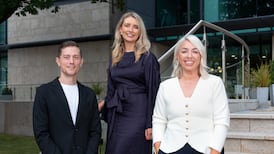
Fiona Croke, MSD Ireland’s head of talent acquisition, agrees that autumn can be a reset for many who are preparing for a new chapter.
“Children are moving into new classes, students are starting college, apprentices are taking their first steps into the workplace, and parents are helping navigate important milestones such as State exams,” she says.
RM Block


From a talent acquisition perspective, Croke says this is also a time where many start thinking about career moves, decisions or new paths too.
Looking at the jobs market for 2026, Croke believes the future of work will be defined by continuous learning, adaptability and growth at every stage of life.
“Over my 15-plus years in HR and recruitment, I have seen the employment landscape evolve significantly, but the pace of change today is unprecedented,” she says. Traditional, linear career paths are becoming less common. Today, Croke says, careers are far more dynamic, with people moving across functions, industries and disciplines, “building careers that are as individual as they are”.
This shift is undeniably being accelerated by AI, digital transformation and changing workforce expectations. Croke says that technical expertise remains important, but insists qualities such as curiosity, resilience, adaptability and willingness to continuously learn are becoming equally valuable. “Skills like communication, collaboration and problem solving are no longer considered ‘soft skills’; they are essential skills,” she says.

In Ireland, MSD continues to benefit from a highly skilled and internationally connected workforce, but competition for talent remains strong across science, engineering, technology, data and advanced manufacturing. “At the same time, candidates are looking for more than just a job,” Croke emphasises. “They want meaningful work, opportunities for growth, flexibility and an organisation that will invest in their future.”
The pharmaceutical industry is also responding. “We are increasingly thinking not only about the jobs we need today, but the jobs and skills we will need five, 10 and even 20 years from now,” Croke says. “Many of the roles that will be critical to the future of healthcare are still evolving today and in some cases do not even exist yet, at least not in the form they will take in the next few years.”
According to Croke, while scientific, engineering and manufacturing expertise remain essential, modern pharmaceutical organisations also need people with skills in technology, analytics, digital innovation, sustainability, supply chain, communications and many other areas.
The pharmaceutical industry is incredibly diverse, offering many opportunities, says senior talent partner Rachel O’Donovan. Given the breadth of opportunity, she advises recent graduates not to become too focused on finding the perfect first role.
“For early-career professionals, it is more important to stay curious, build transferable skills and always remain open to opportunities, even when they might not match the exact plan you had in mind.” Some of the most successful careers, she points out, develop through experiences people never originally expected.

Beyond the roles themselves, O’Donovan also suggests that early talent should look beyond the job title and ask what support structures are in place to help them succeed. “Sometimes finding the right organisation is even more important than finding the right role,” she says. “A strong early-career role should provide access to learning and development, opportunities to work with experienced colleagues, exposure to different parts of the business and a clear sense of how someone can grow over time.”
Formal training is important, she acknowledges, but so is the everyday learning that comes from working in teams, asking questions, solving problems and being encouraged to take on responsibility. The organisation’s culture and emphasis on personal and professional development are worth investigating, she adds.
“The first few years of a career are often when people learn the most, so choosing an organisation that genuinely invests in development can make a significant difference to long-term career success.”
But a fulfilling career in the pharmaceutical industry is not just the domain of the eager graduate. Upskilling, O’Donovan says, has become an essential part of career development at all levels of professional experience from graduates to senior talent, “particularly in an industry that is changing so quickly”.
“One of the most exciting shifts we are seeing is that career moves within the pharmaceutical industry are no longer confined to traditional pathways. At MSD, this is a huge focus area for us,” she says.
‘Experienced colleagues play an important role in supporting others, but we also recognise how much organisations can learn from newer generations and fresh perspectives’
— Robert Toth, senior talent acquisition partner with MSD Ireland
MSD is piloting a new Skills First scheme across Ireland, where it is looking to move away from specific types of university degree or course requirements to instead focus explicitly on demonstrated competencies and skills.
“This also allows us to be more inclusive in our hiring, recognising that there’s no longer just one path or way of getting to a certain point,” O’Donovan says. “Now we see more talented people come from all kinds of industries, sometimes not even remotely related to pharma, science or engineering, and succeed because of the transferable skills and unique perspectives they bring.”
People come from areas such as technology, finance, retail, hospitality, consumer goods, professional services and more, bringing with them valuable experience in project management, leadership, customer experience, digital innovation, operational excellence, communications or problem-solving.
What attracts talent to the pharmaceutical industry? Salary and benefits will always matter, but people today tend to take a much broader view of what they want from an employer, says senior talent partner Robert Toth.
“Candidates are looking for organisations whose values align with their own,” he says. “They want opportunities to learn and develop, but they also want a sense of purpose, belonging and connection.”
Many say it is important for them to understand the wider impact of the work they are doing and how the organisation contributes to society. “That is something that you feel so strongly every time you go into any of our sites at MSD Ireland,” Toth says. “Whether it’s an intern on their first day of their placement or a senior department head or site lead, that shared sense of purpose and service to the people and patients who rely on our products is palpable.”

MSD is also observing a much stronger focus on authenticity, Toth adds. “Candidates want employers to be transparent about their culture, development opportunities and expectations – they are less interested in polished corporate messaging and more interested in understanding what it is genuinely like to work somewhere. And likewise, they want to feel supported to bring their most authentic selves to work in return as well, so it goes both ways.”
As part of this, Toth calls out MSD’s employee business resource groups as a key example of how organisations can help build a sense of belonging for their people. “Our employee resource groups are a great way to create support networks, celebrate different perspectives, help colleagues connect across the organisation and contribute to a more inclusive culture by enabling employees to connect on the basis of whatever matters most to them,” he explains. “These networks make a real difference to the employee experience because they help people feel seen, supported and connected.”
In addition to these groups, another way in which MSD helps build a culture of purpose and belonging is through mentoring, coaching and reverse mentoring.
“Experienced colleagues play an important role in supporting others, but we also recognise how much organisations can learn from newer generations and fresh perspectives. Having a culture that reinforces both mentoring and reverse mentoring is a powerful way to ensure learning happens in both directions and that we remain a dynamic, innovative organisation”, says Toth.
“All in all, at all stages of the career journey and for professionals of all ages and backgrounds, retention ultimately comes down to creating an environment where people feel connected to the organisation’s mission, supported by their colleagues and confident about their future”, concludes Toth. “People want to know they can succeed professionally while also being supported personally.”
Ultimately, the goal, Croke says, is to create an environment where people do not feel their growth has a ceiling. “The fact is, the most successful people are those who remain open to learning, embrace change and continue to invest in their development throughout their careers.”
Looking ahead to the next chapter of MSD’s story in Ireland, Croke says the company remains focused on the people who will shape its future. “As MSD celebrates 50 years in Ireland this year, we also want to say a huge thank you to everyone across our network whose dedication, innovation and teamwork have made this achievement possible,” he says. “It’s our people who are the driving force behind everything we do.”
To learn more about a career at MSD Ireland, visit jobs.msd.com