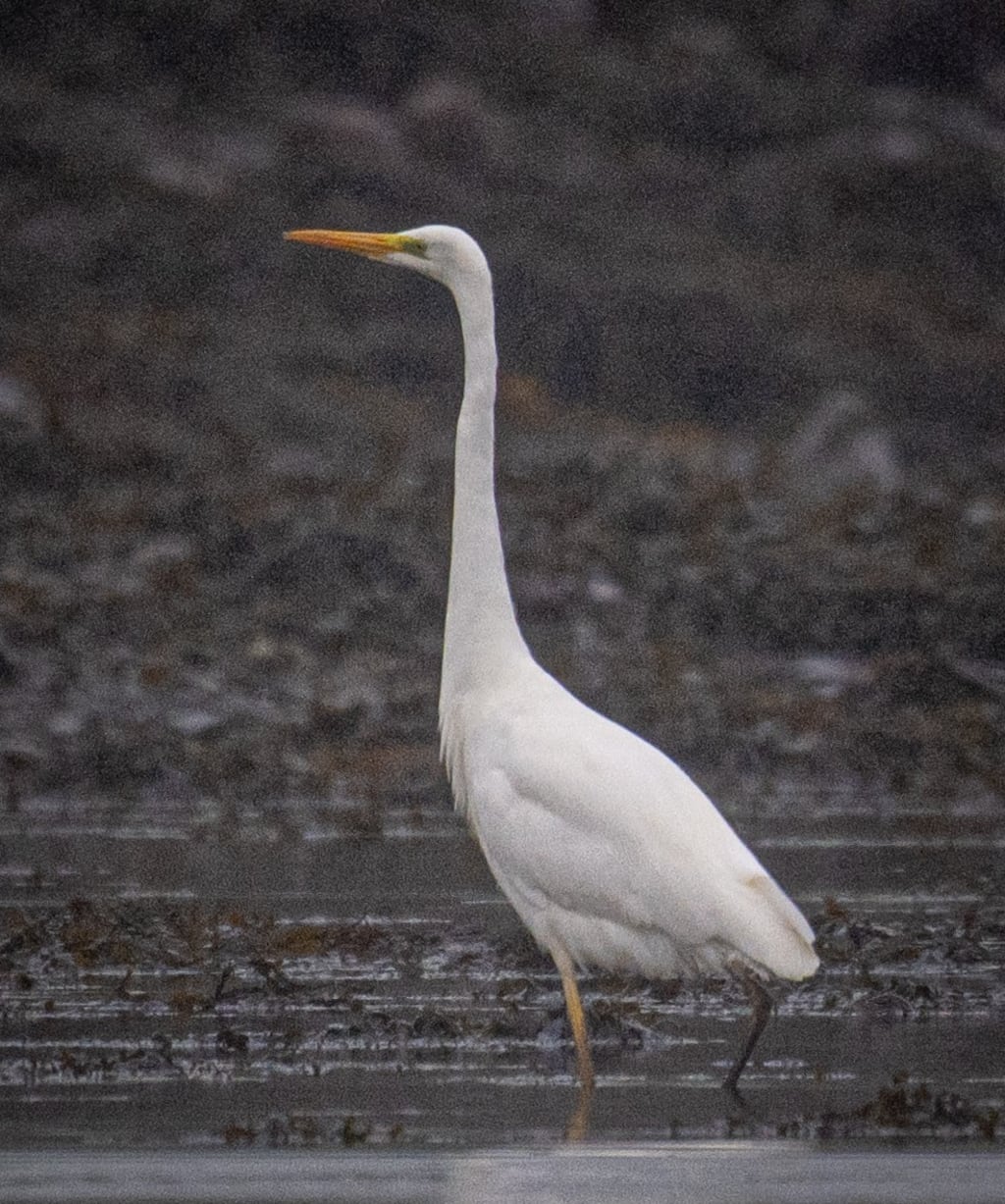
I saw this great white egret at Doonbeg in Co Clare on October 31st. John Glynn, Kilrush
Great white egrets are being seen in ever-increasing numbers here since the beginning of the 21st century. They are birds of wetland and marsh. They breed in central and eastern Europe and fly south in winter. Some stop over here and most of our records occur during winter months. Climate change and habitat restoration have encouraged their spread, and they have been confirmed breeders in Britain since 2012. Non-breeding birds have been seen in Ireland in summer, and it is probably only a matter of time before they are confirmed to be breeding here.
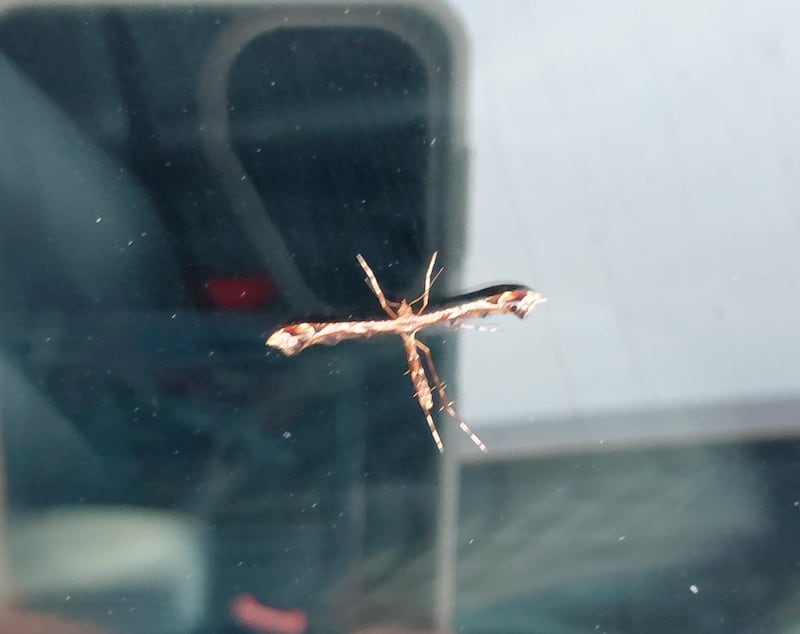
This insect was on the window of my car in Santry, Dublin, recently. I would be much obliged if you would identify it. Our grandson was with us when we spotted the insect and is looking forward to finding out what it was. Bernard McLaughlin
This is the beautiful plume moth Amblyptilia acanthadactyla. Plume moths roll up their wings at rest in a T-shape. This species is on the wing in gardens since September. It overwinters as an adult. It is one of the micro moths, a subdivision that includes species with a forewing of 10mm or less. We have several species of plume moth in Ireland, some of which are all white in colour.
RM Block


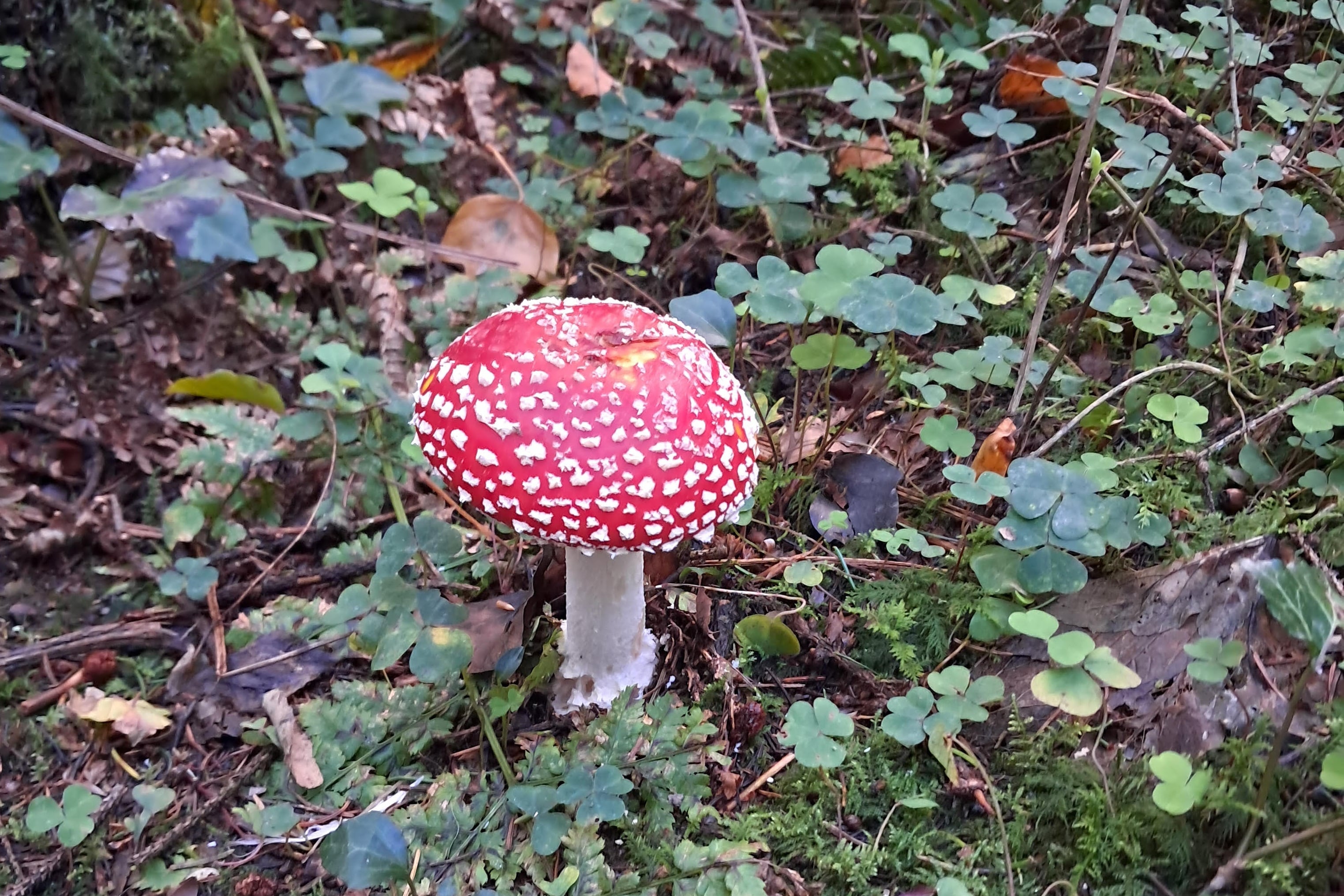


While walking our dog in the rain, I came across this small clump of mushrooms. They look interesting, but perhaps you can confirm whether they are. Aodhbha Bradley, Glasnevin, Dublin.
Mushrooms are always interesting. These are young ink caps, which are a large group of mushrooms collectively known as coprinoid fungi. They are recognised by having black spores borne on gills that mature from their edges inward, dissolving as they do so and resulting in liquefied spore masses – the “ink”, which can be used for writing. The caps in many species soon curl upwards exposing the gills and spores to air currents. The image is of a species of either Coprinopsis or Coprinellus. Identification hinges on microscopic details of the gills, stems, veils and spores. The dog is probably a terrier.
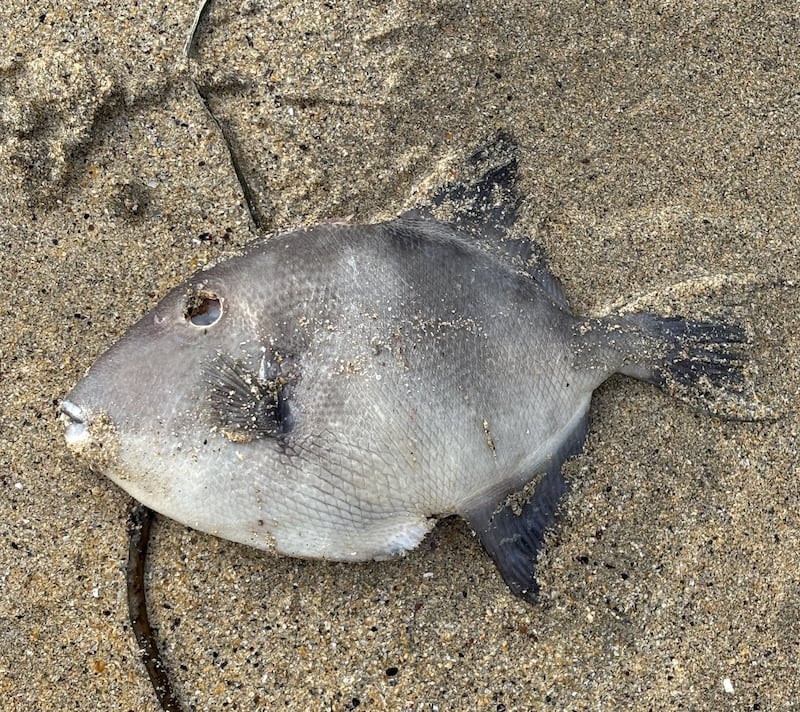
I saw this fish on Narin beach, Donegal, on October 29th. It was about 10in long and had large teeth. What is it? Judy Lee, Blackrock, Co Dublin
This is a triggerfish. It occurs among rocks and seaweeds in Atlantic coastal waters south to the Mediterranean. It often washes up on beaches but is not considered to be breeding here yet. It uses its large teeth to make holes in the shells of crabs, whelks and sea urchins and then feeds on the soft parts inside. It gets the name triggerfish because it can raise the first ray of its first dorsal fin and lock it into position. It can only be released when a secondary spine is depressed – just like a trigger.
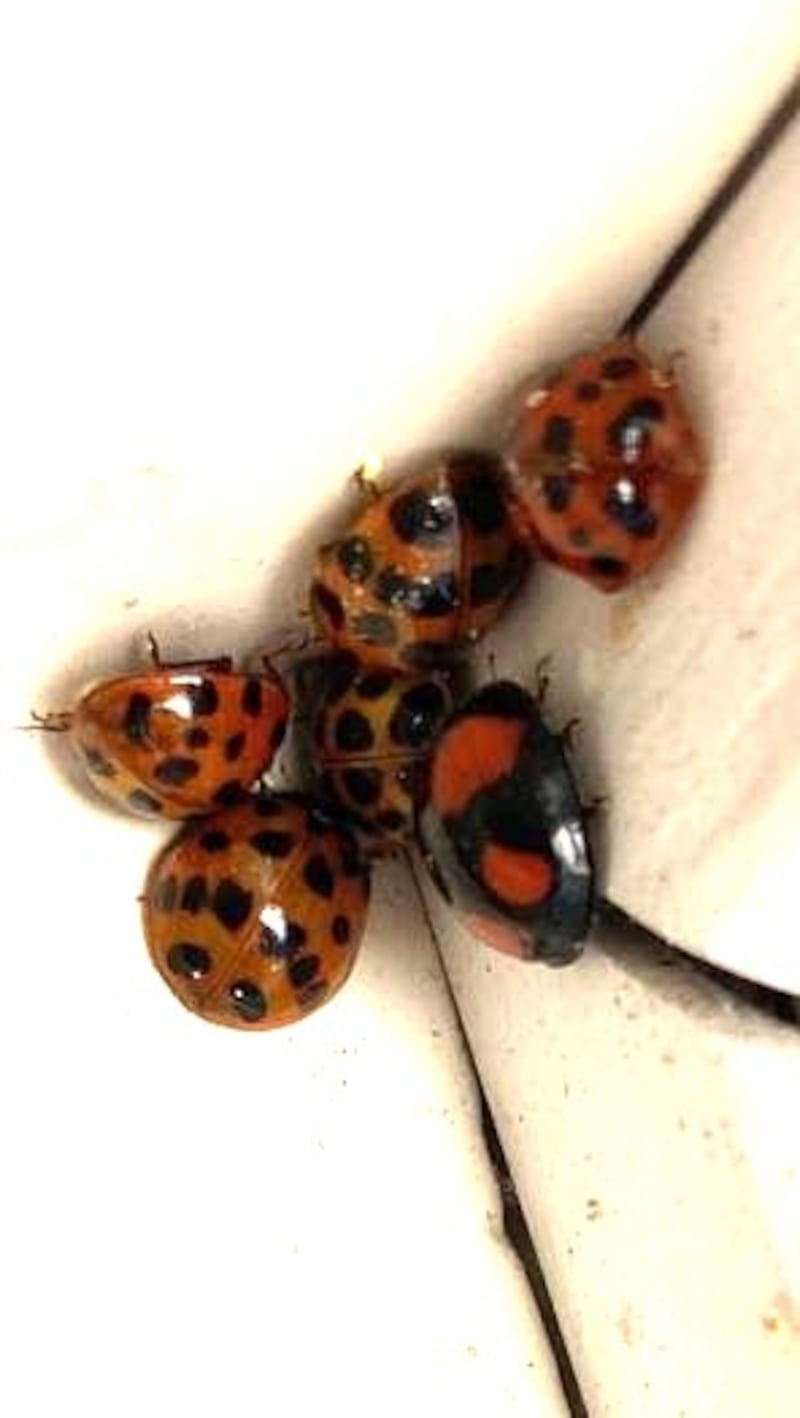
These harlequins have hunkered down in a bedroom window corner for the winter. Should they be allowed to stay or should they go now? Lucy Watson, Bray, Co Wicklow.
They should have got their walking papers a long time ago. I have received quite a few reports of harlequin ladybirds coming indoors, seeking nice, secluded spots to overwinter. Harlequins are an invasive species of ladybird. They first arrived on our shores in a packet of celery hearts in 2007 and have now spread widely over the south and east. They are as large as our seven-spot ladybird, highly variable in colour (yellow to orange to black) and can have any number of spots up to 21. As well as eating greenfly and other aphids like any respectable ladybird, these will also eat our own native ladybird species. Get rid of them.
Please submit your nature query or observation, ideally with a photo and location, via irishtimes.com/eyeonnature or by email to weekend@irishtimes.com
Please submit your nature query or observation, ideally with a photo and location, using the form below or by email to weekend@irishtimes.com