Security officials have significantly increased the size of the no-fly zone over Dublin for the duration of this week’s EU presidency meetings.
Dublin is hosting back-to-back summits on Thursday and Friday, which will see 45 European prime ministers and presidents visit Convention Centre Dublin and the National Gallery of Ireland.
A large security operation, bringing parts of the city to a standstill, will begin on Tuesday in advance of the high-level political meetings, which are being attended by French president Emmanuel Macron, Ukrainian president Volodymyr Zelenskiy, UK prime minister Andy Burnham and German chancellor Friedrich Merz, among others.
Defence Forces PC9 aircraft were on Monday evening practising drone interception drills over Leinster using an Air Corps helicopter as a target.
RM Block



Last December, an Irish Naval Service ship said it spotted five drones operating near the flight path of Zelenskiy’s aircraft as he arrived for a State visit.
[ Dublin road closures: See full list of disruptionOpens in new window ]
Civilian aircraft will be banned over a 3,200sq km area stretching from Newbridge, Co Kildare, to well out into the Irish Sea from Wednesday to Saturday, with State aircraft and scheduled commercial aircraft using Dublin Airport exempt.
This no-fly zone is significantly larger than those imposed during previous EU presidency events, reflecting heightened security fears during this week’s events.
An Garda Síochána has had to hire coaches, at a cost of at least €2 million, to bring gardaí to the capital for what the Taoiseach has described as the biggest policing operation in the history of the State.
This is because members of the Garda Representative Association (GRA) are refusing to use their own cars as part of a work-to-rule during the high-level EU meetings.
[ High politics and traffic chaos: Europe’s leaders are coming to DublinOpens in new window ]
“Our [employment] issues have been dragging on with Garda senior management for many, many months, and this matter could have been sorted out months ago,” GRA president Niall Hodgins told RTÉ on Monday.
“What we have seen there now in the last number of months since the European presidency ... [is that] guards have been treated appallingly.”
Hodgins said gardaí were overworked, underappreciated and exhausted, and have “simply had enough”.
Commenting on the GRA’s work-to-rule, Minister for Justice Jim O’Callaghan said he was confident gardaí would take their lead from Garda Commissioner Justin Kelly when it came to events surrounding the meetings of European leaders.
There has been criticism of the disruption the meetings will cause to life in the capital, but the Minister said Dublin was always the “obvious” place to hold them and there was no basis for moving them elsewhere for security reasons.
“We are well prepared to deal with threats that are posed to large events taking place in the capital city. The Garda Síochána are well prepared for it, and I think it’s the appropriate place to hold it.”
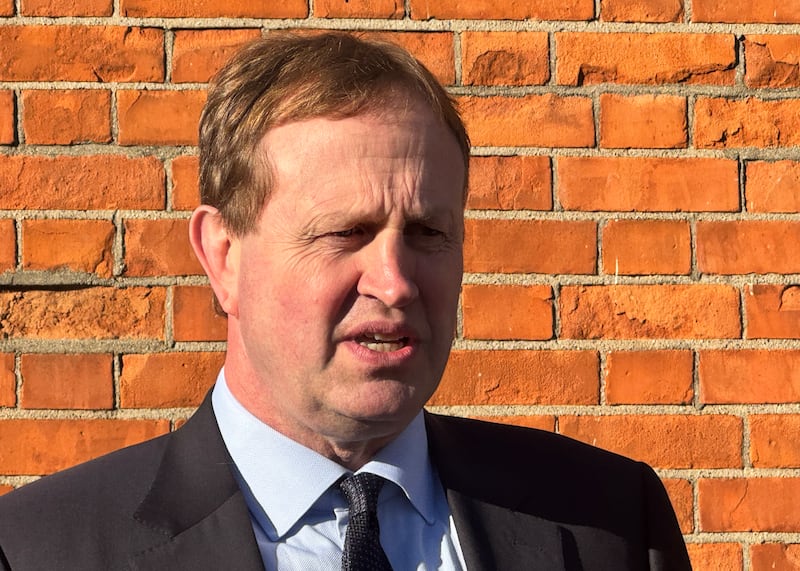
He said gardaí had ensured key locations were safe and scanned for any potential threats.
“I have confidence in the Garda that the events of this week will pass off without incident,” he said.
“It’s a very easy thing to phone in a threat, but as the Taoiseach stated on Friday, we will pursue the individuals who make these threats, and they will be held to account.”
O’Callaghan said the authorities “can’t simply stop everything” on the basis of threats that the Garda assess not to be credible. His comments followed a series of hoax threats made to airlines and Irish media organisations last week.
“I would just urge anyone who’s thinking of making threats that they need to be aware that the full forces of the law will be there to meet them,” he said.
[ Taoiseach says 10.5% pay hike offered to public service unions ‘very fair’Opens in new window ]
Politicians and the media, O’Callaghan said, should not talk themselves “into a crisis” over what is taking place this week.
“It’s a great week to showcase Ireland, and I believe the people that will come here will see what a wonderful country this is,” he said.