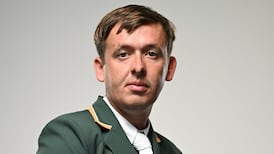
The head of the Presbyterian Church in Ireland has told the opening of its annual general assembly in Belfast that it had endured a “torrid” time in recent months.
Rev Richard Murray, known as moderator of the church, said it had been “a tough seven or eight months for our denomination” – a reference to the safeguarding concerns at the church that led to the resignation of his predecessor Trevor Gribben late last year.
“Many have been left disheartened and discouraged by our failures in safeguarding,” said Murray.
“We are deeply saddened and sorry that people have been hurt and harmed by our failings,” he said, “and yes, it has been a torrid time for us [in the church].”
RM Block


Gribben stepped down as moderator last November over a failure to deal adequately with child protection issues.
The Police Service of Northern Ireland said last November it was looking into safeguarding concerns at the church.
The investigation followed an admission from the church’s safeguarding team that it had identified a “number of situations between 2009 and 2021, with one as late as 2022, where we have failed to deliver an adequate safeguarding service”.
Gribben said at the time it was “clear” there had been “serious and significant failings in the central safeguarding functions of the Presbyterian Church in Ireland from the period 2009 to 2022″.
On Gribben’s resignation, Murray, who had been moderator until June 2025, returned to the office.
Gribben had become moderator – the church’s chief public representative – in June of last year, having been the church’s general secretary or clerk since 2014, before which he was deputy clerk from 2008.
Speaking to the general assembly on Tuesday, Rev Philip McClelland, clerk of the Armagh Presbytery, also addressed the issue of “spiritual abuse” in the church.
“It is right that we as Presbyterians give attention to safeguarding, not only because we are in the middle of a crisis but also because it lies at the very heart of who we are as a people,” he said.
But he also reminded delegates that “spiritual abuse” was also “seriously significant.”
Quoting a definition, he described it as “when a spiritual leader, such as a pastor, elder, or head of a Christian organisation, wields his position of spiritual authority in such a way that he manipulates, domineers, bullies and intimidates those under him as a means of maintaining his own power and control, even if he is convinced that he is seeking biblical and kingdom-related goals.”
The effect on “genuine victims of spiritual abuse” was “devastating,” he said.
On safeguarding failures at the church, Rev David Bruce, convener of the church’s general council, told delegates “if this season can ever be said to have ended, we will not be the same.
“I, rather, hope that we might be more humble. I believe we are being chastised. I suspect our reputation will need to be rebuilt from the ground up,” he said.
Where abuse survivors were concerned, he spoke of “a commitment that their stories, their needs and their voices will help to shape best practice as we look ahead”.
“We got things wrong. Under God we commit to putting this right and doing better,” he said.
According to the report of the general council – the church’s most senior body after the general assembly – its new safeguarding department has delivered training to more than 4,400 youth leaders and elders in the last few months.
The report said that more than 1,000 applications had been processed through vetting but the rate at which applications were being received is higher than the rate at which they can be processed.