

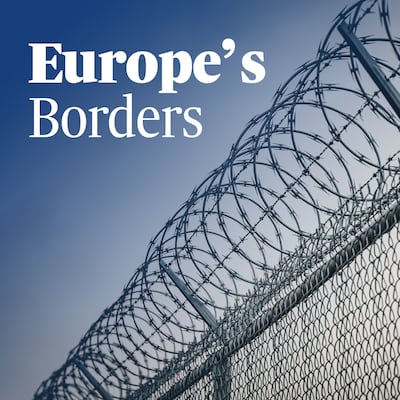
Flanking the four-metre-high fence, laced with surveillance cameras, sensors and coils of barbed wire, are matching fibreglass marker posts: blue and white on the Finnish side, green and red on the Russian. Only the bears enjoy freedom of movement, slipping through specially installed animal gates.
The fence stretches through the forests and lakelands of most of this 1,300km Finnish borderland, the most easterly point of continental European Union and the longest line of defence between the union and Russia.
It separates the Finnish region of North Karelia from Russia’s Republic of Karelia, which until the border closed in 2023 enjoyed a healthy trading relationship – bilateral flows of $378 million in 2021 – and well over a million tourists crossing a year.
No more. Russia’s encouragement of illegal migrants and its invasion of Ukraine saw the Finns close the border at serious economic cost. The small previously neutral country also joined Nato (public support above 80 per cent). The Finns, who fought two wars against their giant neighbour in the second World War, and lost a significant part of Karelia to it, have every reason to be nervous. Russia is building up its defence infrastructure along the border. Here we are closer to St Petersburg – 250km to the south – than to Helsinki.
RM Block


Lieut Col Mikko Kallinen is deputy commander of the local border guard, a combat-ready military force patrolling from the Niirala-Vartsila border station. His men police illegal migrant crossings – just two this year, and four last year – but are also the first line of defence against Russian incursion, whether drones – and there have been a few – or any major land attack. He wryly acknowledges that the day before the visit of this small press group he had personally been through the reauthorisation of his automatic rifle permit.
At sea the coastguard watches over vital undersea cables.
And Kallinen’s men would put up more than a token defence. The well-equipped border force is a key component of Finland’s comprehensive security preparedness model which emphasises an all-society approach to defence in which government, business and people work together to safeguard the country.
Unlike Ireland, Finland took the view that its neutrality entailed building up a robust independent defence capability and invested heavily in its armed services. It has enjoyed strong support internally for compulsory military service for 18-30 year-old men (there is a civil option, and strong voluntary take-up by women) which, unlike the Swedes, it retained after the collapse of the Soviet Union.
According to one poll, the OECD Trust Survey (2023), 82 per cent of Finns trust government to protect lives in emergencies, nearly 30 percentage points above the OECD average.
It provides training and guides to citizens involving weapons and logistical preparedness by all for power, food and medicine shortages. The purpose, as one official document puts it, is to “reduce the `society will take care of it mindset’. Each one of us is a contributor to security.”
The strategy is driven and implemented by the prime minister’s office. It co-ordinates the input of all ministries which are required to “mainstream” security in all their projects – whether emergency planning to ensure continuity, bridges built so they may be easily destroyed, or roads built so that aircraft may land on them in emergencies.
Asko Muhonen, a retired colonel and adviser on security to the city of Kuopio’s mayor, insists: “It’s mainly a mindset – everyone is willing to contribute to national security. There’s no freeloaders.”
Bomb shelters
The strategy also requires the building of bomb shelters which can now accommodate more than 80 per cent of the population – most homes also have their own shelters.
Local councils are responsible for providing and maintaining centres, and Kuopio (population 120,000) prides itself on leading the way in Europe. Two years ago, at a cost of €50 million, it opened Luola, a huge dual-purpose sports hall that can accommodate at least three full football pitches (5,000 sq metres). Protected by massive blast doors and an airlock-filtered ventilation system, it is a nuclear bunker that can shelter 7,000 people from chemical and biological attack.
Built into a hillside, its roof is 10 metres of granite, it has food, water and medical supplies for six months as well as a hospital ward, and operational centres for the military and civil authorities. Delicate electronics hang on springs to protect them from blast damage. And switching use to provide shelter (0.75 sq metres per person), beds, sanitation and food for 7,000 people can be done in less that three days.
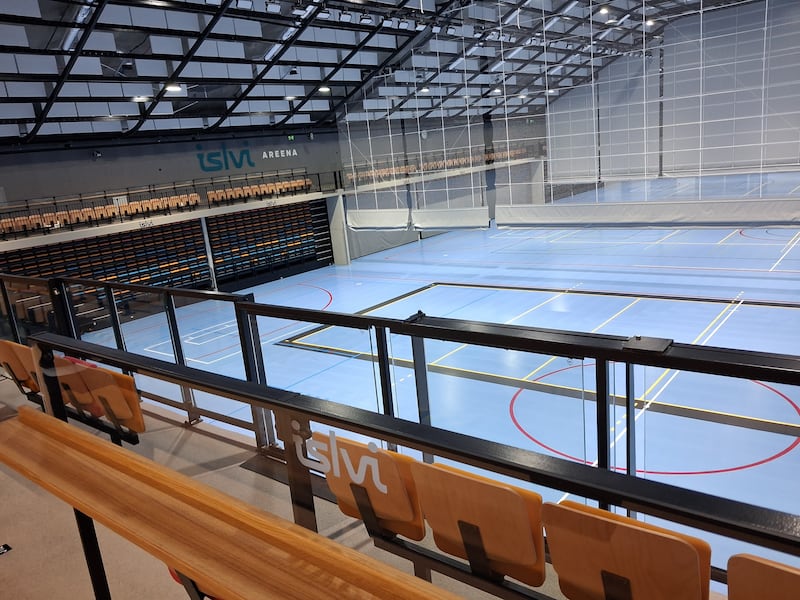
The city, little bigger than Limerick, also has six other smaller shelters. Today Luola is thriving as a sports and events centre and welcoming a steady stream of international guests keen to emulate its unique design.
Kuopio’s mayor, Soile Lahti, reiterates the fundamental premise of Finnish security policy. “The basic idea is that Finnish people will take care of themselves ... When prepared we don’t have to be scared.”
It is a philosophy that has broad consensus, as was the decision, one that would be hugely controversial in Ireland, to join Nato in response to the perceived increased threat from Russia.
“War does not begin when the tanks roll across the border. It has already begun,” Hakki Haliste, a security consultant to the council, argues, in Russia’s hybrid campaigns from cyber attacks, to drone incursions, border provocations and sabotage in the Baltic States.
Saturday: In part 3 of the series, Sally Hayden flies with a civil search plane as people try to reach Europe by crossing the Mediterranean Sea from Africa.
[ Part 1: Jack Power on the Estonian city that fears it is next on Putin's listOpens in new window ]


