

Ask a 17- or 18-year-old what they want to do with their lives, the chances are, you will get one of two answers: a confident one, potentially rehearsed for the sake of adults, or silence. As counterintuitive as it sounds, both are equally reasonable. We have built a system and maybe even a national mood that asks young people to choose early, make reasonable and responsible choices, choose correctly, and choose for good.
The German word for what everyone is looking for here is Sicherheit. It is an interesting one, as it can mean security and certainty at once, as if both were the same thing. But they are not, and that difference matters more every year.
Consider what happened to a number of those options that were thought to be ‘safe’. Research from the Stanford University’s Digital Economy Lab found that, in the U.S., employment among 22- to 25-year-olds in professions most exposed to AI now stands 19 per cent below that of workers in less exposed jobs. The trends indicate that the work disappearing first is of the procedural kind or automated kind—work that can be written down as a rule.
First predictions indicate that in the future the more sought-after skills may be less about problem solving per se than about identifying the right ones to solve and evaluating proposed solutions. All this is everyday work for an arts degree: framing questions, identifying problems, weighing evidence, judging what matters and what is fair, or fit for purpose.
RM Block


The evidence for a greater skills focus is already building: The World Economic Forum’s Future of Jobs Report 2025, for example, names analytical thinking as one of core skills employers value most, with seven out of 10 companies calling it essential.
In Ireland things seem to be going the same way. Already in 2023, Gradireland reported that core competencies and employability skills are a priority for 65 percent of employers. The Irish Times reported in June 2026 that employers hire with a greater focus on skills, with PwC’s Doone O’Doherty telling the paper that “transversal skills such as communication, collaboration, critical thinking and resilience” are what sets graduates apart.

Explore first
You cannot choose what you do not yet know. We often come to care about and value things by encountering them, gaining experience, trying them out. That is a very sobering thought for making CAO choices because we are asking young people to make decisions on subjects before they have sat in a single lecture and about subjects they may not have even encountered yet. The sensible answer here is not to guess what might be needed in the future but to build for a decision in stages, one that rewards finding out: explore first and then decide better informed and based on evidence.
A staged process
That is exactly what the MH101 arts degree at Maynooth University is designed to do. One CAO code opens up an initial 33 subject choices. Students can choose up to four subjects in first year and have up to four weeks to change their minds. The wide combination of humanities, social science, and natural science subjects is unique to Maynooth.
The second opportunity opens when students register for year two of their degree. Students can stay in MH101 and shape their degree according to their passions, abilities and successes from first year, along with future plans, deciding on either a double major, major minor or single major. Or they can transfer into a number of named degrees, including business and languages, law, or business and management. The move is often offered automatically at registration for second year with no further application process if the student has met the conditions.
Take a student who starts with philosophy, business, ancient classics, and anthropology. They may continue with a double major in any of those subjects, turn them into a major-minor or cross over to the BSS in business and management. The first-year experience shows the student what no CAO form can: what they enjoy and what they are good at.
Of course, flexibility is not limitless: conditions have to be met. Progression, results and the right subject choices are crucial for specific degrees. So a student hoping for a specific career path should have the right subject combinations in mind. This is what the advisory office is for.
What parents ask
Behind most questions about subjects and their value, there is often another question for parents: will my child be all right? The honest answer to that is that no one can promise a particular job in 2030 and I would be suspicious of anyone who is attempting to do so. They may be trying to sell something rather than having an answer based on facts. What we can guarantee students is the acquisition of certain skills that will enable them to adapt to whatever the future will throw at them: to analyse and argue precisely, identify problems, to think creatively and collaboratively about solutions.
Maynooth University surrounds this training with career advisors from first year onwards, alumni-mentoring, micro-internships, Erasmus and year abroad, or practical skills acquired in Maynooth University Student Experience (MUSE) Awards or Summer Undergraduate Research Projects (SPUR).
Certainty is a feeling. Adaptability is a capacity. There is a famous line, often wrongly attributed to Darwin that it is those who adapt best who survive. Putting it more gently and more hopefully I would say those who adapt will have the best chances going forward. In a world that keeps changing its terms and moving the goal posts, the prudent investment is in adaptability, and so in a degree that allows you to choose with experience and with your eyes open, leaving more doors open once you graduate.
Considering your CAO options? Visit Maynooth University Open Days on November 20th and 21st to discover more about MH101 arts, explore the full range of CAO programmes, and experience what makes Maynooth University such a unique place to study, learn, and grow.
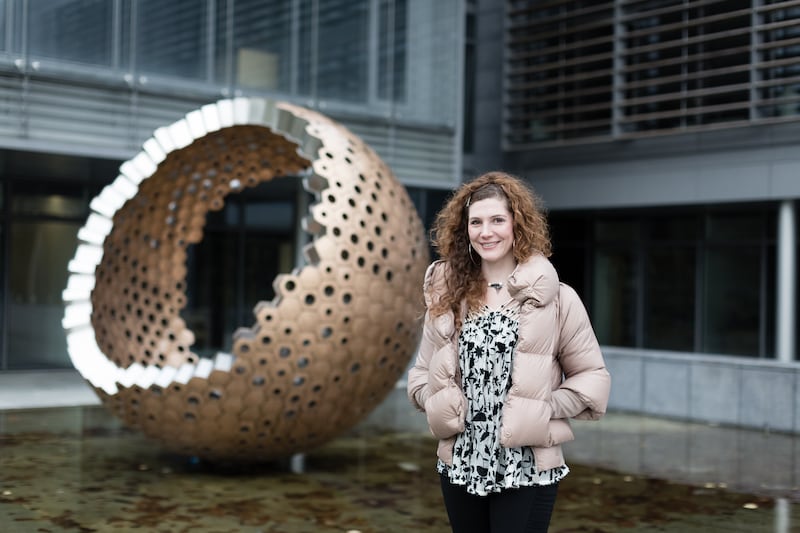
Susan Gottlöber works in the philosophy department in Maynooth University and acts currently as associate dean for teaching and learning for the faculty of arts and humanities.


