
Main Points
- Voters in the United States are electing members of Congress, which is made up of two parts – the House of Representatives and the Senate.
- With Ireland five hours ahead of the US east coast, the first polls will close at 11pm our time.
- The outcome will determine which political party – Donald Trump’s Republicans or opposition Democrats – controls Congress and how easily the US president can advance his agenda.
Key Reads
- What are the US midterms and what do they mean for Donald Trump?
- US midterm election night: When Irish viewers can expect key calls
- Keith Duggan: Trump proclaims ‘golden age’ while US midterm polls are flashing historical defeats
- Analysis: The US midterms show a blue surge. Can we trust them?
Gas climbs to election day high of over $4 in bad timing for Republicans
Americans driving to the polls will pay gas prices averaging over $4 a gallon for the first time on record on an election day, the latest milestone in an energy crisis that has taken center stage in the US midterms.
US gas prices averaged $4.13 a gallon as of 10am EST, according to GasBuddy, a fuel savings app.
That’s the most expensive price ever recorded on November 3rd of any year. It’s also more expensive than any prior election day, including 2022, the year US gas prices set an all-time record, according to Patrick De Haan, GasBuddy’s head of petroleum analysis.
The prices today are below the highs set this year of over $4.56 a gallon in May, and they’re down from a national average near $4.50 in late September, according to AAA.
But the $4 price tag has never stuck on gas station marquees so late into the year, the result of snarled global energy shipments and a refining crisis spurred by the US-Iran war, continued Ukrainian drone strikes on Russian refineries and limited exports from China.
In the hours before polls opened, federal judges issued a series of rulings restricting the Trump administration’s unprecedented efforts to pressure state election officials over alleged noncitizen voting.
The administration’s legal losing streak continued last night. In Washington, one federal judge blocked the administration from demanding officials in California not count any ballots received from people on a list of alleged noncitizens, while another judge prevented the administration from sending such lists to officials in any state.
In San Francisco, the 9th US Circuit Court of Appeals upheld a lower court order for the administration to stop threatening election officials with prosecution if they did not comply with its demands over alleged noncitizen voters.
Those rulings all came after the US Supreme Court swiftly rejected the administration’s request that it intervene in a Justice Department lawsuit seeking to order California election officials not to count any mail ballots received from more than 20,000 people it says may be noncitizens.
The people have the power, says Kamala Harris.
Now, for the sake of balance, we should probably post something from a Republican perspective and who better to choose but the man who leads that party?
The eight Senate seats to watch tonight
While there are hundreds of races reaching their climax this evening, the outcome may well depend on just eight Senate seats.
Abdul El-Sayed, the Democrat, is running against Trump-backed Republican Mike Rogers, in Michigan while in Maine, Republican incumbent Susan Collins is battlind hard for her seat.
In Alaska, former Democratic congresswoman Mary Peltola will hope to take Republican Dan Sullivan’s seat. In Ohio Sherrod Brown, a Democrat, is hoping to return to the Senate having lost his seat in 2024 while in Texas, James Talarico, is trying to flip a red seat blue with a triumph over Ken Paxton.
Kansas is closer than might have been expected with Democratic pastor Adam Hamilton ahead in the polls against Republican incumbent Roger Marshall while in South Carolina, Darline Graham, the sister of late Senator Lindsey Graham, is running for a full term with polls showing a potentially close contest between her and Democratic nominee Annie Andrews.
And then there is Iowa: With Republican Senator Joni Ernst having vacated her seat, her party’s nominee, congresswoman Ashley Hinson, the GOP in nominee, is running to replace her. She’s up against Democrat Josh Turek, a state lawmaker, in a toss-up contest.
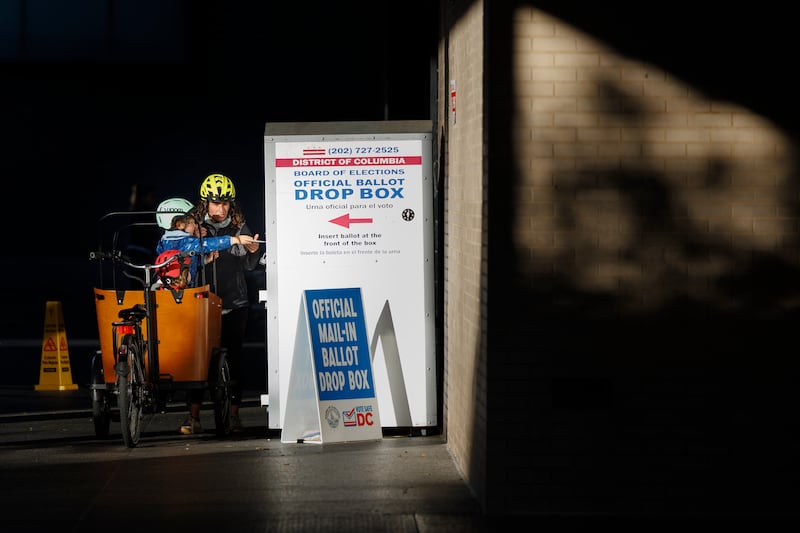
America decides... but when will we know what it’s saying?
While Irish polling booths close at 10pm on the day of voting with the full results not becoming clear for days, they do things differently in the US and many of the polls wil be closing at 6pm local time – or 11pm Irish time - and by early tomorrow morning we should have a good idea what happened. Hugh Linehan has a good breakdown of what we can expect and when we can expect it.
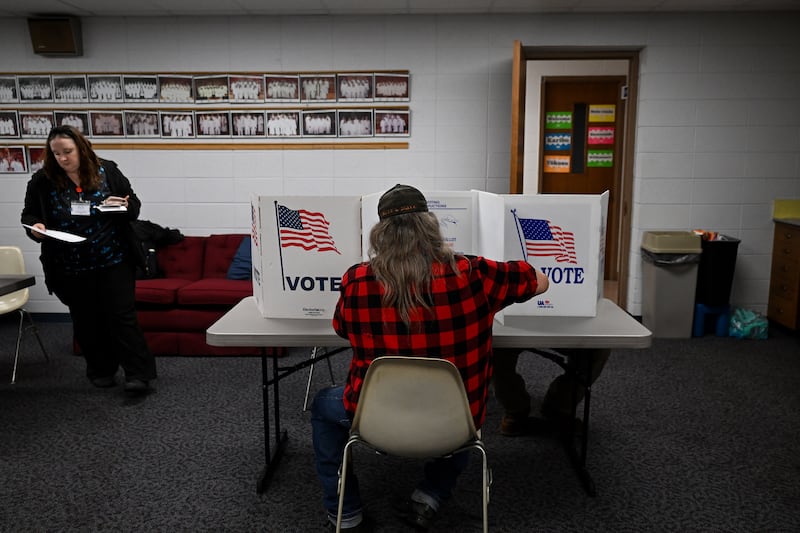
Justice department deploying 1,000 election monitors and observers to all 50 states
The US justice department has said it is deploying 1,000 election monitors and observers to all 50 states in what it called the largest election day monitoring effort in history.
A department statement identified which jurisdictions within the states would receive monitors and observers, and said priorities include areas with a history of voter access issues and places with competitive races that could be targets of voter intimidation.
The Trump administration has taken an increasingly aggressive approach to election oversight, pressing states for voter-registration data and arguing that stricter measures are needed to ensure public confidence in the vote. Critics view the moves as federal overreach.
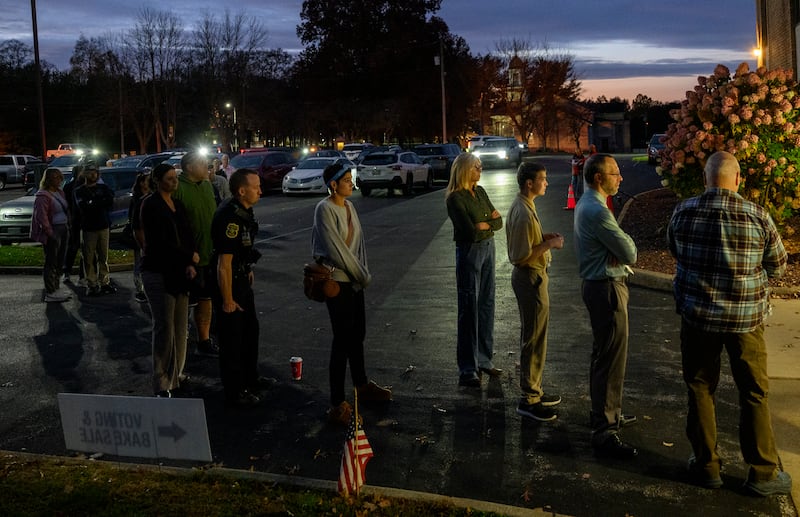
Odds on Democrats to come out on top
Many of the polls are pointing to heavy losses for the Republicans, but what about the betting markets?
There has been a staggering $1.48 billion (€1.32 billion) wagered on the midterms on prediction markets such as Kalshi and Polymarket.
The platforms rose to prominence in 2024 when they bucked traditional opinion polls in signalling that Donald Trump would win the presidency, and have since amassed a global following among media outlets and investors.
On Monday, prediction market prices aggregated by analytics firm BetInt implied Democrats had a 95 per cent chance of taking the House of Representatives and a 76 cent chance of taking the Senate.

What is occupying the minds of US voters as they go to the polls?
The rising cost of living will be top of mind for Americans but it is not the only thing concerning them, according to a Reuters/Ipsos poll that was conducted between last Thursday and Monday.
THE COST OF LIVING
Some 48 per cent of registered voters in the poll say the cost of living is the top issue for deciding how they will vote, compared with 26 per cent who say democratic norms and 13 per cent who point to immigration. US fuel prices have surged since the start of the US-Israeli war with Iran in February.
DONALD TRUMP
Trump has urged supporters to pretend he is on the ballot in an effort to energize his Republican Party. The Reuters/Ipsos poll showed that 48 per cent of people who planned to vote – or already had done so – said they thought of their ballots as a vote against Trump, compared with 25 per cent who said they were voting for him. Some 25 per cent said Trump was not a factor in their vote.
IRAN
Trump has argued that war was necessary to prevent Iran from developing nuclear weapons. Some 25 per cent of voters think military action has been worth the cost, and 55 per cent say it has not been worth it with 18 per cent unsure.
ELECTION INTEGRITY
Voters overall trust the US electoral process, with 77 per cent saying they are confident their ballots will be counted but 45 per cent saying they think voter fraud is a widespread problem. Trump has falsely claimed that massive numbers of non-citizens vote illegally and election officials worry the administration could disrupt the election or certification of results it views unfavourably. The White House says its goal is to safeguard election integrity and voting security.
HOUSEHOLD FINANCES
All told 49 per cent of Americans think their household finances have gotten worse since January 2025, when Trump returned to power, compared with 13 per cent who said their finances have gotten better and 37 per cent who say things are about the same. Trump campaigned ahead of the November 2024 presidential election with a promise to turbocharge the economy, but his presidential approval has fallen in recent months to the lowest levels of his political career, including among Hispanic Americans who swung in his direction in 2024. The latest poll showed 54 per cent of Hispanics said their household finances have suffered, while 10 per cent said they had improved.
TRANSGENDER SPORTS
Some 38 per cent of voters ahead of the election said keeping transgender girls and women out of women’s sports was a very important issue or the most important issue, compared to 25 per cent who said that about protecting the rights of transgender people.
What is on the table in today’s election?
So, with all the talk of midterms and a blue wave and a Democratic sweep seeing power seep away from Trump’s White House, it might be worth recapping just what is up for grabs today.
First things first. Congress has two chambers, the House of Representatives and the Senate.
The lower chamber, the House of Representatives, has 435 voting seats, each representing a district of roughly similar size. There are elections for each of these seats every two years.
The House has several exclusive powers, such as the power to initiate revenue bills, impeach federal officials and elect the president in the case of an electoral college tie.
The upper chamber, the Senate, has 100 members, who sit for six-year terms. A third of the seats come up for election in each two-year cycle. Each state has two senators, regardless of its population.
Most legislation needs to pass both chambers to become law, but the Senate has some important other functions, notably approving senior presidential appointments, for instance to the supreme court.
In most states, the candidate with the most votes on election day wins the seat.
However, Georgia and Louisiana require the winning candidate to garner 50 per cent of votes cast; if no one does, they hold a runoff election between the top two candidates.
Maine and Alaska use ranked-choice voting as opposed to the first past the post voting system in congressional elections.
Florida and Ohio are having ‘special elections’ for the Senate because the previous holders of their seats – Marco Rubio and JD Vance – resigned to join the executive branch following the 2024 presidential election.
And then there are governors.
They are elected by direct vote in their states. The candidate with the highest number of votes is declared the winner.
In every state, the executive branch is led by a governor. They serve for four years in office, with the exception of Vermont and New Hampshire where tenures are two years long.
Governors are responsible for implementing state laws, and have a range of powers available to them such as executive orders, executive budgets and legislative proposals and vetoes.
US voters go to the polls in election which could weaken Trump’s hold on power
Americans are heading to the polls today in US midterm elections widely seen as a referendum on Donald Trump’s second presidency and a chance for opponents to rein in his power.
The party holding the White House typically loses congressional seats at midterm elections and Democrats are hoping the president’s nose-diving popularity can be exploited.
Meanwhile, the US department of justice in California has charged six more people with alleged voter fraud crimes, an escalation of the administration’s campaign against election integrity.
However, in a blow to Trump, the supreme court has ruled against attempts to force California election officials to segregate and not count ballots from people the department claims are non-citizens.


