
In the foothills of the Andes, across an expanse of rugged terrain five times the size of Manhattan, a group of entrepreneurs is preparing for the end.
A handful of small prefab homes, geodesic domes and an airstrip have sprung up in the past two years on the remote Wamani ranch, an hour via dirt roads from the nearest village in far-west Argentina.
Far from the world’s nuclear superpowers and close to Patagonia’s abundant oil reserves and the fertile plains of Argentinian wine capital Mendoza, Wamani is Argentinian-Spanish tech founder Martín Varsavsky’s best guess at a place that would survive Armageddon.
“We’re already in World War Three; the battle lines are already drawn,” says Varsavsky over the phone to Wamani from a business trip to San Francisco, describing a conflict that pits Russia, China, North Korea and Iran against “most of the rest” of the world.
RM Block


“It just makes sense to have a refuge,” he says.
Varsavsky is far from alone among the super-rich in making plans to prepare for nuclear war, climate disaster or economic collapse. Billionaires such as Peter Thiel have bought land in remote New Zealand, while Meta’s Mark Zuckerberg has a shelter beneath his ranch in Hawaii. LinkedIn founder Reid Hoffman once estimated half of Silicon Valley billionaires had some form of “apocalypse insurance”.
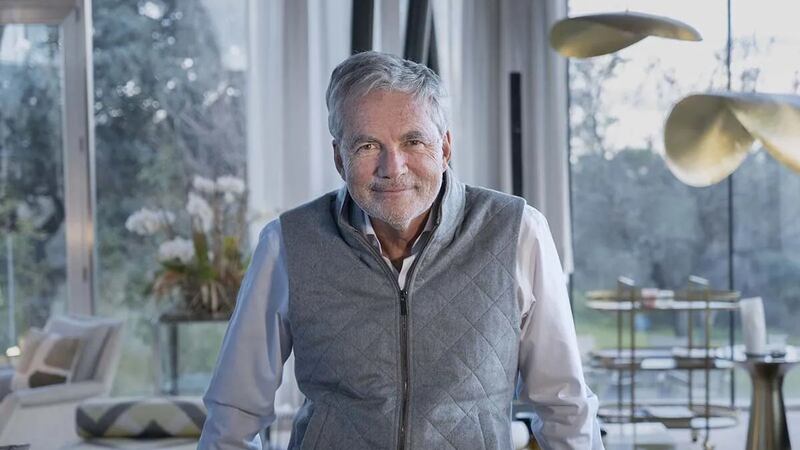
But 66-year-old Varsavsky’s vision is broader. He argues “the whole of Argentina and the Southern Cone region” could support “complex societies” in the event of nuclear war, due to their distance from missile targets and radiation clouds, and abundant food and energy production.
“My idea isn’t just to have little groups locked up in bunkers,” says Varsavsky, who built an estimated fortune of $700 million according to Forbes by founding companies in telecoms, internet services, renewable energy, fertility and biotech.
He is working on a novel that imagines life in Wamani after nuclear war wipes out much of the US, Europe and Asia. A draft features protagonist “Martín Varsavsky” and his family’s hurried flight from Madrid after he spots unusual ship movements on satellite platforms. Once there the family puts stranded – and suddenly penniless – American wine tourists to work on the ranch.
Varsavsky bought the property in December 2023, weeks after the election of libertarian president Javier Milei, with five Argentinian and US businessmen as co-investors. They include Alec Oxenford, a tech entrepreneur who is also Milei’s ambassador to Washington, and Dan Lubetzky, billionaire founder of snack bar company Kind.
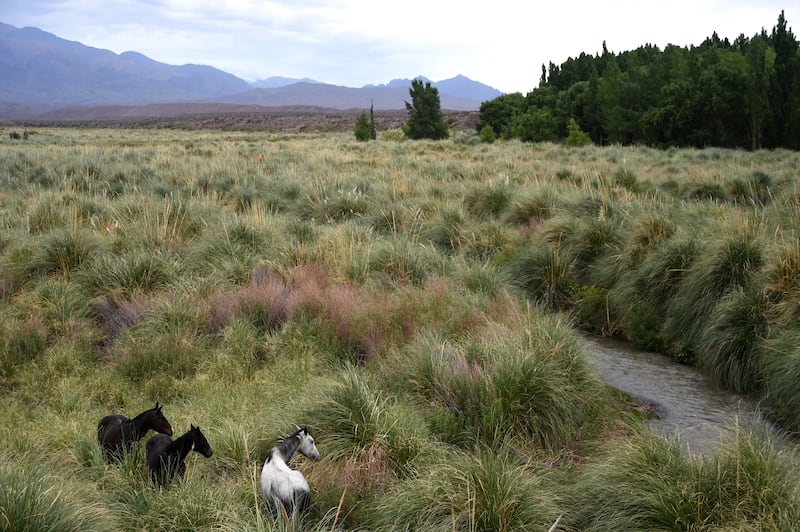
Their goal is self-sufficiency. Buildings are fitted with solar panels. Varsavsky plans to buy cattle to graze Wamani’s scrubby 32,000 hectares, which include a 5,000m peak and several other mountains. They may purchase an even larger property nearby to grow crops.
They are also studying whether large language models could be downloaded on to solar-powered computers “to create your own limited internet” in the event of global server collapse, Varsavsky says.
People in Eugenio Bustos, a nearby town of 12,000, are suspicious of the project. “It’s very weird to buy up so much land just for yourself with no commercial plan,” says one gas station attendant who declines to give her name, citing fear of angering her employer by criticising a local landowner.
But Varsavsky is not the only wealthy person drawn to Argentina following Milei’s election.
The libertarian’s free-market reforms – and more outlandish pledges to allow “nonhuman corporations” run by AI agents – have elicited adoration from some corners of Silicon Valley. Thiel, who secretly acquired New Zealand citizenship in 2011, purchased a mansion in Buenos Aires in April and moved his family there for two months.
Varsavsky, who says he knows Thiel professionally and has spoken to him about Argentina, says they did not plan their investments together. “We coincidentally came to the same conclusion that of all the places you could go in case of World War Three, Argentina is the best,” he says.
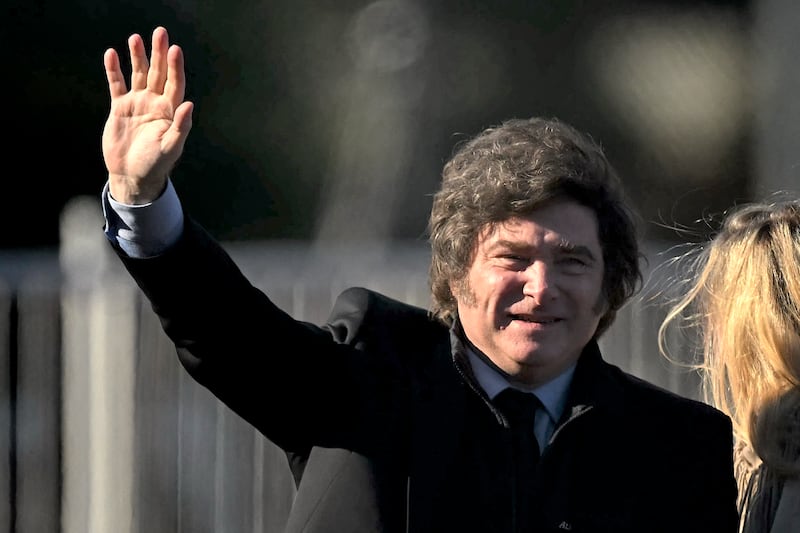
A strong Milei supporter, Varsavsky has accompanied him on trips to meet tech leaders in San Francisco and dined with him in Buenos Aires. He has suggested he create a national reserve of semiconductors and electrical transformers to bolster the country’s resilience, as well as a “tranquillity visa” through which other investors could turn Argentina into their apocalypse insurance plan.
Milei’s government expects the country’s remoteness from global instability to be a big draw of a citizenship-by-investment scheme it is preparing, according to consultants advising the government.
One of those consultants, Eric Major, founder of Latitude Group immigration investment advisers, compares the programme with New Zealand’s recently launched $3 million (€2.6 million) expedited residency permit.
“That whole doomsday California group who are worried about World War Three picked that up in droves, and we told Milei’s government that we’ll position Argentina in the same way,” he adds.
Varsavsky and other tech leaders are also enticed by the idea that Argentina harks back to a whiter, pre-multicultural Europe.
“Some people go to Argentina and say, ‘Wow, this place looks more European than Europe now,’” Varsavsky says. “Argentina is proud of its western civilisation heritage and people can proudly say so. And in Europe and America you can’t.”
Varsavsky, whose family fled Argentina’s 1976-1983 dictatorship when he was 16, has lived his adult life between Spain and the US. He has built five start-ups that each gained valuations of more than $1 billion.
Varsavsky once identified as a Democrat but wrote last year that he took a “turn to the right” after rejecting the “guilt the left imposes” on white people for the Atlantic slave trade, as well as for climate change and feelings of “national pride”. He also denounced a renewable energy group that he cofounded, and later sold, for “scarring” Spain with wind turbines.
Varsavsky owns 50 per cent of Wamani and the rest is split between five friends. Collectively they have spent almost $10 million so far, said Varsavsky, with one structure going up roughly every four months. They use the ranch for group holidays and are mulling renting it on Airbnb to make it financially self-sufficient.
Varsavsky roams the land in a 4x4 or on a mountain bike, along more than 80km of bumpy internal paths. Foxes and guanacos – relatives of the llama – also wander the property’s mountains and craggy surfaces, dotted with tough wild grasses, spiky shrubs and one lone apple tree whose presence no one can explain.

He says he chose the name Wamani, a Quechua word meaning “guardian of the mountains”, as a tribute to a Quechua-speaking nanny who helped raise him.
Camila Martínez, a 28-year-old park ranger who manages the property with three others, describes the suspicious chatter about Wamani in nearby towns as “a game of telephone”. “People say all sorts of things, but at least Martín is conserving the landscape, unlike most big landowners here,” she adds.
Yet there are drawbacks to Wamani as a sanctuary. At least a dozen times a year, Mendoza suffers fierce winds linked to temperature changes in the Andes, which can make it impossible to go outside on the wide-open plain where most of Wamani’s structures have been built. “Martín was freaked out the first time he saw those winds,” says architect Lucía Castillo, also 28.
Some of the prefab shelters – modern Airbnb-like suites with large glass windows – need heating by wood stoves in the winter and cooling with air conditioning in the summer.
While the ranch contains four springs and streams, global warming is expected to increase water stress in the Andes.
Wamani’s ultimate capacity is a moving target. “There’s more friends that want to join, and we’re building more,” says Varsavsky, who has seven children. “But also it’s so beautiful that there isn’t much there. If we invite many people and build many houses, it’s not going to be the same.”
But one thing is clear, he adds. “My wife and I have agreed that if China takes Taiwan or Russia takes the Baltics, the next day we’re there.”
– Copyright The Financial Times Limited 2026


