Last Friday, sandwiched in the middle of the most contentious international football window in memory, the Government launched the 2026 Community Sport Facilities Fund (CSFF).
Given the commotion and acrimony around Ireland’s fixtures against Israel, the launch of the CSFF might understandably have slipped below your radar over the weekend. And yet, there may not be a more consequential announcement this year for sports clubs and organisations across the county.
Formerly known as the Sports Capital and Equipment Programme – more commonly referred to as the Sports Capital grants – the CSFF scheme provides an opportunity for clubs to apply for centralised funding.
Here’s everything you should know about the CSFF:
RM Block


What is the Community Sports Facilities Fund?
In its simplest form, it is the Government’s mechanism for providing grants to clubs and organisations to support the development of sports facilities and the purchase of non-personal sports equipment.
In the past, clubs have successfully applied for funding to help develop pitches, install energy efficient floodlights, build dressingrooms, refurbish sports halls, and erect security fencing and ball-stopping nets.
Who can apply?
Your club, most likely. All voluntary, not-for-profit sports clubs, community groups, national governing bodies and local authorities are eligible.
Schools, third level colleges, diocesan trusts, and education and training boards can also apply in conjunction with associated sports clubs.
Does the money just go to the most popular sports, like Gaelic games and soccer?
Traditionally, that might indeed appear to have been the case. Gaelic games grants of almost €97 million were awarded in the last round (2023) – a total of 787 applications coming in at €96,901,302. Soccer grants totalled €41.4 million (371 grants), while golf received €11.4 million (107 grants) and rugby got just under €10 million (76 grants).
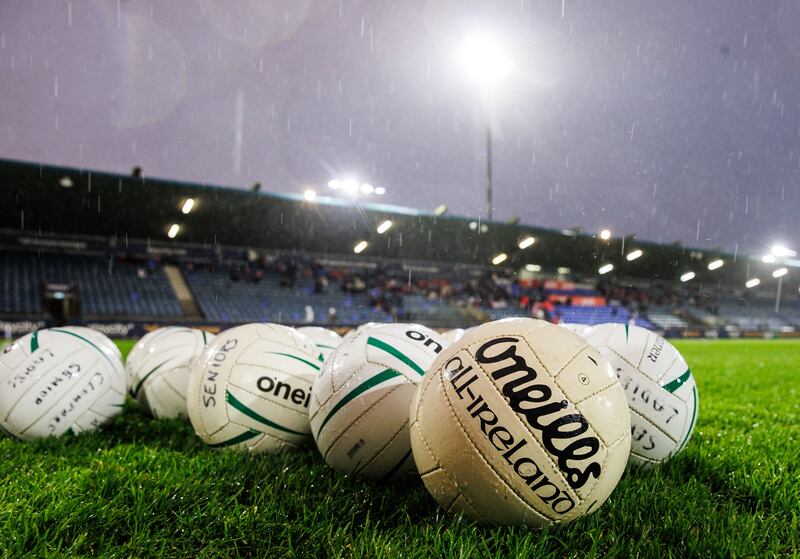
Prior to the 2023 round, the previous tranche in 2020 saw Gaelic games receive €65.5 million, while soccer got €25.1 million, golf €8.8 million and rugby €8.7 million.
However, the Government has indicated this new round will specifically target multi-sport projects and sports that might have been overlooked in the past. In other words, there seems to be a real opportunity for some less high-profile sports to receive backing this time around.
How can my club apply?
There is a new registration management system this year, SPRAOI, through which clubs can apply for grants.
If your club has never previously applied, then the first step is to register on SPRAOI. The portal can be accessed through www.gov.ie/SportsCapital.
If your club was registered on the old system, the details should be automatically transferred to the new system.
If you are unsure of your club’s status, or require guidance on the registration process, further information is available by e-mailing: csff2026queries@ccs.gov.ie.
Is there a deadline to apply?
The system will be open for applications from 9am on October 19th, 2026, and closes at 5pm on February 26th, 2027.
Potentially what kind of money are we talking about?
Well, that depends on your club and the nature of the application. There is a tiered system with set parameters on the level of funding available.
Ah, I knew it was going to get complicated.
No, stick with us. There are three tiers: Local grants, Regional Tier One, and Regional Tier Two.
Local Grants: Funding of up to €250,000 which is open to individual clubs for capital projects, such as renovations to a clubhouse or relaying a pitch. This is the scheme through which most local clubs and organisations will apply. The maximum amount of funding available for equipment is €70,000. For equipment-only applications, ownership of the property is not required. So, for example, boxing clubs or badminton clubs that rent premises can apply.
Regional Tier One: Funding of between €250,000-€550,000. This is intended for larger scale projects with a multi-club or multi-sport character. There is a push towards encouraging more all-weather facilities to provide teams with more certainty around pitch availability throughout the year.
Regional Tier Two: Largest possible grant allocation of between €550,000-€750,000. It is not open to individual clubs, but is instead aimed at encouraging local authorities to be proactive in considering facilities that would benefit their area.
Any advice on how to be successful?
Government ministers have been consistent with their messaging around these grants, stressing the focus is to promote multi-sport collaborations and on synergies between clubs and schools to deliver more shared sporting facilities.

If there was any doubt, Minister of State for Sport Charlie McConalogue outlined as much at the launch: “For the past year, I have travelled across Ireland to visit, listen and engage with sports clubs and organisations for their feedback on how best sports capital grants can work for them. No matter where I went, one message was clear: sports clubs and organisations are under pressure for facilities and resources.
“This new round of CSFF will specifically target sports and geographic areas that have been historically underinvested in. After a winter to forget, we will push to see increased collaboration in multi-sport and multi-club artificial surfaces for training and matches.”
Each application will be judged on its own merit, so if your club has plans or ambitions around improving facilities, or advancing infrastructure projects, then undoubtedly the best advice is simply to get registered and begin the process.
If you’re not in, you can’t win.