From wild camping in open meadow plains to pampering spa breaks at historic thermal spring towns, iconic rail era engineering to dark sky parks, Slovakia offers a multitude of memorable ways to access and experience its abundant natural beauty and unique local histories. Add in wildlife experiences that range from hand-feeding ground squirrels to hiking through bear country, and there is something for every preferred adrenaline level. You can even bed down in a 13th-century castle for a night, or stay longer as a volunteer in its ongoing rescue from ruin.
With an ever-increasing number of direct flights to both western and eastern Slovakia, this under-discovered country is more accessible than ever, and a dream to explore with its unique rail network.
In our age of high-speed everything, travel by rail has become so much more than a personal delivery service. This mindful mode of transportation has its own distinctive rhythms and pace, one that invites you to slow down and truly take in the natural landscapes and layers of cultural history as you pass through them.
Slovakia’s charmingly rustic natural environment is periodically framed by soaring rail bridges, providing inspiring material for photographers seeking that picture perfect shot. Most graceful of these is the Chmarošský Viaduct, where the scenic Horehronie Express train leaps out of the shelter of evergreen forests and across a sweeping valley over wild flower meadows some 18m below this elegant feat of engineering.
RM Block


There is much here for true train enthusiasts to geek out on, but always balanced by charming local attractions with a far broader appeal, too. A word to the wise: many of Slovakia’s attractions open on a seasonal basis only, meaning it is always best to check operating days and hours before planning your trip.
Staying in the Horehronie region in central Slovakia, you can take the Čiernohronská Forest Railway from Čierny Balog village. This narrow-gauge railway once carried timber from deep forest valleys but today provides a whimsical jaunt. Or if you’d like to stretch those legs and earn yourself a local feed, you can take an evening sunset ride along those tracks on pedal-powered bikes with the Horehronie Rail Bicycles. Be sure to pick up a grab a picnic stocked with blanket and regional treats before you go.

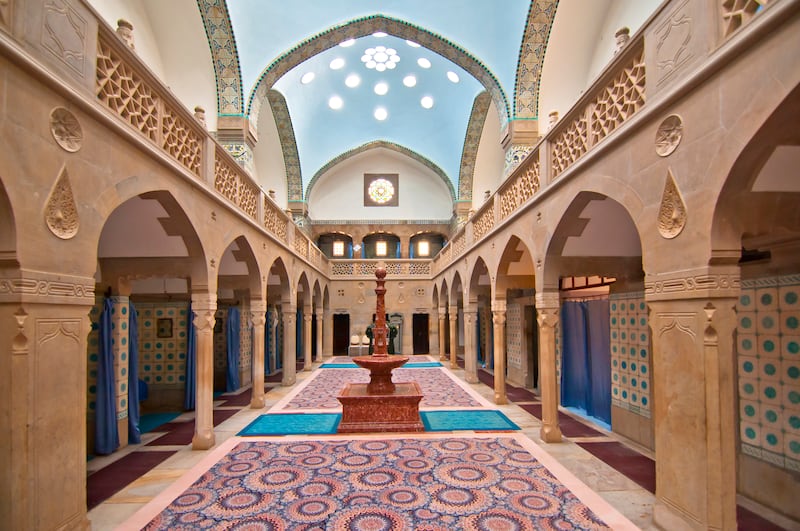
If that sounds like a leg-stretch too far, you might prefer to set your sights on the spa town of Trenčianske Teplice in northwestern Slovakia. Hop the narrow-gauge tram up there from Trenčianska Teplá village and you can offset a visit to the small transport museum at the historic depot of the TREŽ (or Trenčianska Electric Railway, one of the oldest electrified lines in Slovakia) by taking the hot spring waters at the Hammam Bath House, built in 1888 in the Moorish style as the first of its kind in Europe.
Several other towns are worth also visiting for their historic train stations as much as their historic or natural sights.
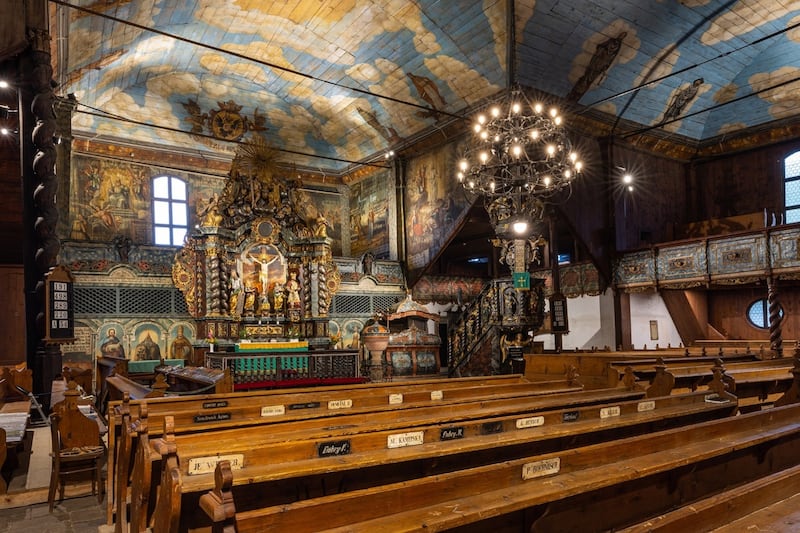
In northeastern Slovakia near the Polish border, the Art Nouveau train station of Kežmarok town has been painstakingly restored. Its colourful stained glass, intricate ornamentation and decorative natural motifs make a fascinating architectural contrast with the nearby Unesco World Heritage Site, the extraordinary Wooden Articular Evangelical Church. Built in just two and a half months for the cost of 660 Hungarian gulden, three barrels of beer, and seven cubits of fine cloth, today it as beloved for its wonderful acoustics, Baroque organ and regular musical recitals as for its against-the-odds endurance over three centuries.
Back in central Slovakia, Tisovec is a gateway town to discover the unspoilt wilds of the hidden treasure that is Muránska Planina National Park. (And yes, it has a unique treasure of a train station to discover.)
One of Slovakia’s nine national parks, Muránska Planina is home to a dark sky park. Far away from the perma-glow of artificial lighting that now hangs over most of our modern world, this protected park with minimal light pollution gives unusual access to the shooting stars, spinning planets and staggering sweep of the Milky Way that’s rarely seen above our heads. Book into organised stargazing events led by astronomers with professional telescopes. Or throw a tent up in Veľká lúka (aka “the Great Meadow”) for some wild night camping, or simply hang out in the new stargazing livingrooms at Nemcová and Predná hora, where oversized wooden outdoor seating areas are designed for comfortable night-sky observation.
Within all this wildness there are also intriguing traces of lives once lived here, as at the crumbling ruins of the legendary medieval fortress of Muráň Castle, the third highest castle in Slovakia.
You can walk to it from those Veľká lúka plains, traversing open mountain meadows where norik muránsky horses roam and graze wherever they want. Local mountaineers and farmers living alongside these semi-wild horses have traditionally harnessed their strength and today offer horse-drawn carriage rides as a gentle way to explore the plains. Alternatively, for a more footloose experience, there are now 200km of official riding trails to explore in the area.
An hour’s walk and gentle climb from Veľká lúka brings you to dramatic castle ruins of Muráň Castle perched on steep limestone cliffs with panoramic lookouts along the castle walls.
For a more challenging route, you can choose the nature trail from the nearby village of Muráň. This option has the added advantage of indulging in some unmissable sweet Muráň buns: local sourdough-based buns baked and filled with everything from fruits and jams to nougat or walnuts.
You really shouldn’t leave Tisovec without discovering the train station’s fascinating Rack Railway Museum. Also called a cogwheel railway, this unusual type of rail line uses a special toothed central rail in-between the two standard tracks to help trains climb particularly steep slopes – in this case, a whopping gradient of more than 50 per cent, necessary to breach the Zbojská mountain pass at an altitude of 725m above sea level. Curiously, construction began on this rack railway line between Tisovec and Pohronská Polhora in the 19th century in order to serve the local ironworks. However these closed before the line’s completion; it was only finished in 2014, having been declared a National Cultural Monument in 2008.
For adventurers who like to give back to the community that they’re visiting, another castle calls – this one in the west of the country overlooking the Váh river valley. Here international volunteers work cheek-by-trowel with local conservationists in the ongoing preservation project of Tematín Castle, a medieval hilltop fortress originally built in 1250 but abandoned since the mid-18th century.
Alternatively for regenerative tourism with a wilder side, Lesmír is a non-governmental organisation based in northern Slovakia that aims to inspire a greater respect for the natural world through experiential learning. Their nature-based excursions in various locations will introduce whole new worlds to you: tracing otter tracks in the winter snow or wolf paths in primeval forests; summer swimming by beaver dams in the summer; hiking or even biking through bear country, all with expert guides opening your eyes to the wonders around you.
In Slovakia, those wonders are truly in abundance, hidden in plain sight until you slow down and take the time to see them.
So, what’s keeping you?
To explore direct flights from Dublin to Bratislava in Western Slovakia, visit bts.aero. Or for Kosice, in Eastern Slovakia, airportkosice.sk