The scale of the cyber threat posed by a combination of criminal elements, nation state bad actors, destructive hackers and rogue AI has never been greater. For many organisations a cyberattack is now seen less as a possibility than an inevitability. If cyber-breach prevention is no longer 100 per cent achievable, what does an acceptable baseline of operational resilience actually look like for an Irish firm – and how do you measure when a company is truly recovery ready?
Leo Moore, head of technology at William Fry, says boards should plan on the basis that a serious incident will happen. The real test of resilience is how quickly and safely a business can restore the services its customers rely on. He notes that resilience is now a legal obligation as well as a technical one.
“Directors must exercise care, skill and diligence under the Companies Act 2014. The GDPR requires appropriate technical and organisational security measures, and the Digital Operations Resilience Act (Dora) places ultimate responsibility for ICT risk on the management bodies of financial entities. The NIS2 [an EU directive on cybersecurity] goes further, requiring management bodies to approve and oversee cyber-risk measures, including backup management and disaster recovery.”
Moore says a sensible baseline involves four things: identify critical services; agree at board level how much downtime each can tolerate; hold isolated, immutable backups that an intruder cannot reach; and be able to detect an intruder early.
RM Block


He believes a company is recovery ready only when it has proved that it has restored a critical system under realistic conditions and the incident team has rehearsed its decisions together.
The regulatory fine is rarely the only cost of a serious incident. Lost revenue, eroded customer trust, higher insurance premiums and the cost of investigations and litigation can all add up quickly. With that in mind, a board’s questions fall into two groups, and each should be answered with hard evidence, Moore observes.
“The first issue is whether the organisation’s systems are resilient and keep pace with the state of the art and with emerging risks, a standard that both the GDPR and NIS2 build into their security requirements. Boards should know which assets and systems are critical, how supply chain risk is being managed and when the business last ran a cyber exercise or test.”

The second is whether the business is ready to respond to a breach. That covers who has authority to take systems offline or respond to a ransom demand, whether an Irish subsidiary’s incident plan is aligned with its US head office and who will speak to customers, regulators and the media from the first hours of an incident.
“Poorly handled communications can do as much damage to a company’s standing as the attack itself,” Moore says.
In terms of development on the technology side, AI has been a double-edged sword in the world of cybersecurity, helping both attackers and defenders, notes Puneet Kukreja, resilient nation leader and head of cyber at EY Ireland.
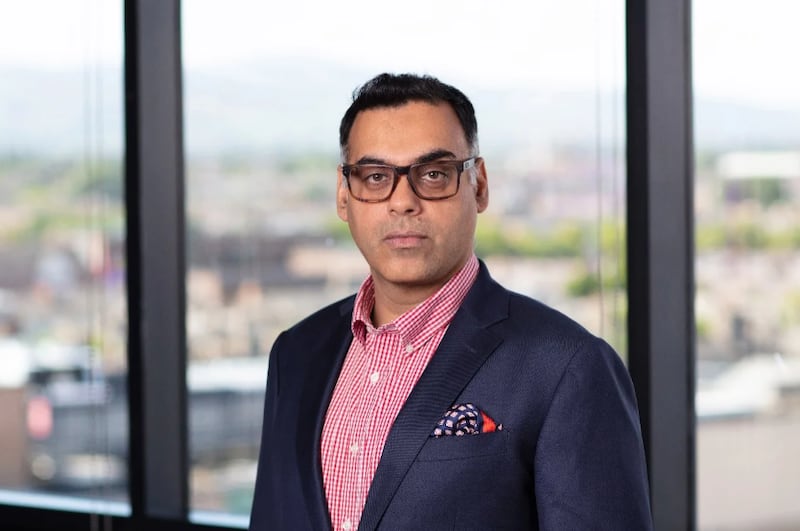
“The biggest leap is frontier agentic AI for vulnerability discovery, exploitation and remediation at scale. The shift is not simply that AI can write code or support phishing; it is that advanced models can reason across complex systems, identify weaknesses, generate fixes or attack paths, and accelerate work that previously required scarce specialist expertise,” he notes.
“For attackers, the leap is AI-assisted vulnerability discovery and autonomous exploitation at machine speed. For defenders, it is AI-enabled exposure management, remediation, recovery engineering and resilience validation.”
Smaller organisations do not need to build a full internal cyber team. They need reliable monitoring, escalation and response capability, which is why managed detection and response services can be so effective, he says. It is equally important to map critical dependencies and understand which suppliers, cloud platforms, payment systems, software tools, connectivity providers and managed services could stop or severely degrade the business if they failed.
“Recovery should be engineered, not assumed,” says Kukreja. “That means maintaining tested backups, clear restart sequences, manual workarounds and agreed decision rights. Organisations should also run realistic disruption exercises covering ransomware, supplier failure, cloud outages, email compromise, loss of core data and loss of access to payment systems.
“AI should be used defensively but safely - AI can help with monitoring, prioritisation and triage, but sensitive data should not be placed into unmanaged AI tools and human oversight should remain in place.”
It is estimated that around 90 per cent of successful cyberattacks globally start with a malicious email. Email is a highly effective way of launching an attack as it often bypasses firewalls and involves direct contact with the most unpredictable variable in any organisation – its people.

“One of the strongest ways to strengthen your organisation’s security posture is to work with an email security specialist,” says Niall Mackey, commercial director of Topsec Cloud Solutions. “Don’t tag on your cybersecurity needs to your IT services provider. They’ll do their best, but email security will not be their key focus. It’s not enough to simply have the right tools. Your organisation has to ensure that security measures are properly implemented and that vulnerabilities and threats can be properly implemented.”
It’s also key to have a protocol in place for what happens after a breach, says Mackey. A trusted email security partner who will provide immediate support, advice and expertise throughout the breach, at all hours, is invaluable. Resilience also means having the ability to recover and continue operating.
“It can be an extinction-level event if critical systems are compromised and the hacked organisation doesn’t have secure, tamper-proof backups disconnected from their live environment. Ensuring that email continuity and independent email archiving is in place will help an organisation to keep running even if their main systems are unavailable.”