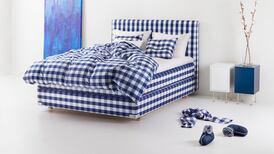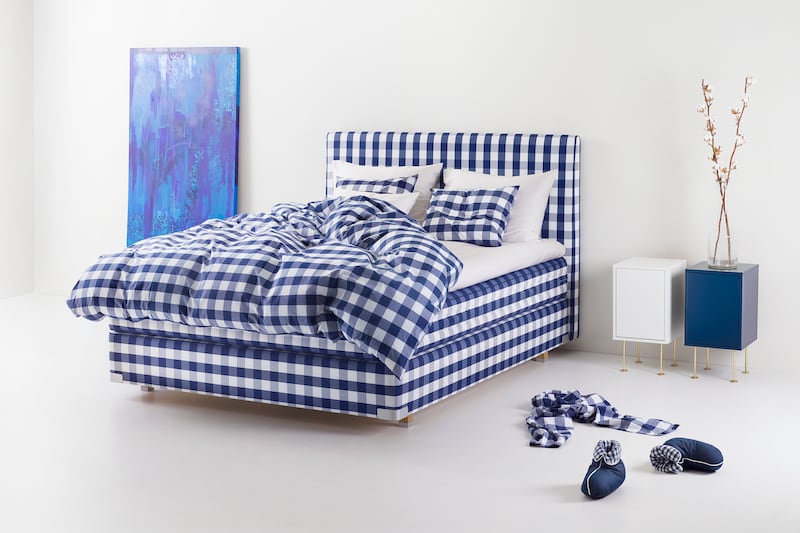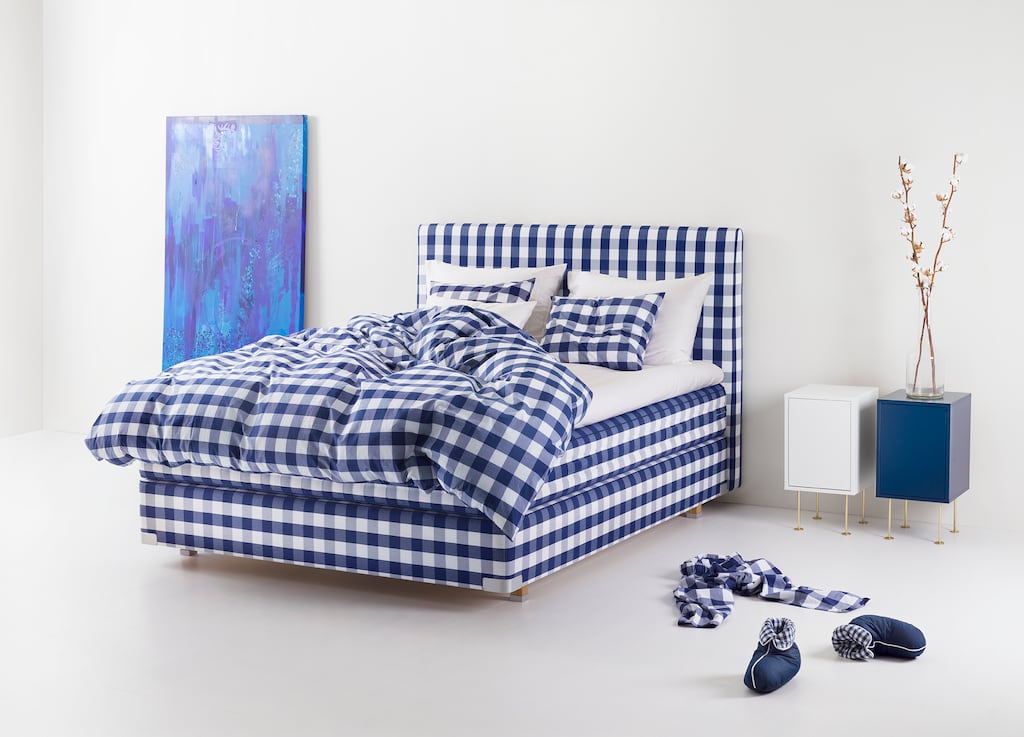

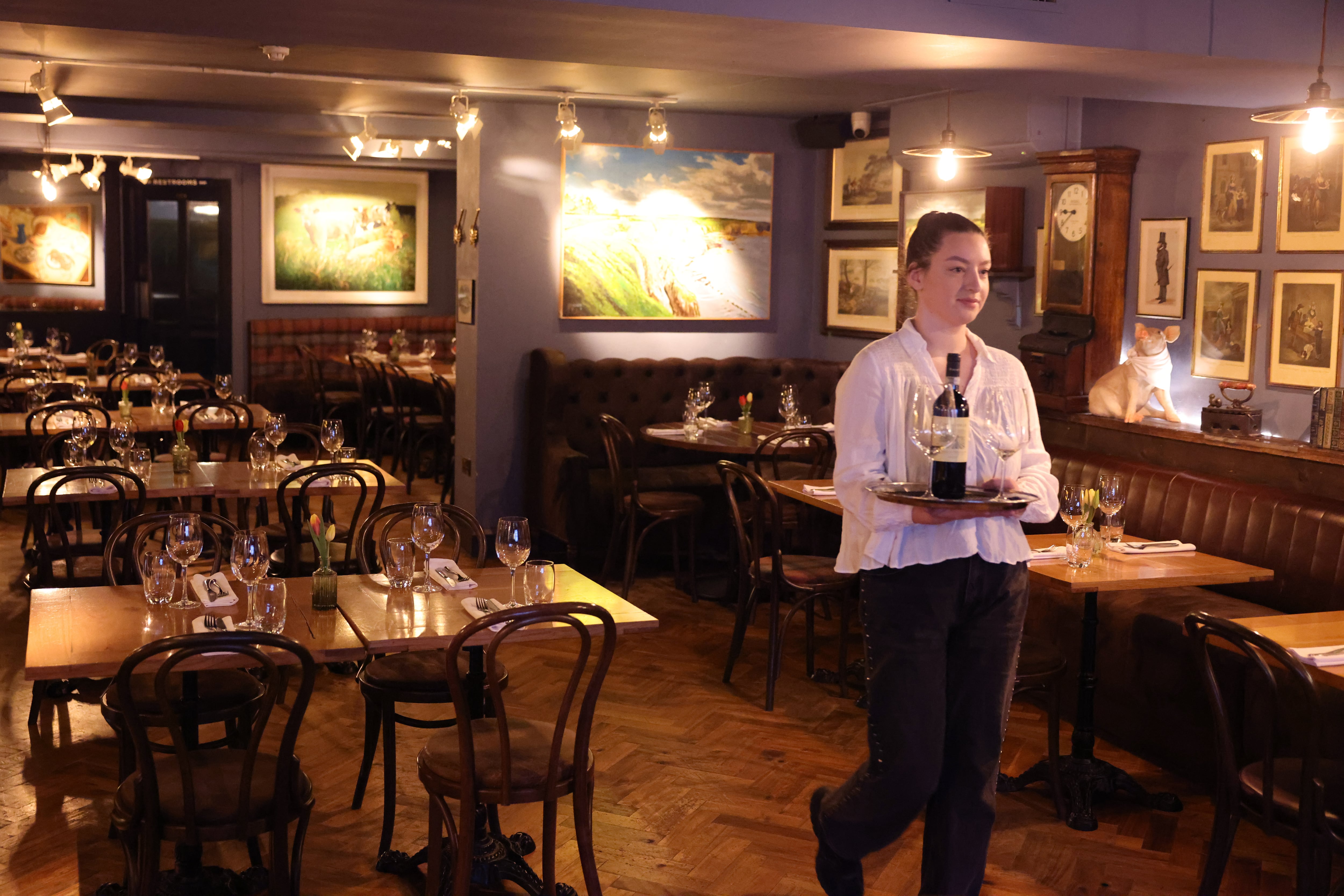
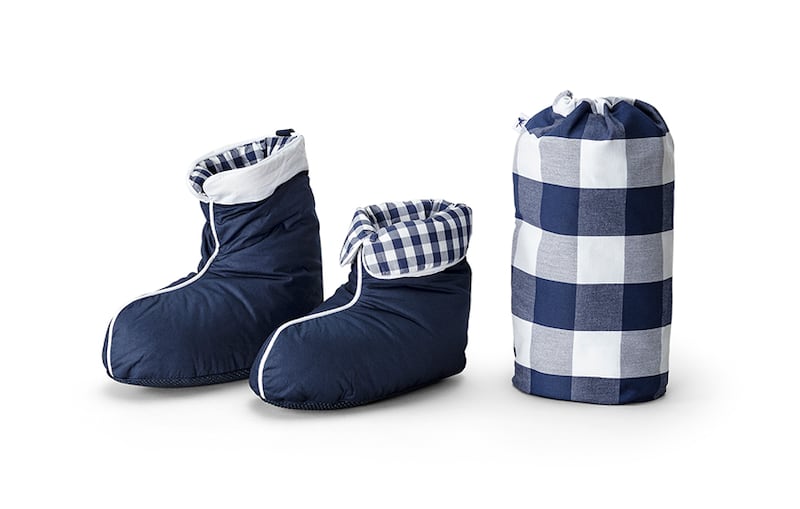
It’s mid-afternoon on a freezing, grey Friday and I’m lying under a perfectly weighted quilt in the most comfortable bed I’ve ever encountered. I have shed my real-world shoes and replaced them with warm, blue-check booties made from goose feathers, and my head is resting on a pillow calibrated exactly for the shape of my neck.
From nearby, a soothing voice is urging me to close my eyes, relax my spine and sink into a “cloud-like experience”. And I really want to do it too, but then I remember I’m in a bed shop in a Dublin suburb, and the voice is not emanating from a meditation app but from a live human who is acting as my “sleep coach” during a personalised “sleep spa”.
The human is Garrett O’Hagan, known for O’Hagan Design, who is an evangelist for Hästens, the storied Swedish bed-makers who create “sleep instruments” that start at €10,000 or so, but can go as high as €1.5 million.
The shop in which I am reclining is the first Hästens outlet in Ireland, but it already has custom here, with notable clients including Ómós, Cúan Greene’s newly opened guesthouse in Abbeyleix, Co Laois.
RM Block


Softly spoken O’Hagan acknowledges that Hästens beds are “costly”, but he says they’re “not expensive”. This is because, he says, sleep is the route to both wellbeing and health and thus merits the kind of spend homeowners might ordinarily put into, for example, their kitchen. And just as you wouldn’t buy a kitchen after one brief visit to a showroom, you should put some proper time into choosing your bed – multiple visits and time spent lying down rather than sitting on an edge for five minutes.
This is where my sleep spa comes in. I am here to try a number of different bed models to work out which one would suit me – a notably poor sleeper – best in my everyday life. All of the beds on offer are handmade in Sweden using layers of natural materials such as hand-teased horse tail hair, cotton, wool and flax. Even the springs, which are calibrated to deal with one person moving more in their sleep than their partner, are 100 per cent Swedish. All models have a 25-year warranty.
As somebody more used to the flatpack wares of a larger-scale Swedish retailer in Ballymun, the Hästens beds, which have a heritage dating back to the 1850s, feel outrageously decadent, but I nonetheless find myself adapting quite well to the conditions around me.
[ Six things we get wrong about sleep, according to expertsOpens in new window ]
As I shuffle in my booties between four different models, O’Hagan reminds me we should sleep “in” a bed, not “on” a bed. It is for this reason that the sleep spa must be booked – it is much easier to achieve full Hästens immersion when other customers are not milling around.
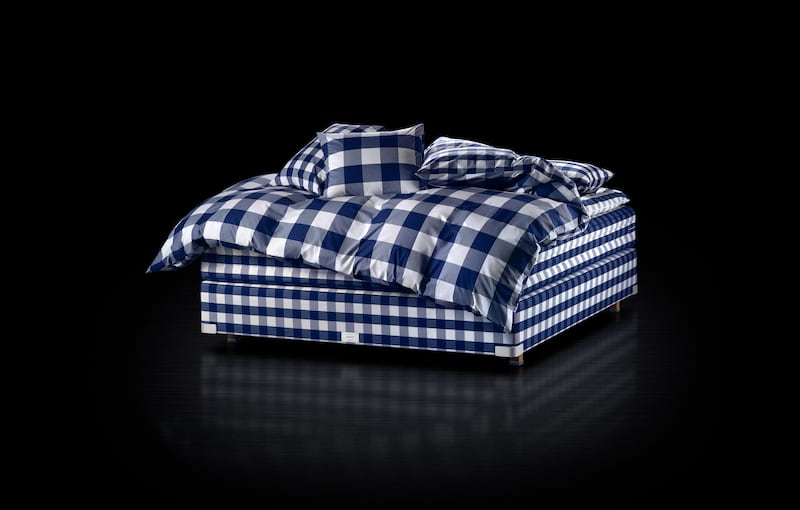
I try four beds over the course of an hour or so, my favourite of which is the 2000T, where prices start at almost €33,000. I sink in, I feel lovely support in the medium model, and I would like to stay here for a long time if this weren’t a retail outlet on a busy road. I also allow myself to be absorbed into the cloud of the Superia in firm (starting at €8,990); the Eala in medium (from €16,690); and the Maranga in firm (from €9,790 and my second-favourite). All are about nine million per cent nicer and more comfortable than my bed at home, but they do feel different from each other, despite all following the similarly traditional-looking designs for which family-owned Hästens is known.
[ How to choose the right bed for a perfect night’s sleepOpens in new window ]
O’Hagan’s suggestions on maintaining my spine in a neutral position and trying a lower pillow than I’d usually choose are both helpful, as is his initially odd-sounding instruction to “sense what’s going on below you”.
He says the Hästens team will undertake home visits to see which model would work best (all are customised after detailed consultations) and advise on how a room might be improved to enhance sleep, which is a lot more than I’ve ever seen on offer from its larger four-lettered furniture compatriot. Would I buy one of these beds if I had the money? Reader, I might.
‘Engineered comfort’
Hästens is not the only luxury bed brand to open up shop in Dublin of late.
Barry Rochford, who has the Irish franchise for BoConcept, the premium Scandinavian furniture store, has just opened a flagship outlet of Duxiana, also in Beacon South Quarter.
The Swedish brand is celebrating its centenary this year, and remains owned by the Ljung family. A Duxiana bed is “all about engineered comfort”, says Rochford, adding that they combine “exceptional comfort, craftsmanship and long-term value”.

These are where you’ll sleep in hotels such as the The Langham in New York City or the Burj Al Arab Jumeirah in Dubai.
Buying a Duxiana bed is not cheap. It’s an “investment-led purchase”, says Rochford, and prices start from about €4,000 for a single and from €8,000 for a king-size, with the final price depending on the model, size and level of personalisation. You can renew elements of the bed over time, rather than replacing it entirely.
“Most bed models are priced up to around €25,000, although the most popular configurations typically fall between €12,000 and €15,000”.