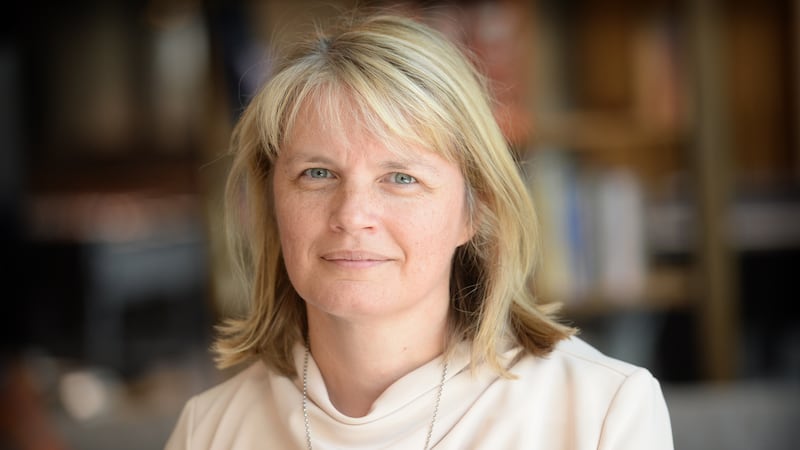
Sinn Féin has set out a document that will be shared across the party on its policy on gender identity, leader Mary Lou McDonald has said.
The document was “not a row-back” on previous positions taken by the party but a “clarification of policy”, she said.
The Irish Daily Mail reported on Tuesday on the unpublished policy document and accompanying draft questions and answers for TDs and Senators that included “what is a woman?”.
Speaking to reporters in Kilkenny on Tuesday, McDonald said a conference and deliberation among its membership on the issue of gender identity had informed the policy document.
RM Block


The Sinn Féin leader was asked whether the party was rowing back on a more liberal position on transgender rights.
“We have set out now in a document, that’s being shared across the party, our policy based on respect, on inclusion, around a whole range of issues that affect the trans community,” she said.
McDonald described it as a “really positive and a really progressive document”.
“It’s about dignity. It’s about recognition of people,” she said.
“It’s about people’s right to live full and complete lives and far from rowing back on anything, it’s a reiteration of a Sinn Féin and a republican fundamental value of respecting people in their totality, of respecting people’s choices that they make, but more fundamentally, absolutely defending people’s right to live full and safe lives.
“It’s not a row-back on anything. If anything, it is a clarification of policy.”
The Dublin Central TD said the document would be published and she denied there was any confusion among party members around questions such as “what is a woman?”. She also said she would recommend other parties engage in a similar process.
McDonald said there was a “very small but toxic element of society” seeking to “weaponise questions” about a minority of people.
“I think people wanted to have clarity and to give clarity to the wider community when discussing and being asked about these matters, and I think that’s a good thing,” she added.
“I think for people to have, and for us to have, a collective atmosphere in which each of us can thrive as a human being, you need that kind of calm clarity.
“You don’t need the weaponisation of this issue by people who are seeking not to bring clarity or not to bring calm or inclusion, but who are trying to stoke up division. I think that’s a reprehensible thing to do on this question.”
Sinn Féin has been drawn into controversy on the subject of its position on gender identity in the past.
Last year the party’s health spokesman, David Cullinane, apologised for welcoming as “common sense” a judgment by the UK supreme court that ruled the term “woman” meant a biological female.
The landmark decision, delivered in April 2025, ruled that the terms woman, man and sex were defined solely by a person’s biological sex in the UK Equality Act of 2010. The ruling means a person born male who identifies as a woman does not have a right to use women-only spaces in the UK.
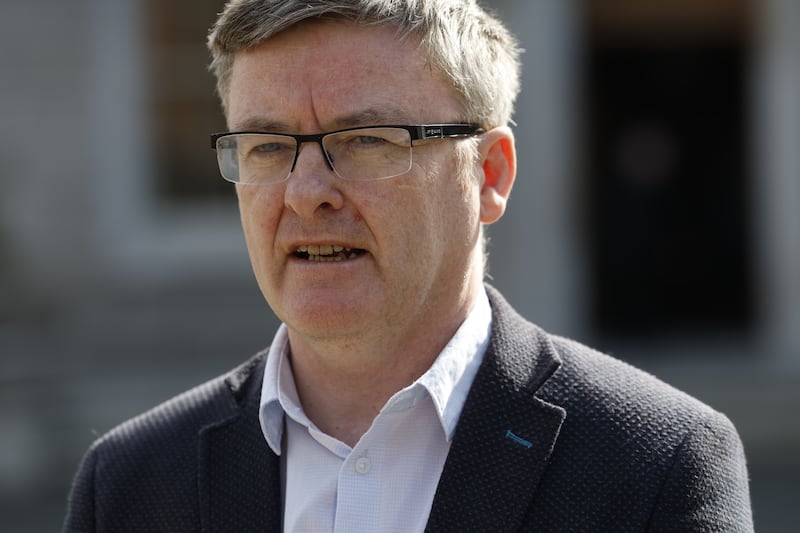
McDonald was also questioned in Kilkenny on whether she was concerned that other parties to the left would take votes from her party with their positioning and policy on gender identity.
However, she said it wasn’t “about an electoral contest or votes” but “about people”.
“This is about people’s rights. This is about a respectful atmosphere in which the very tiny number of people who are trans in our society can actually go about their lives, go about their work, go about their education, live their lives without a permanent cacophony of sound and commentary about them and at them,” said McDonald.
“That’s what it is. This is about people’s peace of mind. This is about people’s personal security ... For me and for us, the important part of all of this is to ensure we get this thing right.
“Part of getting it right is a balance when it comes to young people, and by that I mean people who have not reached the age of 18 ... the balance between parental care, parental consent, parental concern and the rights and autonomy of an emerging adult. I think we struck that balance in the document.”