
I spotted this bird on Portmarnock shores in mid-September. By any chance is this a South African penguin? Marie Purcell
Ah now. Penguins are flightless birds that only live in the southern hemisphere. They are indeed excellent swimmers, but there is no way that a penguin could swim more than 20,000km, cross the equator and turn up on a beach in Portmarnock.
This is a member of the northern hemisphere equivalents – the auk family. All our auks are able to fly. The only one that couldn’t – the great auk – was made extinct by humans by 1844. This particular one is a razorbill. Thousands of these breed around our cliffs and this is a juvenile one. They don’t usually stand at the water’s edge unless sick or exhausted.

What is this creature? It looks like a very small robotic lawnmower. I am in Lithuania on holiday. Carmel McGovern, Ennis, Co Clare
RM Block


What a lovely way to describe it. This is a European firebug – Pyrrhocoris apterus. Like our own very familiar shield bugs, it is a true bug – a particular group of insects that possess a tube-like mouth which pierces plants and sucks their juices. This species is native to Europe and occurs widely on the continent and there are a few records for southeast England. It has only ever been recorded once in Ireland, in 1982, when Dr James O’Connor of the Natural History Museum identified one that was accidentally imported with bananas in the Dublin fruit market.

With reference to your account of the caterpillar of the lime hawk-moth on Saturday September 12th, I recorded one on the grounds of Cnoc Buí in Union Hall last July. It had just fallen out of a lime tree as I walked by. So, if they are in Co Cork they must be on the move. Cormac Leggett
This would be real scientific news, as so far, this species has only been recorded in Co Dublin, in Clonee in Co Meath and in Newcastle in Wicklow. I consulted with Michael O’Donnell of mothsireland.com who welcomes all such observations. He has identified it as an eyed hawk-moth caterpillar which, in fact, has a completely blue spike almost like the lime hawk-moth. It doesn’t, however, have the small reddish protrusions below the spike, which are another characteristic feature of the lime hawk-moth. The eyed hawk-moth has been widely recorded over the country and there are many Cork records.

I saw this interesting little creature walking in the dunes on Bull Island in mid-September. Part ant, part beetle, channelling its inner scorpion. Richard Butler, Raheny, Dublin
You must be reading too many comics – hybrid creatures, such as you describe, don’t actually exist. You have taken a most excellent picture of a rove beetle. This particular species goes by the name of the devil’s coach-horse. It is a common, nocturnal predator which feeds on slugs, and indeed any other invertebrates it can find. When alarmed – as in your picture – it opens its jaws and raises its tail over its back. It can release a foul-smelling liquid and bite too, so it is not to be messed with.
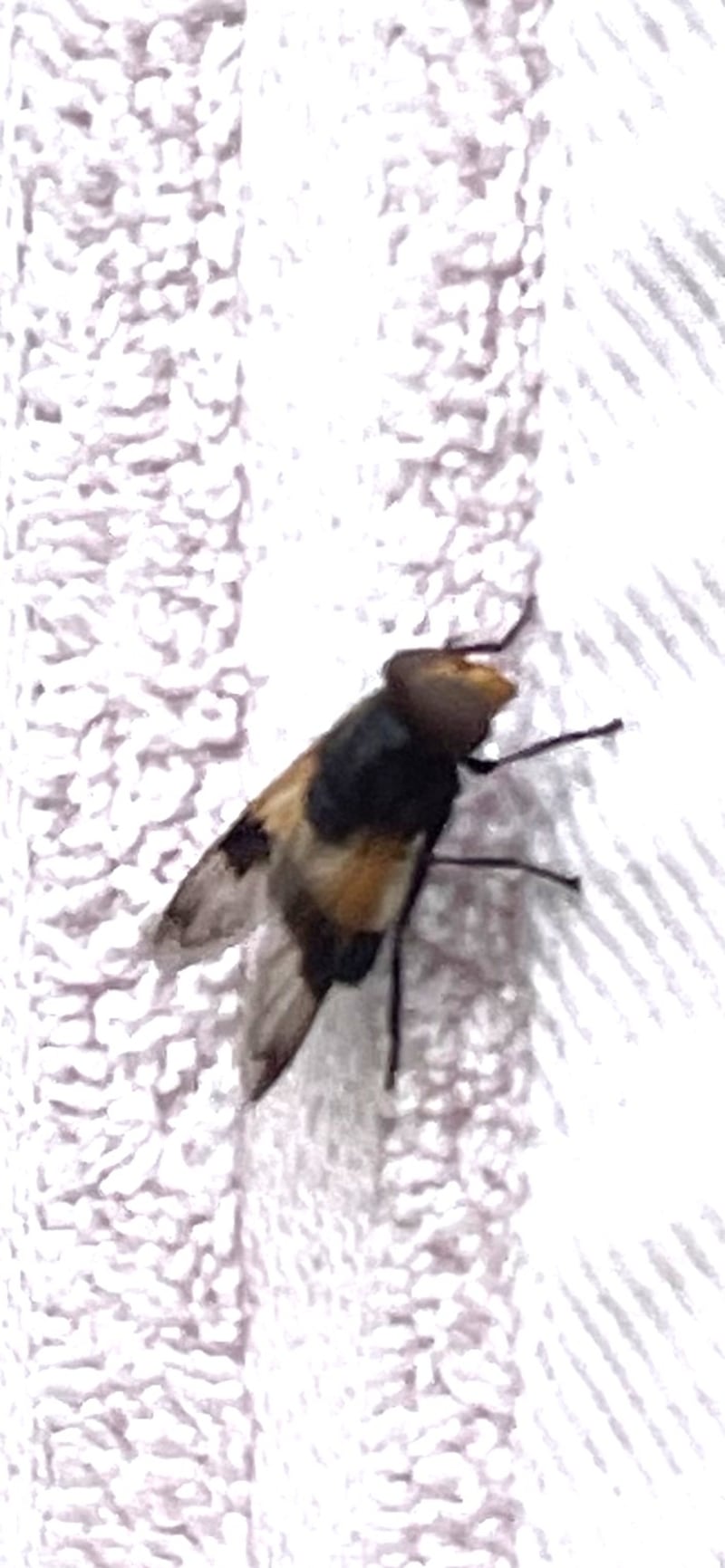
We found this creature on a towel in our back garden in Co Dublin. Could you tell us what it is? Vanessa (14) and Ruth Costello11
It is a hoverfly – Volucella pellucens. This is an adult, which lays eggs in the nest of the common wasp. The larvae, when they hatch out, are scavengers, feeding on nest debris, dead wasp grubs, dropped food scraps, and dead adults. When fully grown, they leave and pupate in the soil below the nest, emerging as adults the following year.
Please submit your nature query or observation, ideally with a photo and location, using the form below or by email to weekend@irishtimes.com


