

This unexpected visitor crashed my daughter’s post-Leaving Cert party. Was it an Asian hornet? Brian Binchy, Dublin
You will be glad to know that it wasn’t, but thanks for reporting it. It is a harmless female woodwasp, Urocerus gigas. It is also known as a horntail because what looks like a sting sticking out the back is its ovipositor. With it, she drills holes in pine and spruce trees and lays the eggs. The Asian hornet has a very definite waistline, a yellow face and shortish dark antennae. If you see one contact invasives.ie with a photo, and immediate action will be taken if it is indeed an Asian hornet.
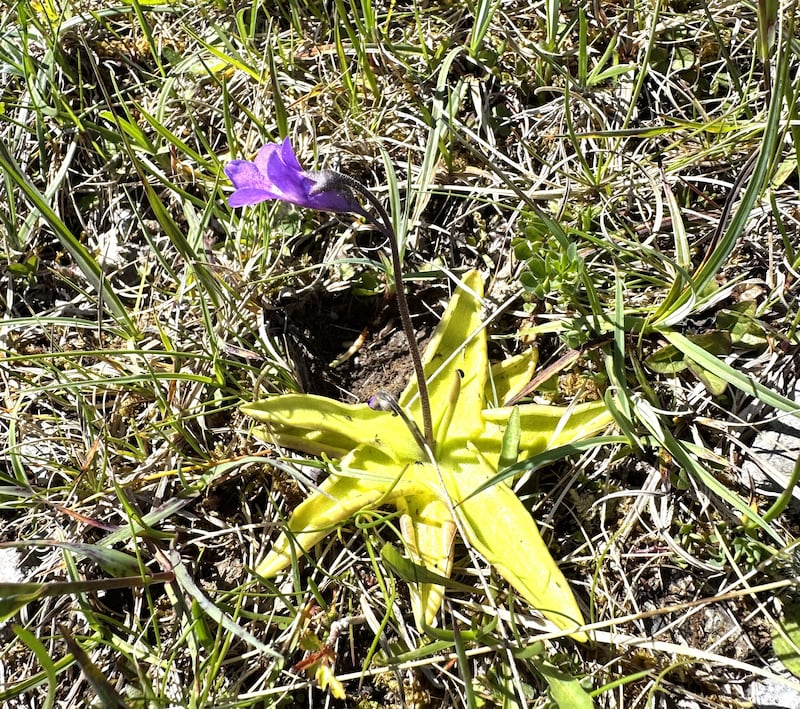
I saw this unusual flower with its star-shaped base while walking on Cappanawalla Mountain in the Burren in mid-June. Its strange base reminded me of something that I might normally expect to see on the seashore. It’s the first such example I came across, what’s it called? Frank Russell, Ballyvaughan, Co Clare
This is butterwort – Pinguicula. The strange base as you call it is a rosette of sticky leaves that act very effectively as a fly trap. Flies get stuck on the sticky glands in the leaves and cannot escape. The plant, which is carnivorous, then exudes enzymes and digests the hapless insect. The large-flowered butterwort – Pinguicula grandiflora – is exceedingly rare and is one of the Burren’s specialties. The common butterwort – Pinguicula vulgaris – has much smaller flowers (10-12mm as opposed to 20-30mm) but looks the same. You give no measurements.
RM Block


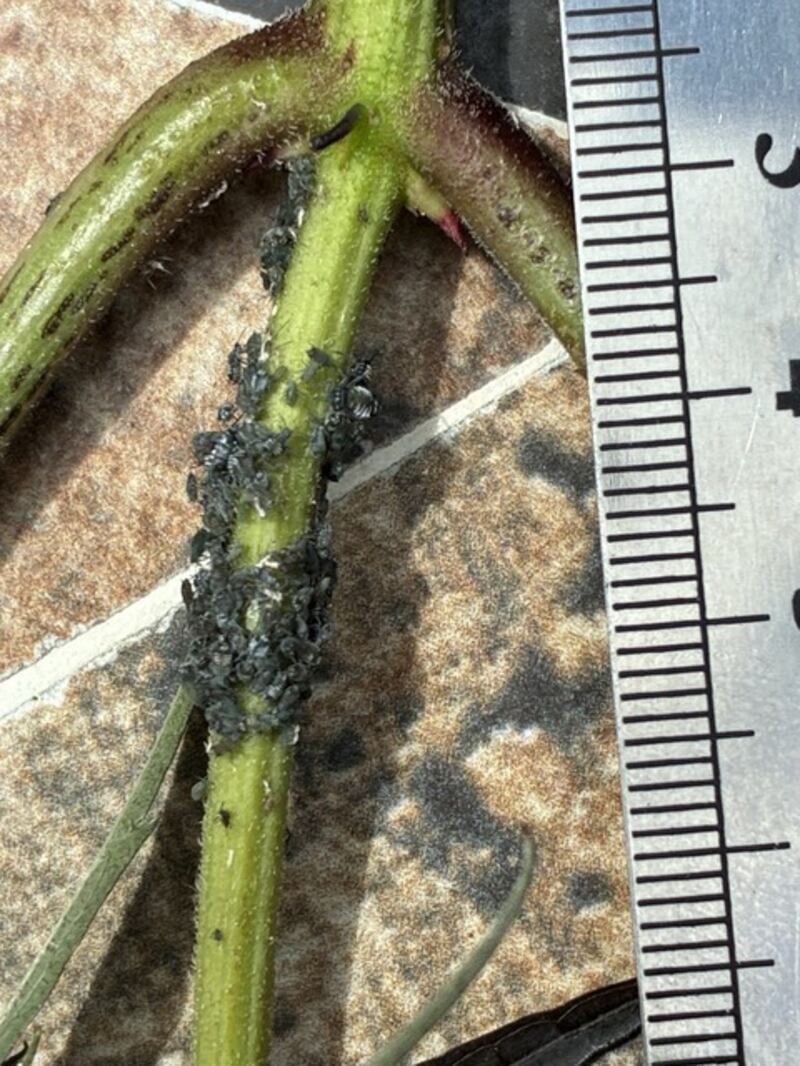
Would you be able to identify the tiny insects that have infested my elder (Sambucus nigra). They seem to be clustered at nearly every leaf/branch stem. I haven’t noticed them in past years. The elder doesn’t seem to show any adverse effects (yet). Tracy Johnson, Killiney, Co Dublin
These blackflies are the black bean aphid – Aphis fabae. They suck the plant juices from many growing plants at this time of year but they seem to be particularly fond of elder and can completely cover the soft green stems. They are a favourite food of ladybirds, hoverfly larvae and indeed tit species gathering food for hungry offspring. The vigorously growing elder doesn’t seem to show any adverse effects from the three-four week invasion.
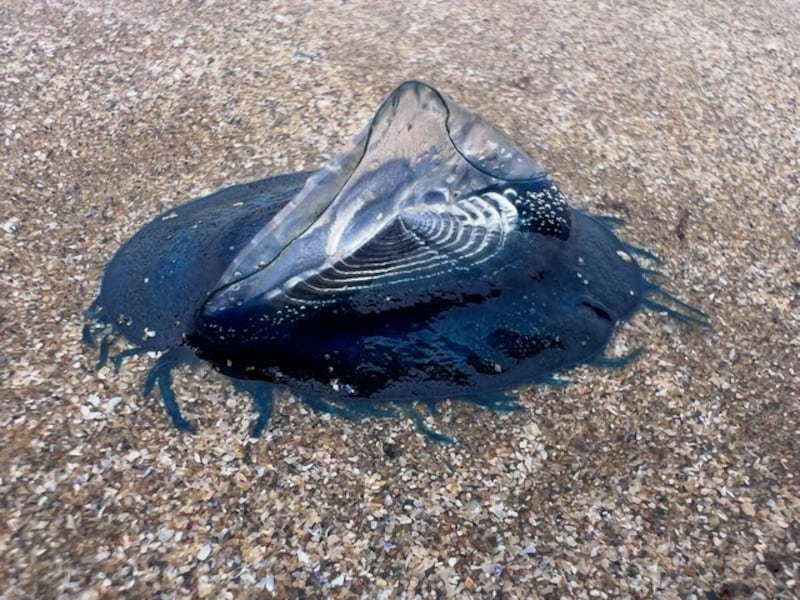
There were hundreds of these tiny creatures washed out on the beach in Tramore. Am I right in thinking they’re Portuguese man o’war babies? The picture might not reflect the proportions, the biggest ones were only about 3cm length. Are they dangerous? Gabi Zagnoj, Waterford
No, they are not Portuguese man o’war babies. They are full-sized, grown-up by-the-wind sailors – Velella velella. They are both in the same group – Siphonophora – which means that they are free-floating on the surface of the oceans and have a sail-like structure on top of their bodies, which catches the wind and allows them to travel the oceans. Like jellyfish, they have tentacles hanging from their bodies which sting any prey that encounter them. The Portuguese man o’war can inflict dangerous stings on swimmers, but the little by-the-wind sailors have tiny tentacles and do us no harm.
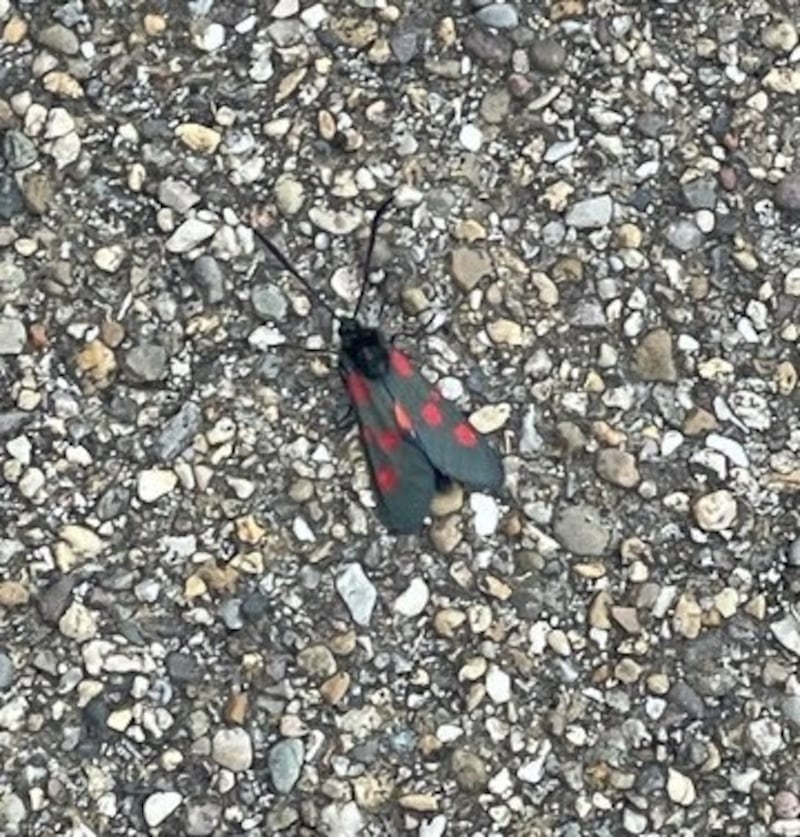
I saw this fly on Killiney beach in Dublin while walking with my daughter and we wondered what it was. Keelin and Penelope Tennyson
This is the day-flying six-spot burnet moth. The caterpillars feed on clovers and bird’s foot trefoil. Red and black are warning colours in insects and so birds avoid them, fearing that they may taste horrible. The similarly coloured, day-flying cinnabar moth is active now too. Birds keep well clear of both moths, which is why they can fly during the day.
Please submit your nature query or observation, ideally with a photo and location, using the form below, via irishtimes.com/eyeonnature or by email to weekend@irishtimes.com


