The new tax break for restaurants and cafes isn’t for the common people, Cabinet Ministers Simon Harris and Peter Burke made clear on Tuesday.
At one second past midnight on Wednesday, the VAT rate on all food services and catering businesses, as well as hairdressers, fell from 13.5 per cent to 9 per cent. But anyone hoping that the changes would lead to cheaper food in Irish restaurants, chippers, pizza parlours and cafes will be disappointed this weekend.
The tax cut, the culmination of an effective and long-running campaign spearheaded by the Restaurants Association of Ireland (RAI), makes no distinction between tiny restaurants in the west struggling to put food on the table and the giants of the global fast food world making big money slinging burgers or slicing pizzas.
That has caused some disquiet, not least because the tax cut will cost €232 million this year, rising to €681 million in its first full year, with its implementation a key reason why there was no money left in the last budget for tax breaks for PAYE workers.
RM Block


“My political objective is really straightforward,” Harris said on the eve of the cut. Smiling and holding a pizza, he said he wanted to “give small businesses in rural and regional Ireland a break, provide breathing space, reduce the cost base on a permanent basis, and this does that”.
Burke, meanwhile described the VAT cut as “a viability measure to shore up businesses that have been experiencing extraordinary costs” – and, in an attempt, perhaps, to throw consumers a bone, he added that by creating a more competitive sector there was the potential for a positive impact on pricing in future.
Taoiseach Micheál Martin said much the same on the way into this week’s Cabinet meeting, telling reporters that profit margins “have been very, very tight in that industry, so it’s a support to the domestic services industry, which I think is important”.
Important it might well be, but Martin seemed to be singing a slightly different tune in the run-up to last October’s budget, when he said any VAT cut should also benefit consumers. “We would like to see anything we do, if something was to happen, that it should be reflected in the pricing,” he said way back then.
So, what of that today? So far at any rate, there’s little sign of the cut being “reflected in the pricing” anywhere.
The Irish Times visited a range of restaurants – from cheap as chips fast food joints to the finest of fine dining restaurants – just after the budget and returned this week to see what effect the VAT cut had.
Last October, a McDonald’s Big Mac was priced at €6.50 while a McChicken Sandwich was €6.20, with a plain old hamburger costing €1.90. This week the humble burger was the same price while the Big Mac and the chicken sandwich were 10 cent more expensive.
In the post-budget haze a Supermac’s cheeseburger was €3 and is €3 today, while a Mighty Mac that had a price of €6.25 in October had the same price after the VAT cut came in.
At the opposite end of the dining scale is Chapter One, one of the finest restaurants in the world and a place where people definitely don’t go looking for cheap eats.
In early October, the four-course dinner menu was priced at €175 while, on Wednesday, the price listed on the website was €190. The matching wines which cost €85 eight months ago had edged up to €90, while the no-expense-spared tasting dinner menu had gone up from €215 to €235.
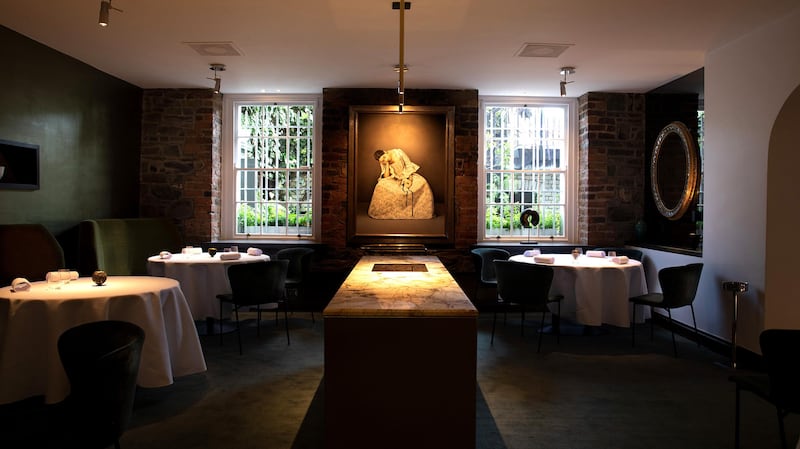
A two-course dinner in the popular but more modest Chez Max in the shadow of Dublin Castle was €39.40 on the day after the VAT cut was confirmed and €40.90 on the day after that VAT tax cut took effect.
Sole, the Drury Street fish restaurant, had managed to keep prices static with the scallop starter costing €18.50 before and after the VAT cut kicked in. The mussel starter stayed at €15, while the seafood tower was priced at €85 in early October and in early July.
The Bewley’s menu similarly showed little movement with staples such as the sticky bun staying at €5 and its cream tea for two costing €25 on both occasions.
In the days leading up to the VAT cut, a pepperoni passion pizza in Domino’s cost €23 – the same as it cost in the days after the cut took effect – while a plain cheese pizza was €16 before and after the VAT was reduced.
One restaurant did, however, cut its prices in line with the VAT cut. Dax on Pembroke Street cut the price of both its lunch and dinner menus with its two-course lunch menu falling from €53 to €50, and the three-course option going from €68 to €65. The restaurant’s four-course dinner that cost €98 fell to €94.
The tax cut was understandably welcomed by the hospitality sector, with the head of the RAI Adrian Cummins saying it would provide “stability” and “great confidence” to “those firms finding it difficult, thinking of throwing in the towel”.
“The difference between this time and 2011 [when VAT was also reduced] is that the Government has told us there’s no pressure on our industry to pass it on,” he told The Irish Times. “The Government has said it understands the pressures on our sector and they’ve made the 9 per cent permanent.”
He suggested that when the announcement was made last October, some restaurants “could see light at the end of the tunnel. There are businesses that could probably have closed down that didn’t because of that announcement last October.”
Not everyone was as happy. Barra Roantree, assistant professor of economics at Trinity College Dublin, said it was an expensive and economically illiterate giveaway to a sector which is growing. “What’s more,” he said, “it will disproportionately benefit owners of McDonald’s and Michelin-starred restaurants most.”
It is hard to argue that McDonald’s needs that benefit.
In 2024, McDonald’s Restaurants of Ireland, which operates no restaurants but generates revenue from just under 100 outlets around the country run by franchisees, saw its pretax profits reach €42.4 million, up 17 per cent on the previous year.
The pretax profits of Persian Restaurants, which runs 12 McDonald’s outlets including Ireland’s first one on Dublin’s Grafton Street, stood at €3.3 million, according to accounts filed in November. Another McDonald’s franchisee, Glenellen, with six McDonald’s outlets, recorded pretax profits of €1.62 million in 2024.
Business is booming, too, at Domino’s Pizza, which will also benefit from the tax break. The pizza chain has about 100 Irish stores and its most recent accounts for the UK and Ireland point to £91.2 million (€106.4 million) in underlying pretax profit.
[ Hospitality wins from VAT rate cut but no benefit for consumersOpens in new window ]
When contacted and asked if it would be passing on the VAT cut to Irish customers, a McDonald’s spokeswoman said the fast food chain had “a long-standing commitment to offering value and affordability to customers across Ireland”, and said “pricing [is] kept under regular review by all franchisees throughout the year”.
For its part, Domino’s – which, unlike McDonald’s runs a substantial number of its restaurants directly – said pricing decisions “are made independently by our franchise partners, who take into account a range of factors when setting prices for their local stores”.
“It is a completely untargeted measure,” Social Democrats finance spokesman Cian O’Callaghan said. “It’s very expensive and I think there’s better ways to support cafes and restaurants and smaller businesses including one-off grants for the installation of solar panels that would benefit the environment and permanently reduce their energy bills. That is a one-off spend that you get a permanent cost reduction from.”
Pointing to the pre-budget comments from the Taoiseach about the cut being reflected in prices, O’Callaghan says Martin is “not just a commentator here. This is going to cost almost €700 million next year and if he’s not clear on what we’re getting for that €700 million, that’s serious.”
Ged Nash of Labour described it as an “unjustifiable, very large transfer of wealth, effectively from PAYE workers to one sector”.
He said he supports “small independent coffee shops and restaurants finding the trading environment very difficult because of high energy costs, because of the high cost of doing business in Ireland more generally”.
However, he said it would have been better to introduce “a targeted scheme to address those energy costs and to reform, for example, commercial rates”.
There are, he pointed out, “a finite amount of resources in this country, despite what we’re being told, and governments need to be responsible with the public finances”.
He said one reason why PAYE workers “are finding it so difficult to absorb the additional costs that households are experiencing” is because the resources that were available for tax cuts “went to one sector” and the arguments from Peter Burke and others justifying the intervention are “extremely thin”.