Dairy farmer William Cassidy can remember the last time it rained on his farm in Laois near the border with Carlow.
It was June 12th, more than two months ago. Since then there has been an odd shower, including one on Sunday morning, but nothing to break the protracted drought.
The Met Éireann synoptic station at Oak Park in Co Carlow near him recorded just 1.5mm of rain in July and 2.6mm in August. Temperatures have been way above normal, further drying out the ground.
This has led to soil moisture deficits locally of 100mm. It would take a month and a half of rain just to restore soil levels on his land to normal.
RM Block


The evidence is all around his farm at Maganey, halfway between Athy and Carlow town, with field after field exhibiting a lifeless yellow colour where there should be green grass.
While he concedes it’s been a “good” summer for his four children, urban-dwellers and holidaymakers, it’s been a bad one for him.
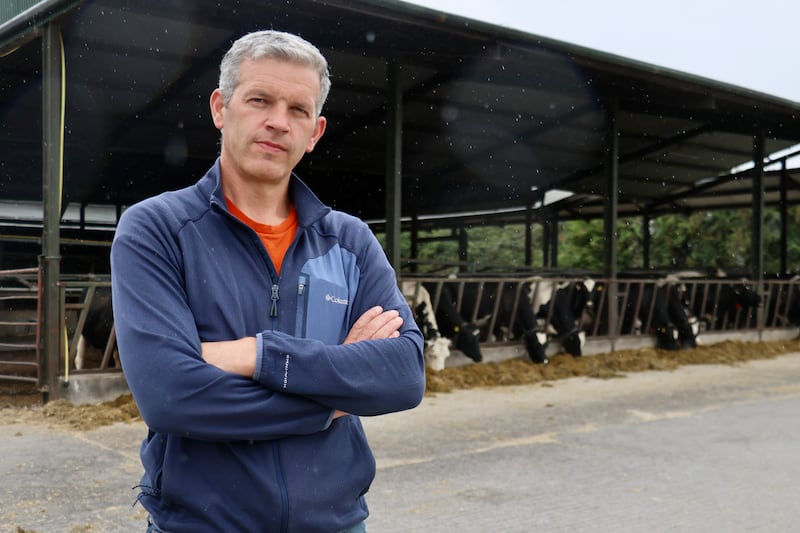
“Cows should be on 100 per cent grass. You should be milking the cows and sending them back out to the paddock,” he says.
Instead, he is feeding his herd of 125 cows with winter feed and supplements as there is hardly a blade of grass growing in any of his fields. “It’s costing us upwards on €3.80 per cow per day. Do the maths, that’s €3,500 a week.”
Cows that are not in calf would normally be kept until January for fattening up, but now they are being shipped straight away to the factory. “You can’t have any passengers around a herd like this at the present time.”
The fodder crisis, he says, is worse than in 2018 and “that was supposed to be a once in a 20 year event”. Then, after an extremely dry June and July, the weather broke in early August, but the summer is nearly over. “There’s not a drop of rain forecast,” he says.
Met Éireann’s soil moisture deficit maps show the extent of the problem, which is worst in the southeast and gradually eases as you move further westwards.
Cassidy says climate change has inverted weather patterns for farmers. As the east of Ireland is substantially drier than the west, it was frequently farmers from the east who provided emergency fodder for farmers in the west who were short because of wet summers. Now, the situation is being reversed. Farmers in the west of Ireland are in a much better position.
The Minister for Agriculture Martin Heydon is holding a summit of farm leaders on Tuesday to ascertain the full extent of the situation. Teagasc is carrying out a national fodder survey, which must be completed by next Friday. This, the minister states, will give a better picture of the overall situation.
[ Farm organisations and minister to meet as drought crisis deepensOpens in new window ]
Cassidy says one thing the Government should not do is reimpose the excise duty on green and white diesel as planned in September. “There will be war. It makes it utterly unviable to bring fodder from one place to another.”
On a neighbouring farm, James Brennan has a dairy herd and substantial tillage holdings. He managed to harvest his crops of winter and spring barley, winter oats and wheat and maize, but yields were way down between half and three-quarters of a ton per acre.
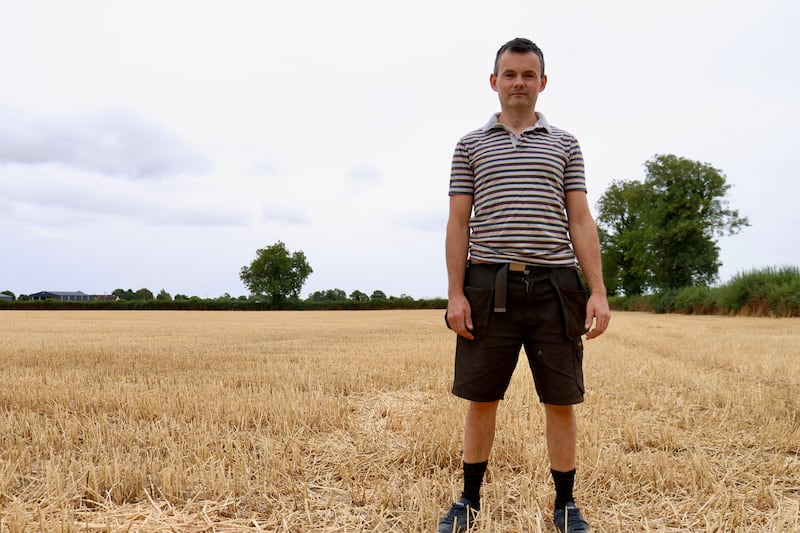
“We wouldn’t be expecting to harvest our spring wheat until mid-September, but we harvested it last Wednesday, which is unusual,” he says.
After a promising June, “the grains just died off in the heat”, and yields are between 60 per cent and 70 per cent of what would normally be expected. “The intense heat with the lack of rainfall just brought everything forward. Everything just ran out of moisture,” he says.
His last tillage crop in the ground is beet, which he plans to feed to his cattle. It was planted in early April. The leaves are drooping and starting to turn yellow. “That should be a dark green colour, but it is anything but at the moment,” he says. It has a chance if there is rain in the autumn.
Teagasc adviser Joe Patton says the present drought is comparable to 2018, “but there is less chance of a recovery now”, with time running out for grass growth.
Most farmers went into 2026 with good fodder stocks. “That was one of the lessons learned from 2018,” he says, “but those stocks are coming under a bit more pressure. The number of weeks we have for recovery is starting to tighten.”
The problem is worst east of an imaginary line from Drogheda to Mallow.
“Agriculture needs moisture. Yields of grain are considerably back, but, on a day-to-day basis, the livestock sector is most affected,” Patton says.
“Instead of conserving their extra grass growth as winter feed, they have had to graze that in the first instance and now break into that winter feed.”