Rosetta Cucchi’s first memories of Wexford Festival Opera are of the driver who picked her up at Dublin Airport back in 1995.
“I didn’t really understand one word of what he was saying, because the Irish accent was really strange for me. But I felt his welcome, his passion about having me in the car – a pianist repetiteur; nothing special. He was so happy. He talked all the time for the three-hour journey. About everything. I understood maybe 20 per cent.”
What Cucchi, who is now the festival’s artistic director, picked up was that it was “a welcoming place for artists”. Like so many before her, she had difficulty believing the directions she’d been given. High Street seemed just too narrow for a theatre. “Ah, wrong place,” she thought. “There’s no theatre here.”
Now, of course, the National Opera House, on the same site, does have the signage that the Theatre Royal lacked. When she eventually made it through the stage door she entered what she calls “a new world, a new reality” for musical performers. “Parties. People that get to know each other in these parties. People dancing together. And so I fell in love with it.”
RM Block


For the festival’s 75th anniversary she has, unusually, chosen to revisit three works from past repertoire. The first, which she is directing herself, is also the first opera she worked on in Wexford: Pietro Mascagni’s Iris (1898), with its exotic Japanese setting, which predates Puccini’s Madama Butterfly by six years.
Mascagni is best known for Cavalleria Rusticana, his 1890 hit. But Cucchi is fascinated by the stylistic shift away from realism in Iris.
“Mascagni had a wide range of ideas. Cavalleria is verismo. Beautiful music but also a way of shouting about the everyday. Iris is pure symbolism. At some moments it’s as if you can hear Ravel, Debussy. But in other passages you can hear Kurt Weill [who was only born in 1900].
“For a stage director it’s not easy to approach the libretto, because there’s no deep dramaturgy. There is a story, yes, but suspended in a kind of watery world where they talk about purity, about feelings, about ... nothing. But even if they talk about nothing, there is a rare depth underneath the music.”
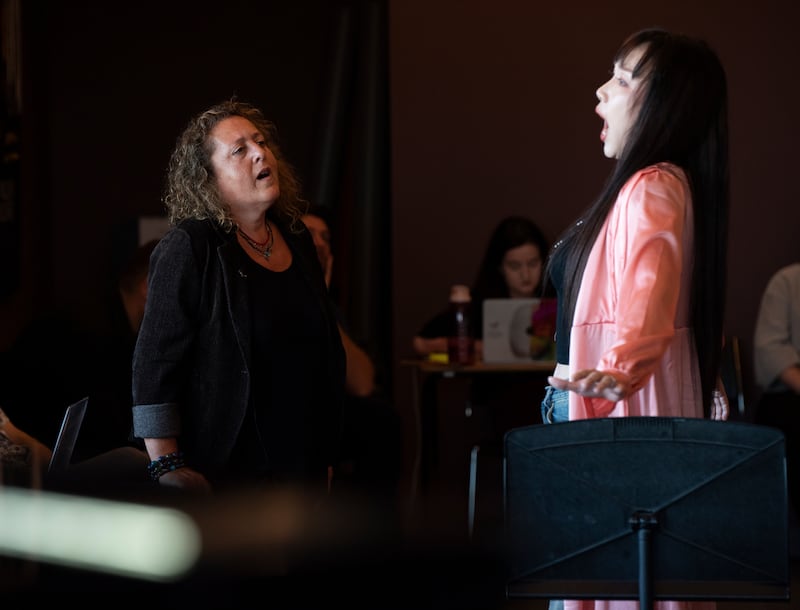
Back in 1995, Cucchi was moving from playing piano in orchestras to opera, and Iris was a turning point in her career.
“I fell in love with the music. My big goal was to play it properly. To accompany the singers, to be there for them. Now I realise that there is so much more in the piece.”
Prokofiev’s The Gambler, based on the 1866 story by Fyodor Dostoevsky, which premiered in 1929, was first staged at Wexford in 1973 – “in French”, she says, “probably because it was too difficult to do it in Russian”.
It marked a leap into a new area of 20th-century music for the festival.
“The Gambler is a difficult opera, and not an easy listen for the audience. It’s so deeply into the idea of addiction, and it’s a psychological drama.”
In the world of Russian opera, Cucchi says, it’s “easy to do Tchaikovsky. More difficult to do Prokofiev. When I was a solo pianist I worked on Prokofiev’s First Sonata. It’s not the most difficult, but for me it was a kind of mountain to climb. I got to the top, and I won one competition with it.”
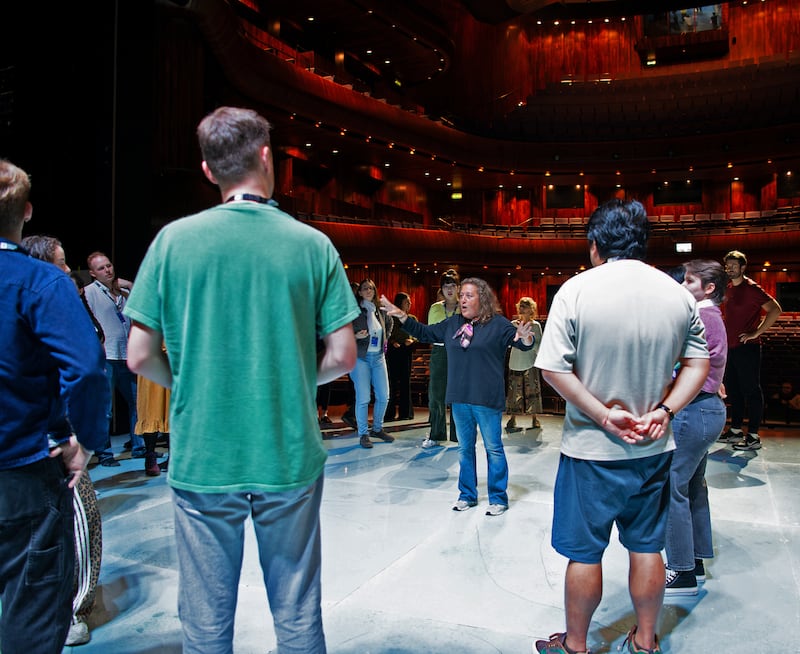
She’s also attracted by the “modern vocabulary”, the “tight dramaturgy” and the fact that the work reflects the years when her predecessors Elaine Padmore and Luigi Ferrari looked a lot to Russian, Polish and Czech music.
Rossini, this year’s third main composer, was born in Cucchi’s hometown, Pesaro. But she didn’t choose his L’Equivoco Stravagante (The Bizarre Misunderstanding) directly. It was put to public vote, in competition with works by Donizetti (which she expected to win) and Paisiello.
“The older generation of Wexford’s public has been so linked to Donizetti. But, surprisingly, they chose Rossini. I’m happy. Rossini is my bread and butter, and L’Equivoco Stravagante is still rarely done.”
The opera was banned from the stage three days after its premiere, in 1811.
“It’s an opera that’s about a woman who masquerades as a man pretending to be a castrato. The sexual misunderstandings were considered a little bit too bold. But the en travesti of Rossini is all over his work. He liked the humour of talking about those kinds of things. He liked to play with sex.”
The composer, she says, “is a genius of disguise”. She elaborates.
“The iconography of Rossini is a funny man, a fat man. But he was depressed for a long time. He arrived to romanticism before anyone else, in my opinion. If you look at his Semiramide [from 1823], or Ermione [from 1819], you can feel the early Verdi already.
“And he decided to stop writing opera very young. For another 37 years he didn’t do anything but little pieces like his Péchés de Vieillesse [Sins of Old Age], and then suddenly he composed the Petite Messe Solennelle. A masterpiece.”
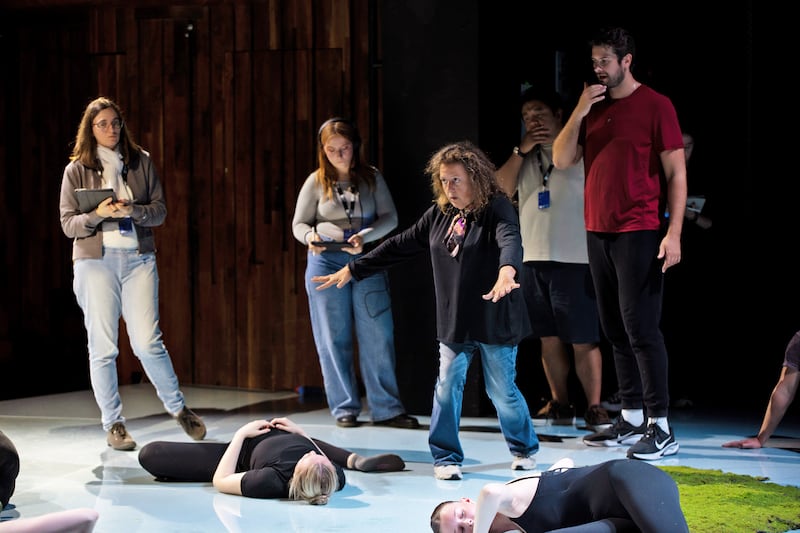
Reflecting on Rossini’s exit from opera, she says: “Sometimes when you’re forced to stop, you learn things. You sometimes learn: ‘This is awful. I must get back to where I was.’ Sometimes it’s okay. ‘I can stay like this. I don’t miss having all that pressure.’
“It’s good. This would apply to lots of artistic directors who get wedded to the idea that their event couldn’t possibly happen without them. Of course, all they have to do is disappear and it’ll be sorted.”
I ask for a personal highlight from each of the operas.
“For The Gambler the special moment is the casino scene. It’s a mess. A real mess. You have 21 small characters with one phrase each, all together in one room, where the obsession is beyond them, over them, casting a big shadow.
“All the addiction, all the rage comes out through little things. Like the croupier who keeps saying, in French, ‘Les jeux sont faits. Les jeux sont faits. Rien ne va plus. Les jeux sont faits.’ [‘The bets are placed. The bets are placed. No more bets. The bets are placed.’] After that climax the end is like an octopus that goes inside the black hole.”
[ ‘We can all see you’: Gillian Anderson addresses ‘distracting’ fans in front rowOpens in new window ]
The two comic characters in L’Equivoco Stravagante, Gamberotto and Buralicchio, “are always balancing stupidity and cleverness. For me Equivoco doesn’t have a proper climax. It’s all about understanding where we are and how to save yourself from being a dummy. In all of this Ernestina [the fake castrato] is the clever one. The core idea is the eternal fight between cleverness and stupidity.”
In Iris the climax is tragic. “It’s at the end of the second act,” Cucchi says, “where the naive and innocent Iris will be presented to the world. Up to that point you can believe in the possibility of hope. After that there’s no hope for humankind. The battle is a war between purity and fango – mud.” Literally, as it turns out.
Cucchi, whose early years as artistic director were blighted by social distancing and lockdowns, is optimistic about the future, even though she feels Wexford is “established as an international festival” but not quite “perceived as a national festival”. She would, of course, still like both to grow the number of international visitors from other continents and to take productions on tour abroad.
Her pride and joy is the Wexford Factory, which she initiated in 2020. It’s a professional-development academy with Irish and international partners, originally for young singers in the early stage of their careers but now facilitating pianists and stage managers, too.
As a director herself, she believes she has brought about “a tighter relationship with the stage” in Wexford. She is full of praise for the festival’s new executive director, Suzanne Nance, a trained singer with a starry career in public radio in her native United States. “She has a clear idea of where to go,” Cucchi says.
And both seem to grasp that “little things sometimes are more effective than the big gesture”.
Cucchi already has her (near) disaster story to keep the tradition of operatic misfortunes alive.
“In my time we had a tenor who was going to do a lunchtime recital. I was the pianist. And suddenly he looked at me and said: ‘Who am I?’ I replied: ‘What? Sorry? In 10 minutes we have to give the concert.’ ‘Yeah. But who are you?’
“We were so scared we brought him to the emergency department. I remember the doctor saying: ‘Who is the president of the America?’ ‘No idea.’ After 24 hours he was perfectly normal. So we did the concert a day later. We never found out what had happened.”
Wexford Festival Opera runs from Thursday, October 15th, to Saturday, October 31st. Michael Dervan has given presentations at the Wexford Factory. His next play, an Impossible Interview with Rossini (played by Peter McCamley), is at the festival on Wednesday, October 21st