

What’s a daydream for some people can become a career reality for others. If you’ve ever fantasised about quitting your unfulfilling job and beginning a new, totally different adventure, you might be on the verge of a career pivot.
This week, I spoke to three people who have taken unusual leaps of faith into different fields about what they learned and their advice for anyone who might be considering doing the same thing.
Comedian to climate activist
The career of stand-up comedian and actor Joe Rooney (62) took a hard turn during Covid when he was no longer able to perform in front of a live audience. Instead of facing the microphone and hot lights, he spent his time reading. That inspired him to obtain a bachelor’s degree in multimedia and then a master’s in documentary practice at Dublin City University (DCU).
After graduation, he never left. He was offered a job as a DCU research assistant on the Climate Talk project, funded by Research Ireland. Today, he helps transition-year students become climate champions through environmental multimedia storytelling.
RM Block


Why the pivot from comedian to climate advocate? “There was nothing surprising about comedy for me any more. I’d started for enjoyment and because it was rebellious, anti-establishment ‘alternative comedy’ but then suddenly I was making a living out of it and doing corporate gigs. It’s hard to earn a living and do something that makes a difference; I was always trying to find that balance.”
College was about “curiosity and wanting to learn new skills. I didn’t expect the job to come up but soon realised I like teaching, especially climate activism.” He works with academics in the communications and physical sciences as well as an education design specialist.
Bean counter to bead maker

Amy McCarthy, founder of Mama is a Dreamer jewellery, worked in finance and accountancy for more than 10 years, with some travel in between. Her career was progressing well but, with a long commute, two young kids and a husband who often worked abroad, it wasn’t an easy road.
When her mum became ill she took carer’s leave from work. After her mum passed away, McCarthy felt compelled to change her job pathway and life.
She had a feeling in her gut that creativity was missing from her life but didn’t have the words to verbalise it. After advice from a reiki practitioner, she decided to do something with her hands.
“I bought a set of beads from the internet, looked at a bangle I’d just bought from a department store and thought I could make something like that. I made jewellery in the evenings, put them on Instagram as Mama is a Dreamer and people kept asking for more.”
She found a good supplier and, for nine months, made bracelets, necklaces and earrings before she started thinking: can I make an income out of it? Could I be my own boss?
McCarthy found “starting your own business” courses through her local enterprise centre and rural development agencies and found incredible business support and customers in her local north Cork community. “Running a business is no joke but I’m three years in now and I love working for myself.”
Senator to genealogist
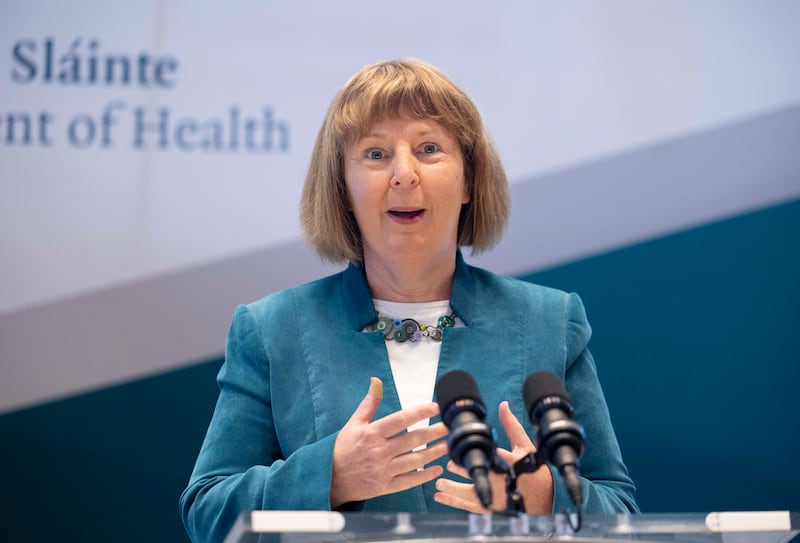
In 2016, Jillian van Turnhout’s term as an Independent senator was coming to an end and she wasn’t sure what to do next. So, she started not one but two businesses. The first was an obvious one, governance consultancy and boards but the second, unusually, was in genealogy.
“I see it like a scale: governance was quicker and busier initially but gradually things became more weighted towards the genealogy as I built my clients and credentials,” she says.
Genealogy was something van Turnhout did for family and friends but, after seeing her posting on social media about it, Damien Mulley of Mulley Communications offered her a new pathway. Years before he’d purchased the domain name genealogy.ie and he offered it to her.
“He gifted it to me for free on the condition that if I made, or sold it for millions, I had to buy him a Land Rover.”
If she was looking for a sign, she’d found it. Why genealogy? “I love uncovering stories and finding out more. It’s the detective side of me. I really enjoy the search, the research and writing it up is a great discipline too.”
What’s their advice?
Money, money, money
One of the biggest things that holds people back from the career leap is a lack of savings or a financial runway. It’s nice to dream but you need a realistic safety net too.
Figure out how many months you can live on your savings without any additional income. Chances are, even when you’re making money, it won’t get back to the same level for at least a couple of years – if at all.
Playful experimentation
Pivots that work are rarely clean breaks where you go from one career directly into another within a few days or months. Rooney says you should keep working, but try little experiments before you leap.
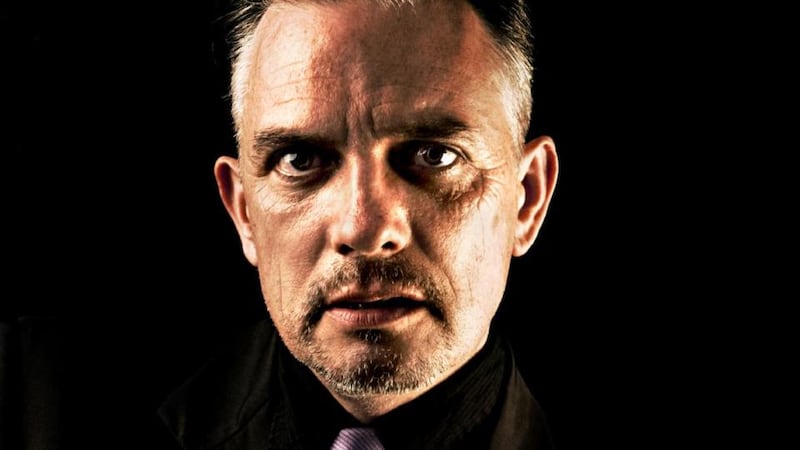
“College was a steep learning curve at the start and I was still working too. I’d be over in the UK doing comedy gigs and then sitting in an Airbnb in Preston finishing an assignment by watching an old black and white film I’d never seen. But what else would I have been doing? Scrolling on my phone probably.”
Small inexpensive experiments – a course, a credential, a market stall – help test the reality of your new life against the fantasy, all for very little money and without burning bridges.
Strong foundations
People rarely start again from zero in a new career. Think about what three transferable skills you’re bringing with you? What problems are you solving for new clients using those skills?
Self-discipline on time management and pricing are always a challenge, says van Turnhout so get support early on.
“I have two accountability anchors: my husband and a good friend. Three times a year we look at the figures. How are things going? I need to make an honest assessment: am I covering expenses and paying myself? Or the good bit: do I deserve a bonus?
Rebuild expertise
When you go from one career type to another, you’ll leave most of your contacts behind. Rebuilding your professional network from scratch will need to be a priority.
Like Rooney, you may need to face down some fears too. “I was very nervous about going into college – people in their 20s will know more than me about coding and editing and software packages – and [I was going] back to what scared the living daylights out of me. Reading at home, I didn’t challenge myself. At university, it’s different.
“Life is so much richer as a result. Teaching young people is great, plus it’s good to see how neurodiverse people are more catered to now than when I was in school.”
A career leap of faith is frightening and probably sounds dramatic when you say it out loud to friends and family. But, as Rooney says: “At any age, I’d advise people to make a career change. Learning is a great thing to do. I feel so much more alive now.”
Margaret E Ward is chief executive of Clear Eye, a leadership consultancy. margaret@cleareye.ie


