

HSE healthcare assistant Dermott Foy had wanted to see substantial movement on fuel prices in the budget to help him with the cost of running his car, but he said he has come away disappointed.
The first thing he mentioned when asked what he thought of the package was the changes to income tax, from which he will only benefit to the tune of a couple of hundred euro a year.
“I’m one of these hard workers that gets up and every morning goes out to work, but I’m still under the €44,000 bracket and so, to be truthful about it, the uplift in my payslip is going to be very poor,” he said.
“When you break it down to a weekly figure, it’s not going to go anywhere close to the increase in the price of petrol we’ve seen over the last six months, which is costing me more than €50 a week on top of what it used to, so it’s no help really to me as a worker going out to do my job.”
RM Block


He said he was “really shocked about it” because of the “spin” that was put out about it beforehand. “There was all that talk about the working person and the middle earner and this budget being about them because last year’s was absolutely shocking,” he said.
“But I’m someone who has worked my way up from being a lower earner for a long time ... I left school with a very poor education and so I drove buses and trucks for a long time.
“No disrespect to the people doing it now because it’s tough work and long hours, and, as I got older, that was one of the reasons I looked at a way to get out.”
Foy reskilled and became a healthcare worker because there was “so much talk” about how many were needed.
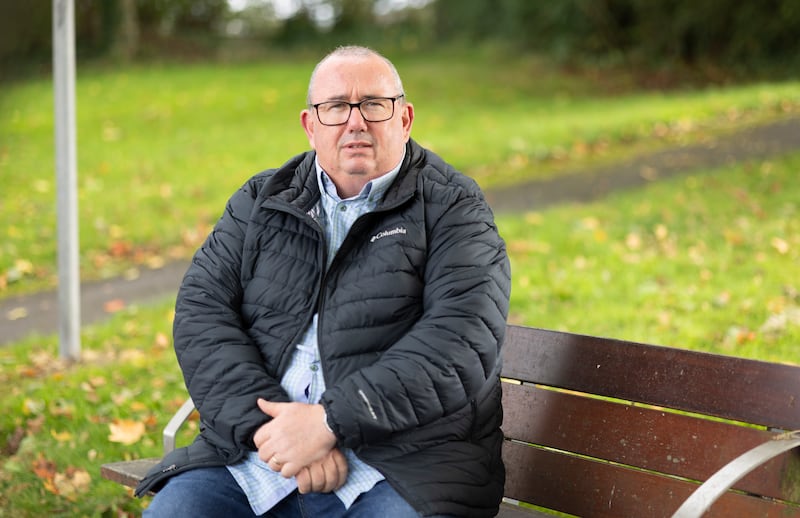
“I was lucky enough to get a job with the HSE, in the public sector, that came with what people would describe as a middle income,” he said. “But it certainly doesn’t feel as though this budget was about me.
“The cuts to the carbon tax, they’re not going to make a big difference to the people I’m dealing with – pensioners who are sick or vulnerable on low incomes who can’t pay their heating bills.
“They’ve kicked the can down the road, but there just seems to be a lack of imagination down there. They’re completely disconnected from working people.
“But the supports for new cars have been extended ... There isn’t the infrastructure in Donegal. An electric car just wouldn’t cut it up here.”
‘The curate’s egg’ – the professional

“What’s the famous phrase – ‘the curate’s egg’? It’s good in spots,” says Damien Owens, laughing after hearing what was in the budget on Tuesday afternoon.
Nearing retirement after more than 40 years working as an engineer, Owens, who lives in Clontarf, Dublin, says there was little in Budget 2027 for him.
The 64-year-old, who has been director general of the representative body Engineers Ireland for the last four years, did not sound surprised.
Regardless, he was primarily concerned about what the budget would do for young professionals like his daughter.
Aged in her late 20s, she moved home in recent years to save a house deposit.
Housing measures in the budget aimed at young workers like her appear to have left much to be desired.
The maximum relief available under the Help to Buy scheme has been increased by €5,000, though Owens believes it will not help, arguing there is “nothing to buy”.
“A lot of the new developments are rent-only,” he says.
The decision not to increase the value of eligible properties from €500,000 “won’t move the dial much”, particularly in Dublin.
[ Budget 2027: Big business pays the bills as Coalition rolls the diceOpens in new window ]
Elsewhere, while tax bands have “only widened a bit”, he says the income tax package will help if it coincides with pay rises to offset inflation next year.
Regardless, the changes “send a positive message”, Owens says, though he believes it was a missed opportunity not to set out plans to gradually increase tax bands over the coming years.
This would have given greater certainty to young professionals, he says.
He welcomed measures around cutting childcare costs, alongside details of capital spending, which he says will give professionals confidence to “stay put”, arguing that many are being pulled abroad.
“Those sorts of things really lift the spirits of an economy,” he says, adding that such “tangible symbols” like MetroLink, the long-awaited rail line connection the city centre and north Dublin, give confidence to young professionals that they have a future in Ireland.
Nothing jumps out for him personally from Tuesday’s budget, aside from the increase to the amount of electricity he will be able to sell back to the grid without paying tax.
That rate will rise from €400 to €600. Owens installed solar panels last year, saying they have made an “enormous difference” to his bills.
Having previously paid about €200 every two months, he has been receiving money after selling excess electricity back to the grid over the summer months.
Aside from that, he mentions the inheritance tax, saying it “didn’t move much”.
“Not that I’m planning on leaving.”
No ‘meaningful action’ on student accommodation

Budget 2027 lacks any “meaningful” action to resolve the student accommodation crisis and fails to protect students from public transport fare increases.
This is the view of student Daniel Walsh, who is president of Aontas na Mac Léinn in Éirinn (AMLÉ), the student advocacy group.
“This year’s budget does very little to support the thousands of students around the country who are getting up at 5am every morning to begin their hours-long commute to college, a journey that they’re forced to make as a result of the student accommodation crisis,” Walsh said.
The student union had campaigned to protect students from the scheduled 15 per cent fare increase across bus and rail services from January.
This was not included in Tuesday’s budget, meaning “students who are already being forced to commute long distances due to the shortage of student accommodation on our campuses are effectively going to be doubly penalised by fare hikes”, Walsh said.
Walsh did welcome the reduction of the student contribution fee by €150, bringing the maximum fee per third level student down to €2,350.
“This move signals a positive commitment to promises that there would be a continual reduction to the fee over the lifetime of this Government,” he said.
He said he was “quite disappointed” to see such a small reduction in the student contribution charge at a time when the cost to college has risen by €500 this year, Walsh said.
The budget failed to provide funding to support purpose-built student accommodation “on the kind of scale which could meaningfully reduce the cost of student accommodation for families up and down the country”, Walsh said.
While there has been an increase in the tax relief available to homeowners who let out a room in their house under the rent-a-room scheme, which has risen from €14,000 to €16,000 a year, there continues to be a lack of protections for students who may avail of this type of accommodation, he said.
“We’re yet to see any progress on the expansion of renters’ protection to students living in that dig-style accommodation – it’s really the wild west,” he said.
“There’s no protection available to students at all. They can be turfed out overnight, and the only recourse available to them then is effectively just small claims court.”


