A permanent disability support grant is to be introduced in next month’s budget as a “first step” in acknowledging the additional costs people with disabilities face.
The payment will “not meet the cost of disability”, a Department of Social Protection source said, but it will represent a “small improvement” on the €500 and €400 ‘once-off’ cost-of-disability payments provided in recent budgets.
The hope is that there is scope to increase the payment in coming years, with the department source saying the priority was to establish the payment and “build on it from here”.
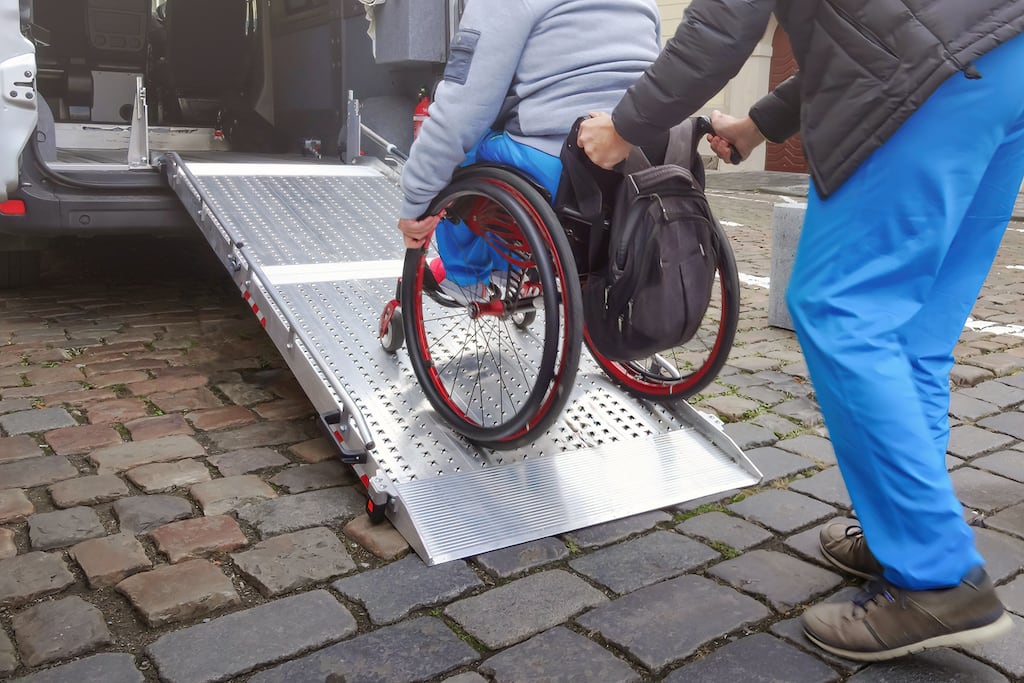
Government data put the additional costs faced by disabled people at between €10,766 and €15,500 per year, with additional expenses including extra energy costs, mobility equipment, home adaptations and modified modes of transport.
RM Block


A commitment to the providing of a cost-of-disability support payment is included in the Coalition’s programme for government. Taoiseach Micheál Martin earlier this year told the Dáil that introducing one was a “complex” initiative that would be better done in a “structured, targeted way”. He noted there were up to one million people who identified with a disability at the time of the 2022 census, some 22 per cent of the population.
Campaign groups have called for a weekly payment of about €55 to provided in addition to the standard disability, invalidity and blind-pension payments. The payment expected to be announced in Budget 2027 will not be weekly, the source said, and is likely to be paid in one, or a number, of lump sums over the year.
It remains unclear whether it will be paid to disabled people over 18 and in receipt of disability payments only, or whether it will also go to adult carers of disabled children, or disabled people who do not meet the means tests for weekly disability payments.
Though disabled people’s organisations (DPOs) have contributed to discussions about the introduction of the payment, the department’s plan, once established, is to further involve them in how much it should be, how it should be structured and whether it should be extended to more recipients.
At this stage, sources said, the payment will be set at a universal level but this may be refined in future to ensure those with higher costs associated with their disability can access larger payments.
“There will be an ongoing conversation with DPOs about what works best,” said a source. “[The payment] will evolve and we are committed to working with disabled people on that.”
Other Budget 2027 priorities for the department, the source said, are tackling child poverty, fuel poverty and poverty among single, older people.
A second tier of child benefit will not be announced by Minister for Social Protection Dara Calleary next month, sources said, though work is said to be “well under way” on a targeted additional payment that could be ready for Budget 2028.
An increase in the child support payment, which goes to children in families dependent on welfare, is expected, as is an increase in the income disregard for the one-parent-family payment. This would allow single parents to earn more while retaining their full payment.
There is particular concern at recent data from the Economic and Social Research Institute showing poverty has increased more sharply in households with very young children than those with older children. Child-support payment to under-fives may increase more as a result.
Poverty among children in lone-parent families stands at about 12 per cent, more than twice that in two-parent families.
An increase in the fuel allowance, payable to more than 400,000 households, is “almost certain” to be included in the budget, the source said.