
Hungary’s prime minister Viktor Orban was heading for a crushing defeat in parliamentary elections on Sunday night after official projections based on interim results put the opposition Tisza party on course for a clear majority in parliament.
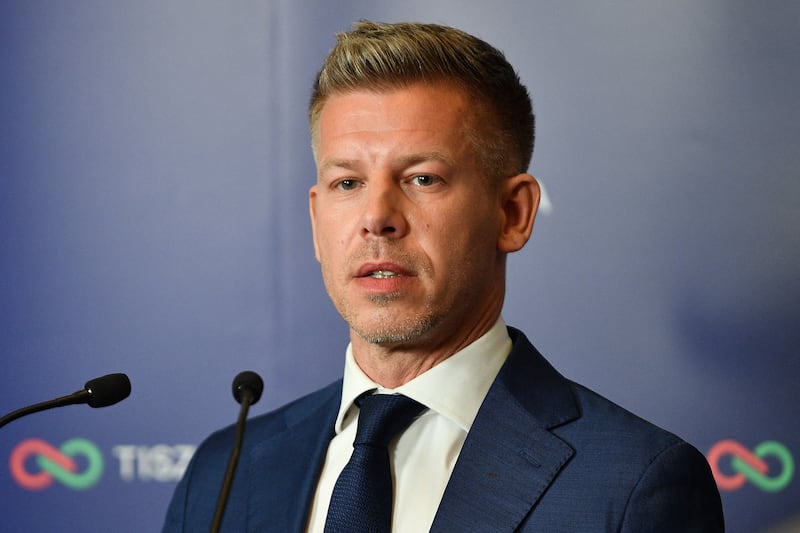
With more than 70 per cent of the votes counted, the Tisza (Respect and Freedom) party led by Peter Magyar was projected to win 138 out of 199 seats in parliament, a two-thirds majority that would enable it to change the constitution. Orban’s Fidesz party was projected to win just 54 seats, down from 133 in 2022.
In a concession speech to party supporters, Orban, who is the European Union’s longest-serving premier, said “whatever happens we will serve our country and the Hungarian nation from opposition as well”.
“We no longer bear the burden of government, now we need to strengthen our communities,” he added.
RM Block


“Prime minister Viktor Orban has just called me to congratulate us on our victory,” Magyar wrote on Facebook.
Victory for Magyar, who has promised to repair relations with the EU, including by unblocking a €90 billion EU loan for Ukraine, will be celebrated in EU capitals where anger has intensified in recent months over Orban’s obstructionism.
European Commission president Ursula von der Leyen said: “Hungary has chosen Europe. A country reclaims its European path. The union grows stronger.”
German chancellor Friedrich Merz, who had been enraged by Orban’s decision last month to block the Ukraine loan, offered Magyar his “heartfelt congratulations”.
Writing on X, Merz said: “I am looking forward to working with you. Let’s join forces for a strong, secure and, above all, united Europe.”
Orban had become a standard bearer for national conservatism and for what he called “illiberal democracy” and his defeat will reverberate widely. The defeat is a setback for US president Donald Trump and for Russian president Vladimir Putin, who both counted the Hungarian premier as their closest ally in Europe.
The Trump administration multiplied its messages of support for Orban in recent weeks, dispatching vice-president JD Vance to Budapest last week.
[ Did JD Vance’s visit to Hungary help or hinder Viktor Orban?Opens in new window ]
If Tisza secures a two-thirds parliamentary majority it would enable Magyar more easily to unpick the system of so-called state capture put in place by Orban over 16 years in power.
Multiple state bodies as well as educational institutions and cultural establishments have been placed under the control of Fidesz appointees during Orban’s four terms in office. – Copyright The Financial Times Limited 2026


