
“Hit me, sir, hit me!” yells Bharat, a young protester, as about a dozen riot police surround him and beat his head and body with truncheons.
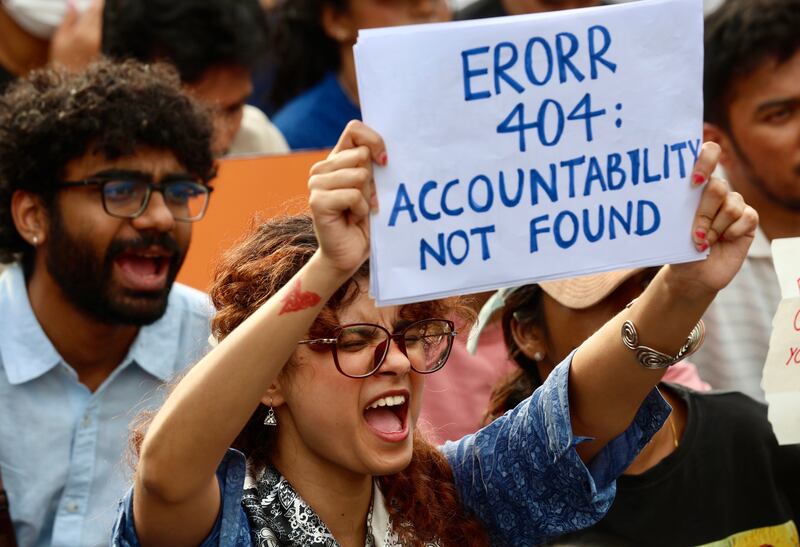
His defiance in the face of overwhelming force, filmed during Monday’s big student protests in Delhi, has gone viral in India. Dozens of other reels on social media showed protesters, some as young as 16, sobbing as they are beaten and tear-gassed by police.
Commentators said the unexpected size of the protest, with tens of thousands on the streets and the backlash generated by the police crackdown, posed a growing political risk to prime minister Narendra Modi and his Hindu nationalist Bharatiya Janata Party (BJP).
A hitherto popular leader fresh from a string of election victories, Modi is now faced with an unexpectedly strong youth protest movement that has emerged from his middle-class voter base. This raises the question of whether India will see a repeat of the Gen Z protests that challenged governments in neighbouring Bangladesh and Nepal.
RM Block


Pramit Pal Chaudhuri, head of the India practice at the Eurasia political risk consultancy, says the demonstration “has put the BJP on warning, the Modi government on warning”. While the government was unlikely to suffer big defeats at the polls any time soon, “the sweeping [election] victories that they used to get before, that will become increasingly more difficult”.
The protests, led by the upstart “Cockroach” movement, began after the leak in May of exam papers for a national entrance exam to medical college, which forced the exam to be cancelled.
They continued at a low level for weeks but escalated at the weekend when Sonam Wangchuk, a popular activist on hunger strike in support of the students, was forcibly removed by police from the main protest site and taken to hospital. Tension rose further on Tuesday, when national opposition parties weighed in to support Monday’s protests.

In a move with few precedents in Indian politics, police detained on Tuesday night the country’s main opposition leader Rahul Gandhi and his sister Priyanka as they staged a sit-in outside Modi’s official residence in New Delhi in support of the students. The Gandhis were released three hours later but images of Gandhi being held aloft by police officers as they carried him away to a waiting bus swept social media.
Government supporters and BJP officials have played down this week’s events, saying that Modi had already dealt with the protesters’ grievances over the education system.
“The government has taken the action to solve the immediate problem [of exam paper leaks] and it is committed to taking further actions to ensure that the system is overhauled so that it doesn’t repeat itself,” said Baijayant Panda, a senior MP and vice-president of the BJP.
“There’s also a widespread feeling among the treasury benches that as some cynics had expected, the original protest has been hijacked by a bunch of the usual suspects who have tried in the past to derail [other legislation].”
Coverage of Monday’s protests in India’s mainstream media, mostly controlled by government-friendly business tycoons, has focused on injuries to police and violence allegedly committed by protesters rather than on the demonstration itself.

Modi prides himself on his popular touch and his ability to read national sentiment, but the 75-year-old premier has been absent from India on numerous foreign trips in recent months and ignored the massed protesters outside when he addressed the opening of parliament on Monday.
“Their approach has always been to tough it out and not approach dissenting voices and engage in dialogue with them,” says Yamini Aiyar, the former head of the CPR think-tank in New Delhi. “As the pressure rises, they then increasingly start using the coercive powers of the state.”
Shekhar Gupta, editor-in-chief of ThePrint, an independent online publication, says the protests are “particularly troublesome” for Modi “because this comes from what is essentially his base, which is the urban middle-class, mostly Hindu aspirational population”.
“They are the BJP’s default voters and they feel let down.”
Adding to the sense of public anger are other recent episodes which have tarnished the government’s reputation as efficient administrators. A scandal over the embezzlement of donations to a newly built temple in Ayodhya, a Modi flagship project, has angered the Hindu faithful.
Car owners have complained of engine damage and higher fuel consumption after the government mandated a sudden doubling of the content of domestically produced ethanol in India’s petrol, a move to reduce the country’s dependence on imported oil.
Narendra Taneja, a former national BJP spokesperson, says there is “understandable frustration” among some segments of the urban and semiurban population over the lack of places at top medical colleges.
“It’s a kind of alarm [for the government] to be more alert and set up more colleges,” he says. “But it is not a significant challenge to the government. In a vibrant democracy, these things are common, protests are common.”
Opposition politicians challenged that interpretation. Mahua Moitra, an MP from the left-wing Trinamool Congress party, says the government has “totally underestimated” what she described as “a very spontaneous sort of movement. It really is everybody’s children.”
She highlights the potency of the exam issue for public opinion.
“In India, your caste and your birth define you and your poverty defines you,” she says. “The only way you can break out of your cycle of caste and poverty is through a competitive examination, where you can get into the [police service or the public engineering service], somewhere where people will salute you, irrespective of whether you’re lower caste or a Muslim.”
“And then if there’s an exam paper leak ... 80 million kids have been over the past 10 years systematically denied the right to break out of the cycle of birth and poverty.”
Chaudhuri says public examinations are not in themselves a big enough issue for Indian society as a whole to get excited about. “But if it were to spread,” he says, it could “become a lightning rod for everybody else who has grievances against the government.”
“The underlying problem is youth unemployment, or youth frustration,” he added. “We have a huge labour bulge, 370 million youths in India and unemployment rates among them are high enough to represent a very large pool of discontented people.” – Copyright The Financial Times Limited 2026


