
MetroLink boss Seán Sweeney is resigning from the project to develop Dublin’s long-awaited underground rail line less than two years after being appointed to the €550,000-a-year role.
The 67-year-old from New Zealand said he was stepping down as programme director for MetroLink with “deep regret” but said he had taken the decision for family reasons.
His resignation comes as updated cost estimates for the rail project, which is due to begin construction next year, are shortly to be presented to Government for approval.
Previous costings, prepared in advance of the start of the planning process for the 19km rail line, estimated a price tag of €9.5 billion as the midpoint of a “credible” cost range of €7.16 billion to €12.25 billion.
RM Block


However, it is expected the cost of the line, running from Swords, in north Dublin, to Charlemont, in south Dublin, serving the city centre and the airport, will have increased since and could be up to 25 per cent higher.
In a statement on Thursday, Sweeney said leading the MetroLink programme had been “one of the greatest professional privileges of my career”.
“However, after several years away from home, the sacrifice of being separated from my partner children and grandchildren, who are over 10,000 miles away, has become unsustainable. It is with deep regret that I leave MetroLink. However, I know it is the right thing to do for everyone.”
MetroLink will have “many parents”, he said.
Explainer
What is the MetroLink?
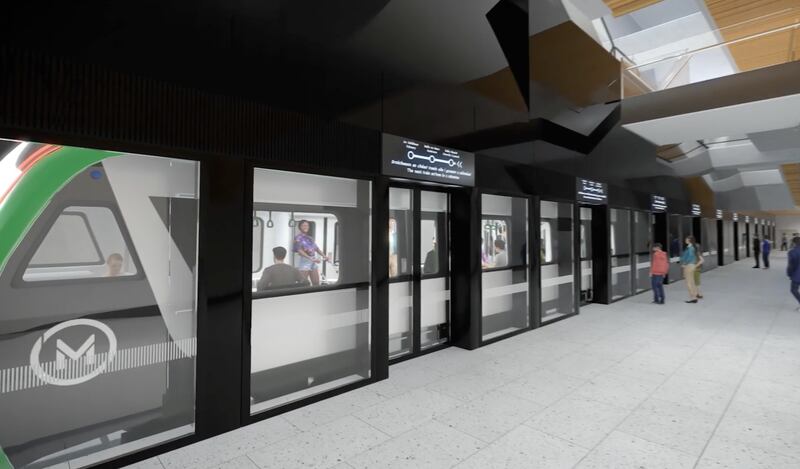
“I always believed my role was to get the programme up and running. I am proud to leave the programme with a highly committed and experienced executive team, full Government support as well an operational Railway Order and MetroLink fully funded into construction. MetroLink is no longer a ‘proposed’ plan; it is a live delivery project.”
Enabling works are expected to start on the ground this year, with contracts for construction of the line also to be issued before the end of the year in advance of the start of full construction next year, with completion in the mid-2030s. Sweeney said he believed the “market appetite is huge, the political support is firm” for the project.
He said: “The team I leave behind is the best I have ever worked with. I want to thank Minister [for Transport Darragh] O’Brien, the TII board and the people of Dublin for their trust. I look forward to seeing the first tunnel boring machines start their work, knowing the foundation is rock solid.”
Transport Infrastructure Ireland (TII) chief executive Lorcan O’Connor said it was with a “mix of gratitude and regret” that he was confirming Sweeney would leave the project this summer.
“While we are sad to see him leave we wish him well with the next chapter of his life. We will begin an open competition for his successor immediately. In the interim, Michael Flynn, deputy programme director, will step up to ensure MetroLink continues to progress towards delivery.”
Permission for MetroLink was granted last September but the project, set to be the largest infrastructure project in the State, was thrown into jeopardy last November after a group of Ranelagh residents took a legal challenge to its development.
The challenge was withdrawn after TII agreed to purchase the residents’ homes on Dartmouth Square in a deal understood to be worth more than €30 million. Sweeney was understood to be instrumental in securing the deal.


