

After Limerick played Tipperary in the 2024 league Liam Cahill came in to the press conference, deflated by a beating more bruising than the numbers pretended. In these settings over the years Cahill has invariably been lucid and plausible and frank. No short answers, no fatuous attempts to distort the plain reality, no special pleading.
In the middle of the match Limerick had engineered a nine-point swing without the trampoline effect of a goal and Tipp were increasingly stressed by the simple act of hanging on. The one-point margin of Limerick’s victory was a white lie, common in the league.
“I’m not going to sugarcoat it,” Cahill said afterwards. “Limerick didn’t do anything that Limerick don’t do every day they go out. They didn’t come with anything extra special. I can’t say we didn’t know what was coming but we just weren’t able to counteract it again, call a spade a spade. We have to go away and find the answers.”
At the root of Cahill’s response to that match was repetitive strain. During John Kiely’s 10 seasons as Limerick manager, nobody has sat that examination more often than Cahill. Only the honours paper was available.
RM Block


Over a six-year period as manager of Waterford and now Tipp, Cahill has faced Limerick 12 times in league and championship. In that time his record is one win, two draws and nine defeats. The only win came in the boiled-down league of 2021, when Cahill was manager of Waterford and Limerick had a man sent off before half-time.
When Limerick were in their pomp, their dominance was characterised by transparency. Patterns were not hidden. They targeted the third quarter, for example. So when they beat Tipp in the 2024 league, it was the third time in a row that Tipp’s half-time lead against Limerick had been wiped out in the third quarter. It was like one of those cartoon punches where the assailant swings his arm like a windmill. Everyone knew what was coming. What could they do about it?
“We spoke about starting the second half well,” said Cahill after the league semi-final in 2023, “but Limerick found their flow there for a 10 or 15-minute period. Typical Limerick, they just put you to the sword.”
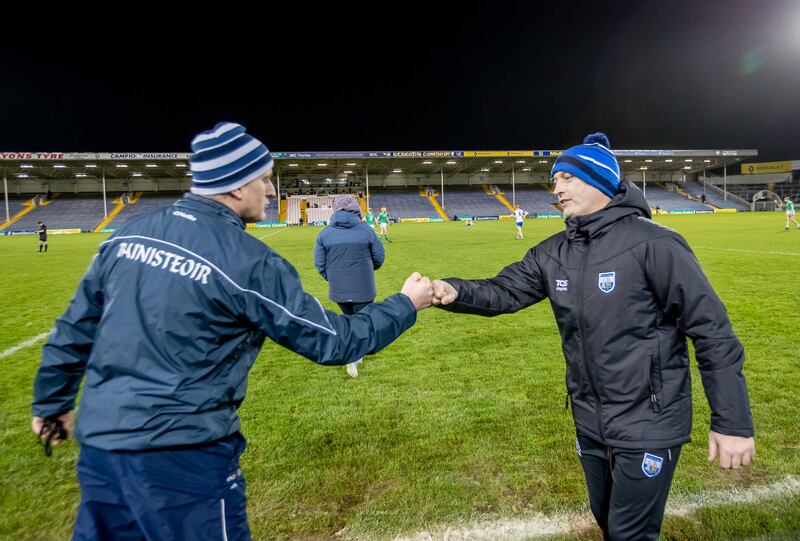
The fascinating part is how these experiences have shaped Cahill’s thinking. In the beginning he was very clear about what was required against the fire-breathing dragon. His team would need to stand up and fight.
During his hugely successful period with Tipp age grade teams Cahill said he had no mind to send “soft” young players through the system. In training, the players understood that their limits would be under constant attack. When Cahill and Mikey Bevans – his long-time coach and friend – took over in Waterford in the autumn of 2019 their first principle travelled with them.
The former Waterford captain Stephen Molumphy was part of their management team in 2020, and he described their attitude in plain terms. “If you’re hurt, get up. Don’t mind the referee, just get up.”
Boxing was introduced to Waterford training sessions by Martin Bennett, an army man. Pads and gloves would be brought on to the field, and every player would do a couple of one-minute rounds, unloading their aggression on the pads.
“You’d want to be in the whole of your health to get through the training sessions,” said Bennett. “Everything about them [Cahill and Bevans] was aggressive. The way they spoke, the way they got the team to play. It was just in your face. You’d feel invigorated.”
The difference against Limerick, though, was scale. The best team in hurling was also the most powerful, the most aggressive and the most athletic. Twice in the space of a month in the delayed 2020 championship, Waterford were turned away by Limerick – the second time more emphatically than the first.
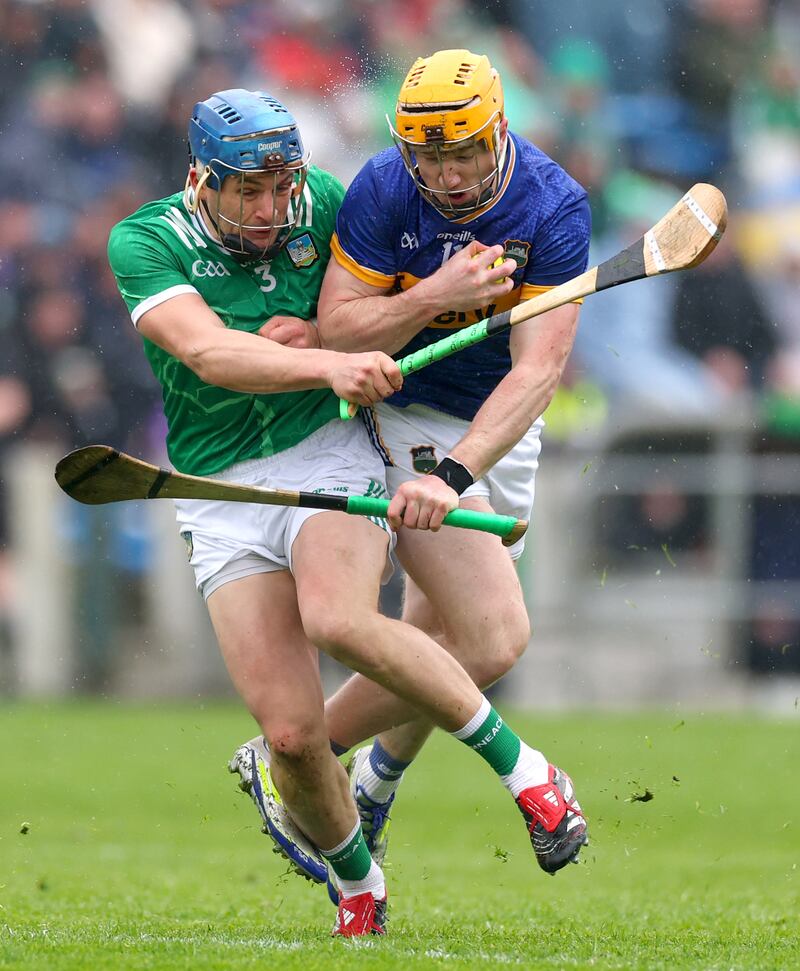
After each of those games Cahill made a judgment on how Waterford had fared in the contact zone. “I just thought we got muscled out of a lot of ruck ball,” he said after the 2020 Munster final. When they lost the All-Ireland final to Limerick a few weeks later, Cahill said they would have to look at “the whole strength and conditioning side of it, to make sure we physically improve, to match the likes of Limerick.”
When they met in the 2021 All-Ireland semi-final Waterford went baldheaded for Limerick in the first 20 or 25 minutes, wiring into tackles and targeting some of their most influential players. It didn’t work. Limerick beat them by 11 points, just as they had done in the previous year’s All-Ireland final.
“Once the ball goes to ground, they’ll swarm you and batter you and turn it over,” Cahill said after the 2021 All-Ireland semi-final. A year later, after a Munster round robin game at the Gaelic Grounds, he returned to the same theme.
“When you bring the ball into contact with this Limerick team, they just dominate you and we did that on a couple of vital occasions where we brought the ball into contact and lost it.”
Over the course of three seasons, Waterford had failed to beat Limerick by force. It was futile.
By the beginning of last year, though, it seemed as if Cahill had modified his thinking. “I think we did [struggle against Limerick’s physicality],” he said after Tipp lost a league match in the Gaelic Grounds. “A lot of teams have laboured in that department. But we moved the ball a little bit better and tried to avoid contact as much as possible and trust our hurling a bit more.”
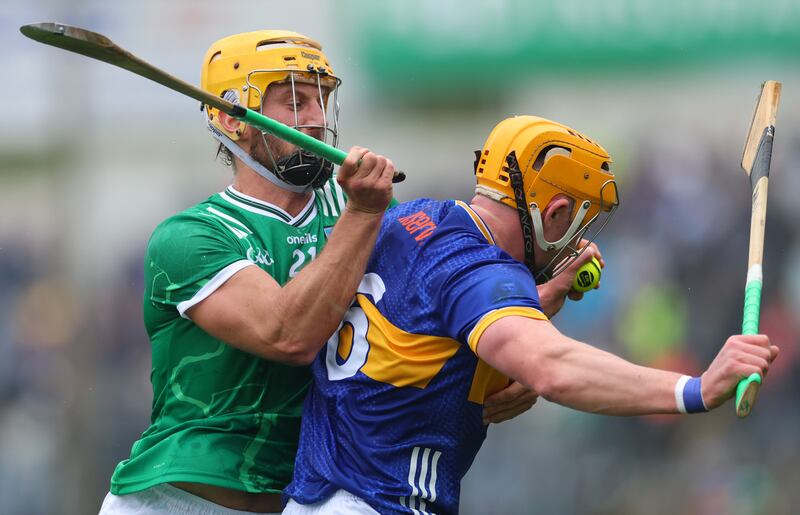
Against Limerick, it was the first time he had spoken explicitly about “avoiding contact”. Too many times, his teams had been fed in to the green threshing machine.
The other conviction he harboured about beating Limerick was the necessity for goals. For Cahill and Bevans, though, this was a global solution for beating all-comers. They were obsessed with the power of goals.
Cahill said after the 2020 All-Ireland final that they “needed to score two or three goals” to stay in the hunt against Limerick and it wasn’t for the want of trying. That day they created six goal chances and failed to take any of them.
The underlying numbers tell a story, though. In 51 league and championship matches against opponents other than Limerick, the teams prepared by Cahill and Bevans have averaged 2.35 goals per game. In 12 matches against Limerick, however, that average falls precipitously to 0.75. In seven of those games, they failed to score a goal.
At the height of their powers, there was a force field around the Limerick goal. Like all great teams, they relied on a strain of cynicism. After the 2020 All-Ireland final Cahill made an observation about the black card which has aged well. Repeatedly, that day, Waterford players were dragged down in the red zone.
“I know we toyed with the idea of the black card and the sin bin towards the early part of the year and I wasn’t maybe in favour of it, but I think now – not just today but throughout the course of our championship this year – it’s something that I think has to be looked at.”

Cahill was asked about the black card again after the Tipp corner back Johnny Ryan was penalised under that rule in Páirc Uí Chaoimh a fortnight ago, and his position hadn’t changed. “I like the idea of it,” he said. “It’s not a rule I’d be giving out about, to be honest.”
For teams with goals on their minds, the black card is a licence to attack the D. For Cahill and Bevans that had headlined their manifesto from the beginning. The critical difference between the Waterford team Cahill managed at the turn of the decade and the Tipp team he has now is the variety of threat.
[ Tipperary hurlers reminded us why the past is more powerful than the futureOpens in new window ]
In the 2024 league match, when Limerick wrestled them to the canvas in the second half, Tipp still managed three goals. It was the first time Limerick had conceded three goals in over 32 months, an astonishing sequence that stretched back 31 matches.
What Cahill and Bevans have now is firepower. After the 2020 All-Ireland Cahill said that Waterford “needed to be in 2-24 or 2-25 territory to counteract whatever points Limerick were going to put on the board”.
None of the teams he managed had come close to that total until Tipp scored 2-23 against Limerick in last year’s Munster championship. That was good enough for a draw. In five years, the maths hadn’t changed.
John McGrath scored two terrific goals that day. For the second, there were five transfers of the ball in a move that ripped through the heart of the Limerick defence. No Tipp player took the ball into contact.

“You have to be brave to play in the big cauldrons with the big crowds when there’s only small gaps to work the ball out,” said Cahill after that game. “But we should be trusting our hurling more in Tipperary because that’s what we thrive on, being really good hurlers.”
Does that mean Cahill and Bevans have worked it out, at last?
League matches only matter by mutual consent. As Shane Brophy pointed out in the Nenagh Guardian this week, Tipp have beaten Limerick just twice in their last 17 attempts; one of those wins was in a preseason match. More than half of the Tipp team that started the All-Ireland final last July have never beaten Limerick in a competitive game.
And Cahill? Until now, every team he managed against Limerick was the underdog. As All-Ireland champions, they can’t play that role in Thurles tonight. So, what gives? Tipp can’t go on losing this fixture; Limerick can’t beat them often enough.
This has nothing to do with the league.


