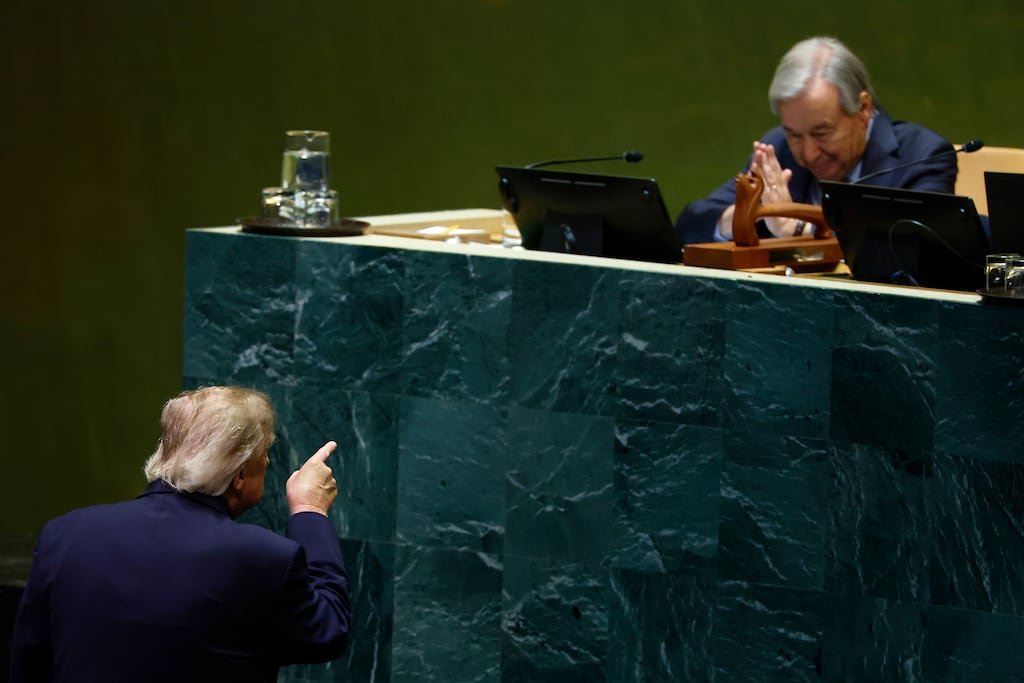
Threatening to “annihilate the Islamic Republic” and warning he could drive it “into hell with no chance of survival,” US president Donald Trump is once again brazenly reaffirming the might-is-right doctrine at the heart of his foreign policy, and his contempt for all the United Nations stands for.
The UN Charter enjoins members to “refrain in their international relations from the threat or use of force against the territorial integrity or political independence of any state.” The US president’s use of the platform of the General Assembly to brandish such threats, boasting of his supposed military accomplishments, represents above all the tragic repudiation of mutilateralism on which the post-second-world War international order – and relative peace – has been built.
This year’s General Assembly comes at a time when the UN looks ineffective and weak. Most of the blame lies not with the organisation but in the failure of a political will for peace in the major powers and the inability of the Security Council’s veto-wielding members to overcome decision-making gridlock by rising above their own narrow national interests, or those of their allies.
That gridlock and paralysis has been amplified by Trump ’s sabotage. He has pulled the US out of a host of UN treaties and agencies, from the Paris climate accords to the World Health Organisation. The Lancet projects that ongoing US foreign aid cuts and the dismantling of USAID could result in between 9.4 million and 22.6 million avoidable deaths globally by 2030.
RM Block


Trump has withheld billions of dollars in membership dues owed to the UN, with secretary-general, António Guterres, warning of an “imminent financial collapse.” Guterres, his authority reduced to the role of what one observer has called “a global town crier”, has had to make major budget cuts, slashing a fifth of the UN’s workforce and scaling back vital humanitarian and peacekeeping operations. Finding a consensus replacement for Guterres, who departs in December, is – not surprisingly– proving difficult. It is an apt reflection of the crisis facing this vital institution.