
I found this beautiful orchid growing in our suburban front lawn this morning. We don’t tend to mow it very often, and we certainly won’t be mowing it now! Denise Keating, Waterford
What a lovely reward for observing No Mow May and June Let it Bloom. Grass and rosette-leafed flowers such as daisies and dandelions grow from the bottom and, frequently, cutting the lawn encourages their growth. Flowers that grow from the top have no chance of surviving having their heads cut off. The soil in our gardens contain seed banks of plants that may have flowered there quite a long time ago, as in the case of these elegant Bee Orchids. Continue to enjoy your wildflower meadow.
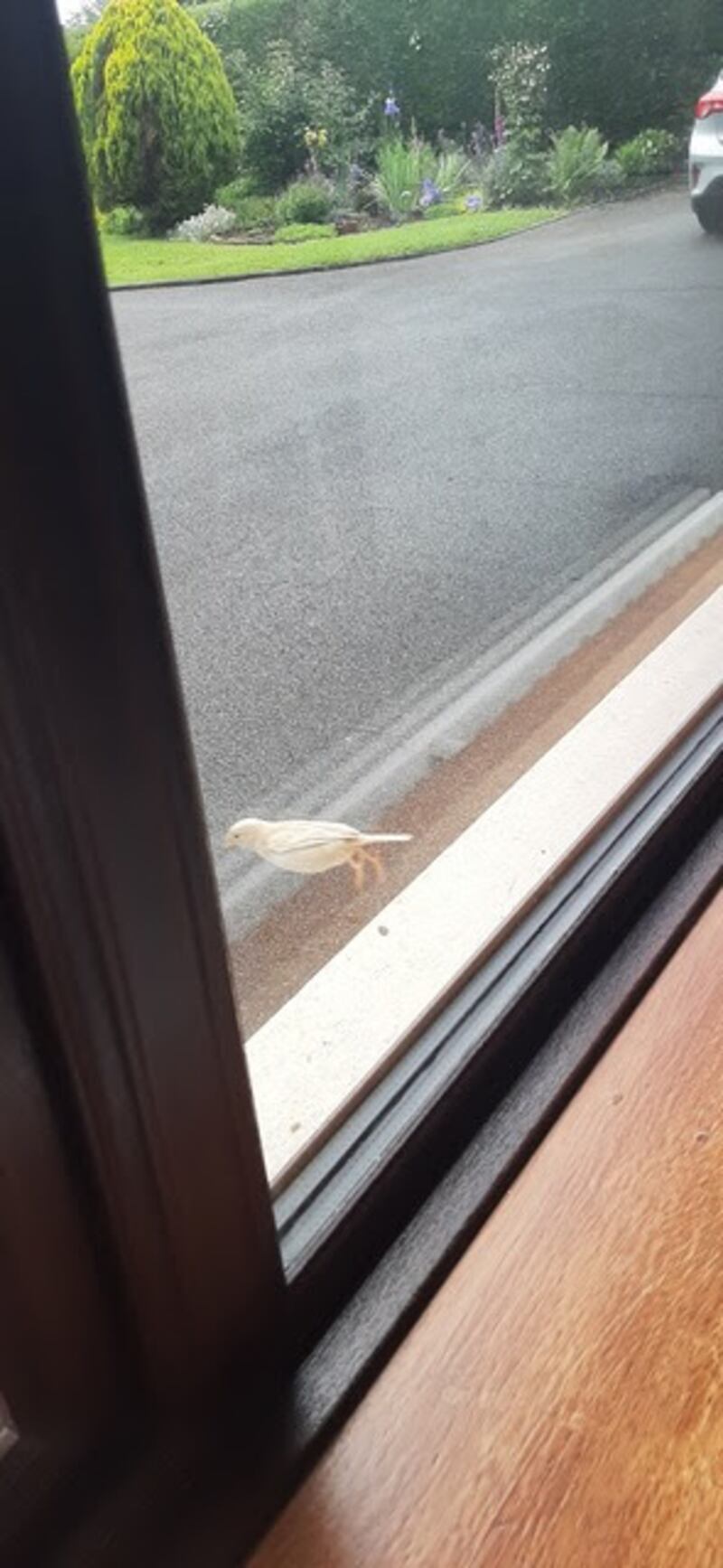
This little cutie called “Latte” lives in our garden with the sparrows. It has taken me a long time to get a photo in order to ask you about it. Is it a sparrow? Mona Brophy, Tullamore, Co Offaly
It is indeed a sparrow, a leucistic House Sparrow. Leucistic means that the sparrow has a lack of pigment in its feathers, so that it is much paler in colour than the other house sparrows. It is not an albino, however, as its eyes have pigment. The shape of its beak and head match perfectly with the other sparrows. It’s good that its companions are apparently so accepting of it. Often birds don’t tolerate leucistic members of their own species.
RM Block


I’ve noticed that in the evenings, multiple bumblebees appear to spend the night on the upside-down flowers of this Turk’s cap lily. Have they been bitten by the nearby garden spider or are they in a cold stupor for the night? Terence Prendiville, Dundrum, Dublin
This is a worker bumble bee. Nests are in full swing now and the warm weather at the end of May was great for them. The first half of June was much colder, so the worker bees are just sheltering for the night as it is too cold for them to fly. If the garden spider bit them they would be quite dead.

This fly was in my granny’s and grandad’s house. It was on a bean plant. Fiadh Jackson Minnock, Greystones, Co Wicklow
This seems to be a female Garden March fly – Bibio hortulanus. Males are black all over, but the females are chestnut brown. These flies feed on nectar and so are important pollinators of apples and other fruit trees. They fly in May and June.
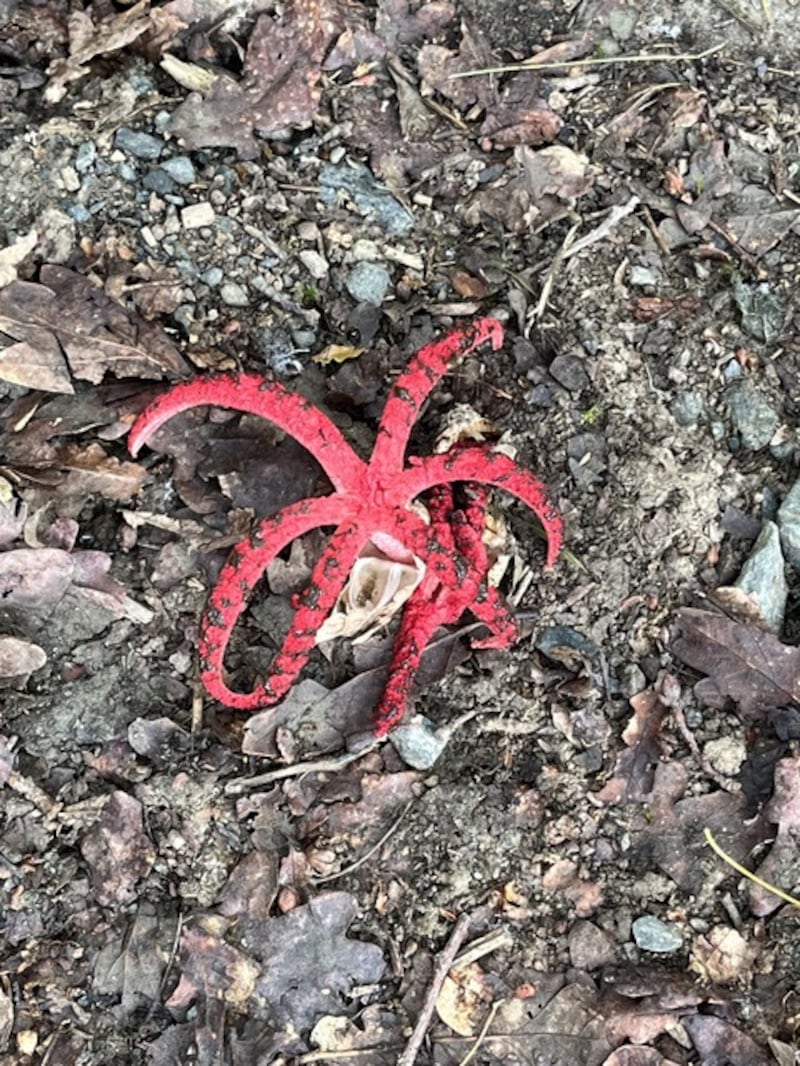
I was walking the Camino through Galicia recently and saw this crab-like plant growing in woodlands. Do you know what it is?! Róisín Ní Cheallaigh
What a treat to find while walking the Camino, or did you smell it before you saw it? This unmistakable, spectacular red fungus is one of the stinkhorns – Clathrus archeri – commonly known as ‘Octopus Stinkhorn’ or ‘Devil’s Fingers’. It grows on decaying vegetation such as leaf litter, mulch and bark chippings. It starts growing as an off-white fleshy ball (25-30 mm) called a ‘witch’s egg’ from which, when mature, erupt red tentacle-like structures, typically four to six, each measuring up to 10cm. The tentacles/arms are covered with extremely foul-smelling, dark, green-coloured spore masses.
As with other stinkhorn fungi, insects attracted by the smell of decaying flesh facilitate dispersal of the spores. The fungus is endemic to southern Africa, Australia and New Zealand, but now has a global distribution and is naturalised in Europe and the United States. It was first reported in Britain in 1914, and while still scarce, has shown a steady spread in the south of England. There are two known locations for the fungus in Northern Ireland.
Please submit your nature query or observation, ideally with a photo and location, using the form below, via irishtimes.com/eyeonnature or by email to weekend@irishtimes.com


