

Highly anticipated topics appeared on this year’s higher-level Irish paper two yesterday, but some unseen elements of the exam were more challenging than in previous years, teachers have said.
The State Examinations Commission has apologised for an error in the higher-level biology paper, Tuesday’s second Leaving Cert exam, and says it will be taken into account in the marking scheme.
Today, students will sit French in the morning and history in the afternoon.
Key reads
- Ten tips for parents supporting an exam student this month
- Sign up for our Classroom to College newsletter
Day six is done
The history exam has now ended, and we will have a full paper review from Peter McGuire later this evening.
Those were two challenging papers today. If you sat them, or are a prent of someone who did, and would like to get in touch with any thoughts, please email me niamh.towey@irishtimes.com.
An extract from former Irish Times Religious Affairs Correspondent Patsy McGarry’s book Well, Holy God appeared in the ordinary level history paper today.
The question Topic 6 A asked students about the impact of Vatican 2 following an extract in which McGarry explains the excitement in his home town of Ballaghaderreen, Co Roscommon in 1962 at a time when the church was becoming more open and accessible to young people.
Junior cycle French ‘an absolute horror show’
This year’s junior cycle French exam was “an absolute horror show”, according to Elizabeth Lyne, owner of FrenchNotes.ie.
Students sitting the common-level paper do not have any element of choice, and Lyne said many were thrown by a question about pocket money.
“The term appeared twice, and any student who may not have the word could be stuck,” she said.
Students also faced a new test that they had no practice or experience in.
“There was also a close (fill in the gaps) question, which has never appeared before, and it really threw students,” said Lyne.
“A lot of teachers want to see the reintroduction of higher and ordinary level French at junior cycle. The current common level paper discriminates against the weaker student. At a time when language learning should be to the forefront, it is making it harder for younger people.”
History paper ‘very challenging,’ teachers say
Initial reaction to the higher-level history paper is in now from Peter McGuire, with a full report to follow later.
This year’s higher-level history paper was “very challenging”, according to early reaction from Patrick Hickey, a teacher with TheTuitionCentre.ie.
“It rewarded the student with genuine breadth of understanding rather than the one who banked on predicted questions and rehearsed answers,” he said.
“It did, however, start well. The GAA to 1891 was probably one of the more welcome case studies to appear in the documents-based question, even though many had predicted that the 1885 and 1886 elections would come up instead. “The documents set a critical contemporary report against a far more positive account of the GAA’s growth, a fair pairing, though the mini-essay then demanded precise knowledge of the political problems of the period rather than a general overview.”
The same pattern ran through the rest of the paper, said Hickey.
“The American foreign policy question avoided the obvious signposts, with no clear steer towards Cuba or Vietnam, so students had to select and shape their own examples.
“The dictatorship and democracy question on Britain extended right through to 1945, leaving anyone who had prepared only as far as 1939 needing to dig deep.
“Several of the Northern Ireland questions were pitched narrowly, including a very specific question on Gerry Adams, which gave students fewer easy choices than they might have hoped,” he said.
Hickey said that the happiest students will be those who took on the topic of nation states.
“Here, a lot of the reliable, anticipated questions turned up, including the classic Bismarck and Kaiser Wilhelm II comparison and the expected emphasis on anti-semitism and on women. That topic ran closest to form.”
Overall, Hickey said that well-prepared, adaptable students will have done well.
“There is no doubt, though, that this was a very challenging examination, one that consistently closed off the rehearsed answer and rewarded, above all, the student who knew the course in depth and could adapt on the spot,” he said.
French higher level paper: Try this one at home
Q3. Votre ami(e) Joseph/Joséphine vous a envoyé un courrier électronique dans lequel il/elle vous informe que sa famille et lui voudraient passer une quinzaine en Irlande cet été. Le frère de Joseph/Joséphine, Julien, est en situation de handicap et doit utiliser un fauteuil roulant.
Joseph/Joséphine vous pose les questions suivantes :
- Est‐ce qu’en Irlande on traite les personnes en situation de handicap correctement ?
- Comment est l’accessibilité pour les personnes en situation de handicap en ce qui concerne les transports en commun et l’accès aux bâtiments publics ?
- Est‐ce qu’il y a des tarifs réduits pour les personnes en situation de handicap ?
- Avez‐vous quelques suggestions générales pour notre séjour?
Écrivez un courrier électronique à Joseph/Joséphine dans lequel vous répondez à ses questions.
(75 mots environ)
‘Odd, challenging, balanced’: Mixed reaction from teachers to French exam
Peter McGuire’s full paper review is here now:
There has been a mixed response to this year’s higher-level French paper from teachers, with some feeling it was accessible and fair but others saying it was challenging and contained some tricky vocabulary.
“In general, this was a very challenging paper both in the reading comprehension and written production sections,” said Ann Brudell, chairperson of the French Teachers’ Association of Ireland and ASTI representative.
“Some of the topics, like the housing crisis or driving schools would be outside the lived experience of many 17-18 year olds.”
But Elizabeth Lyne, who tutors at FrenchNotes.ie, said that her students would not have issues with the exam.
“In the first, obligatory part of the paper, they could answer about their favourite holiday, and they would have been well-prepared.
“The récit (story or narrative) option was a little odd, asking students if they ever experienced having to ask someone to give them a chance, but they could have swerved it for the other options.”
Maria Ciuperca, a teacher at TheTuititionCentre.ie, said that the paper contained topics that were relevant to student lives, including climate change, artificial intelligence and fast fashion.
“These are the kinds of conversations students are already having in SPHE, CSPE, geography and everyday life, which made the paper feel current and meaningful,” Ciuperca said.
Brudell said that, even for those topics within the students’ experience, such as fast fashion, it was very demanding of their vocabulary base and grammatical skills.
“A lot of manipulation was needed to tackle the difficult phrasing of some questions which, at times, depended on the student’s understanding of a specific or ambiguous word,” she said.
Isabel Conlon, Studyclix.ie subject expert and a teacher at John the Baptist Community School in Co Limerick, said that students would have been pleased to encounter familiar themes and topics in the higher-level exam.
Lyne said that there were no major issues or problems with the aural component of the exam.
On the ordinary level paper, Conlon said that it followed the familiar format of previous years by assessing candidates’ reading comprehension and writing skills.
“The written questions awarded students the opportunity to demonstrate their past, present and future tense skills across a variety of questions, including a cloze-test, form, message, postcard, letter and diary entry,” she said.
“Overall, a balanced exam with plenty of written production choices.”
The French papers have now been published online.
Higher level is here.
Ordinary level is here.
French paper had well-flagged topics - except for one ‘odd’ question
The French exam is now over, and Peter McGuire has early reaction to the papers:
The higher-level French paper contained well-flagged topics and was fair and accessible, according to early reactions from teachers.
Elizabeth Lyne, who tutors at FrenchNotes.ie, said that her students would not have issues with the exam.
“In the first, obligatory part of the paper, they could answer about their favourite holiday, and they would have been well-prepared.
“The récit (story or narrative) option was a little odd, asking students if they ever experienced having to ask someone to give them a chance, but they could have swerved it for the other options.”
Maria Ciuperca, a teacher at TheTuititionCentre.ie, said that the paper contained topics that were relevant to student lives, including climate change, artificial intelligence and fast fashion.
“These are the kinds of conversations students are already having in SPHE, CSPE, Geography and everyday life, which made the paper feel current and meaningful,” Ciuperca said.
Lyne said there was nothing too complicated in the reading comprehensions, with a grammar question asking them to look for a feminine adjective.
Ciuperca said that the language of the literary text was relatively accessible, but the themes were mature and thought-provoking.
“It will be interesting to see whether future papers continue in this direction, with topics such as social media, misinformation and the impact of technology on young people’s lives becoming increasingly relevant,” she said.
“Overall, the paper was less about testing whether students knew a particular set of vocabulary and more about whether they could engage with real-world issues in French.”
On Monday Dara Mac Dónaill was at Marian College in Ballsbridge, Dublin 4, following Maths paper two.
Marian College is a non-fee charging boy’s secondary school founded by the Marist Brothers in 1954.


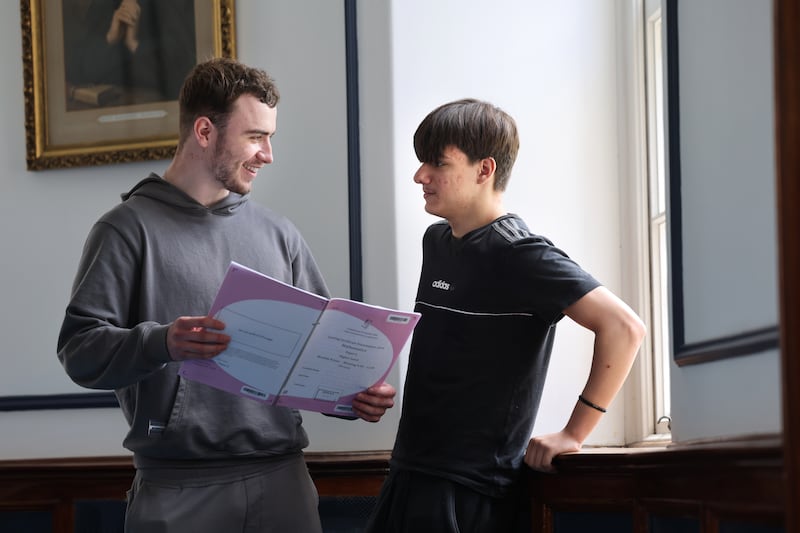

Leaving Cert maths paper one: what were those who set it trying to achieve?
In today’s Letters pages Colette Griffin from Dublin 6 questions the intentions of those who set the higher level maths paper one.
“Were they trying to ensure that students left the exam hall in tears? Or that students’ confidence in their ability to sit other subjects was shattered?
“Were they perhaps trying to put students off taking higher-level maths in the future? Or were they making sure that students were doubly worried for paper two?”
Read her full letter here.
Irish Times photographer Dara Mac Dónaill visited St Nathys College in Ballaghaderreen, Co Roscommon yesterday after Irish paper two.
I sat my Leaving Cert at St Nathys sixteen years ago, and have fond memories of it as a diverse, warm and academic school.
Many of my classmates went on to do wonderful things - doctors, pharmacists, teachers, accountants, physiotherapists, theoretical physicists - and even playing senior football for Mayo ladies.
I won’t forget the intensity of these days, though. A sense of change in the air. A final few days on the corridors of a school which had become home.
In a matter of days, these students will be done with St Nathys, and the rest of you across the country will finish with whatever school became home for you.
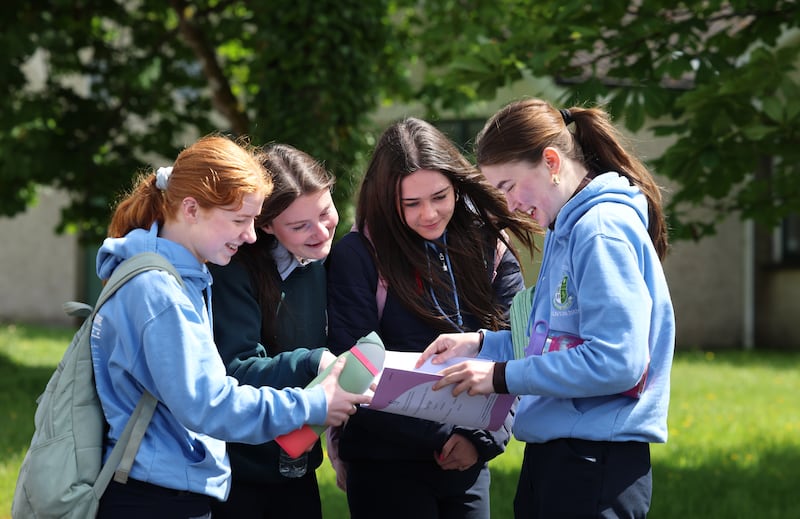


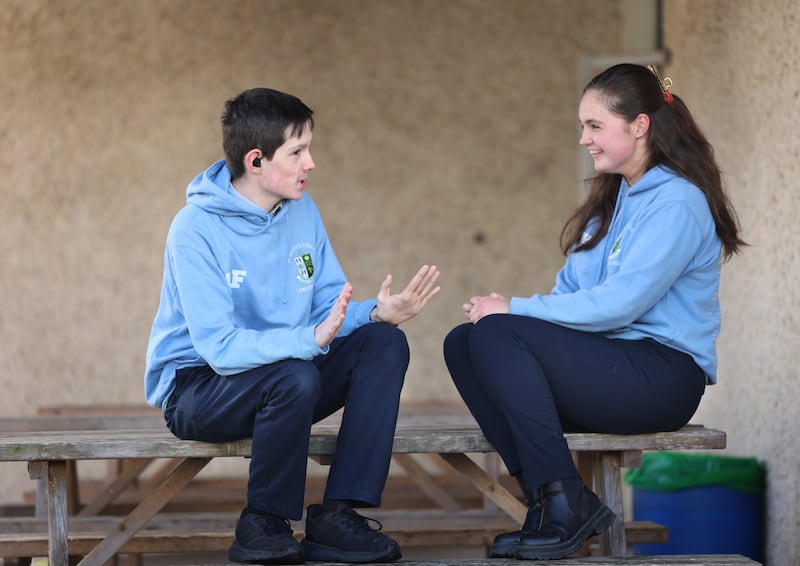

The sixth day of Leaving Certificate exams kicks off at 9.30am today with French.
Almost 19,000 students were due to sit this exam across higher and ordinary level. The aural exam will follow at 12.10pm.
In the evening we will have history, which starts at 2pm and finishes at 4.50pm.
Over 14,000 students were predicted to sit this subject this year.
We will have paper review for both subjects once they are completed.
As always, please feel free to get in touch at niamh.towey@irishtimes.com.


