
Every year, more than 10 million motorists drive through Dublin’s Phoenix Park. Almost all are breaking the speed limit, yet there are no pedestrian crossings anywhere in the park.
All the park’s attractions – Dublin Zoo, the People’s Gardens, the Ashtown Castle visitor centre, Farmleigh House, the Magazine Fort and the almost 2,300 parking spaces – are accessible from Chesterfield Avenue, the main road dividing the park. Yet there is no dedicated way to walk across this 4km-long road.
This might be acceptable if motorists stuck to the park’s 30km/h speed limit, but they don’t. Traffic surveys commissioned by the Office of Public Works found more than 95 per cent of motorists using Chesterfield Avenue are breaking the speed limit.
Chief park superintendent Margaret Gormley acknowledges motorists are not respecting the 30km/h limit, which was reduced from 50km/h in February 2022, but it used to be worse, she says.
RM Block


“People are actually travelling slower now than they were. You have people driving at 40km/h or 50km/h, but they’re not doing 70km/h or 80km/h. So it’s not as bad as years ago.”
Driving the length of Chesterfield Avenue at 30km/h instead of 50km/h adds 2.2 minutes to the journey, but means a pedestrian has a much better chance, fivefold or more, of surviving being struck by a car.
Gormley points to the low level of adherence to 30km/h speed limits in the rest of the city. “How many people obey those?”However, “not as bad as it was”, and “no one else is doing any better” don’t sound like great traffic management strategies for the State’s premier national historic park. Gormley concedes the lack of adherence to the speed limit is a serious problem for the park but, to an extent, her hands are tied.
After the limits were introduced in February 2022 and speed surveys in May of that year indicated they were being egregiously flouted, Gormley wrote to senior gardaí in the roads policing division to say she and her staff “witnessed numerous vehicles overtaking on the continuous white line on Chesterfield Avenue at speeds well in excess of 50km/h”.
It had been her understanding gardaí were in a position to enforce the new limits. “We would welcome Garda enforcement of this,” she wrote. However, in response she was told the legislation governing the Phoenix Park “does not confer power upon the Garda Commissioner to regulate speed”.
The Park: An Irish Times series
Following queries from The Irish Times, gardaí have confirmed this remains the case. Although it has the power to prosecute offences such as “dangerous driving, including speeding, within the park, as they would in any other public location”, the power to impose speed limits in the park “is vested in the OPW commissioners rather than An Garda Síochána”.
With just 12 park rangers, and generally two working per shift, Gormley says, they are not in a position to “police” the speed limit, though she says all OPW staff in the park are instructed to drive at 30km/h “even if they are getting blown out of it” by motorists.
“We make no apology for people being slowed down. If you’re in a hurry, take a different road. This is a park. This is a destination; it’s not a through road.” It is notable, she says, that those who drive at excessive speeds through the park are those using it to cut through rather than to visit. “The people coming in as tourists, they’re not speeding.”
Gormley, over 2022 and 2023, engaged with the Department of Transport with a view to enacting new legislation to facilitate enforcement by gardaí.
In response to queries from The Irish Times, the Department of Transport said the next Road Traffic Bill will include provisions enabling enforcement of the Phoenix Park speed limit.
“It is expected that the General Scheme will be submitted to Government for approval before the end of the year,” the department said.
The OPW, Gormley says, has “a very good working relationship with the gardaí”.
In recent years, some of the park’s roads have been closed to traffic, with others made one-way and two gates made either entry or exit only. At one of these gates, the Chapelizod gate, traffic surveys in 2022 showed an average of 160 cars a day continued to exit the gate in contravention of the new rules.
Where the rangers report traffic infractions, gardaí are quick to respond, Gormley says.
“If we find there’s a little pattern, we will inform the guards, and they will spot check those areas. All you need is [a] patrol car sitting there one morning, and it will stop.”
The OPW is also working with Dublin City Council to upgrade walking and cycling facilities on Chesterfield Avenue.
“We are actively working with Dublin City Council and Transport Infrastructure Ireland for a cycle scheme on Chesterfield, which includes 13 pedestrian crossing points,” she says.
The Chesterfield Avenue Active Travel Scheme is at the preliminary design phase, according to the council.
Cyclists in the park don’t fare much better than pedestrians. The park is home to some poorly maintained and illogically designed cycle paths. There is little continuity in these paths, and where they exist, they almost all end abruptly, frequently spilling their users into the path of oncoming traffic.
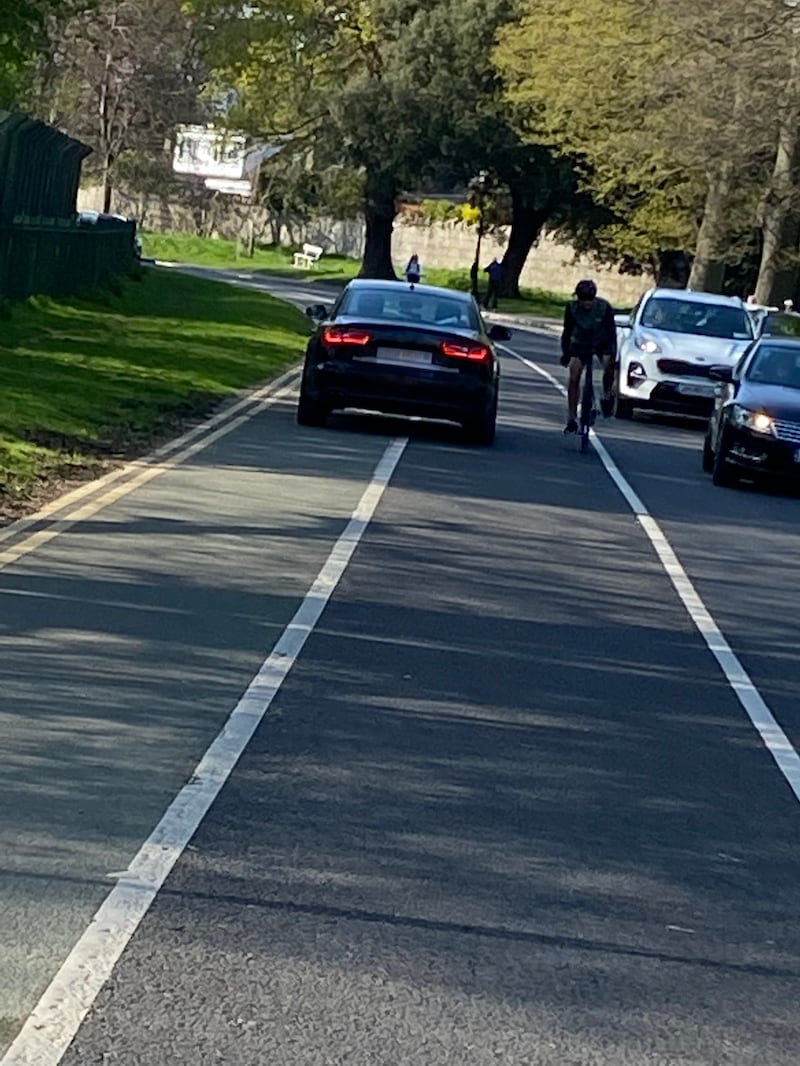
There are a small number of off-road cycle paths, including the circular route at the 15 acres, opposite the Papal Cross, and along White Field’s Road. However, these routes are not connected, so accessing them involves using the park’s roads. Some of these have sections of cycle path, others don’t.
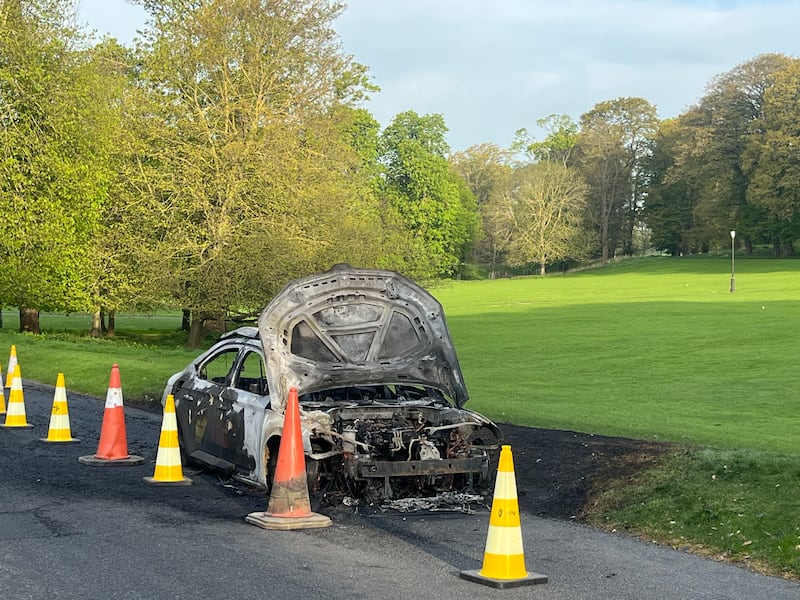
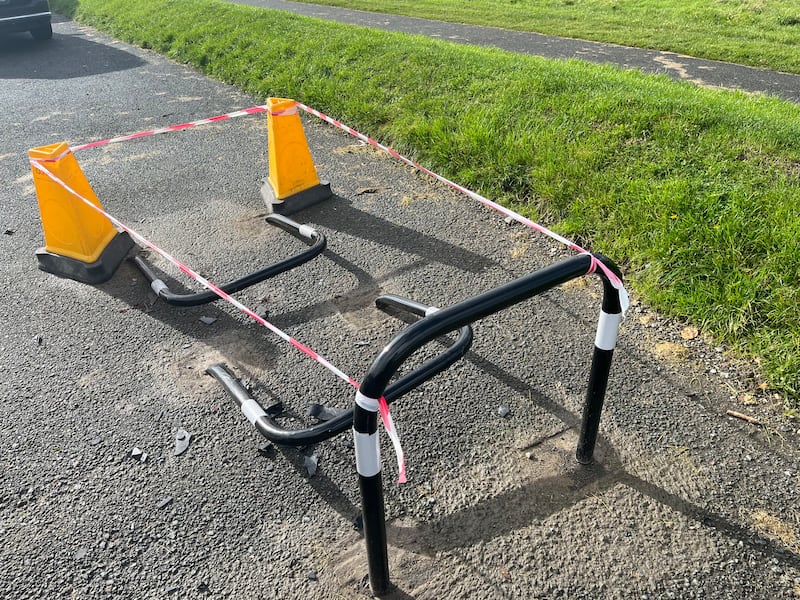
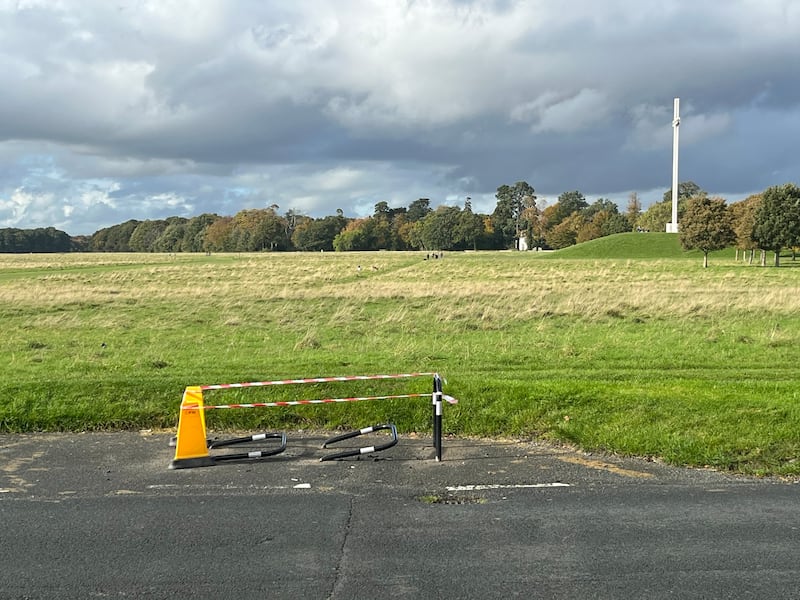
The only protected on-road paths are along Chesterfield Avenue, where the traffic wands are regularly uprooted by vehicle strikes.
The other on-road paths have no grass verge barrier or wands; cyclists are left protected by paint, which is no protection at all given the chance of motorists speeding, using phones and even driving the wrong way down one-way roads using the cycle path.
[ The future of Phoenix Park: How it is facing challenge of an expanding cityOpens in new window ]
Gormley says the cycle infrastructure in the park will be reviewed once the Chesterfield scheme is in place. “Chesterfield is the priority route, then we will go back and look at the other linkages.”
None of these traffic problems in the park are new. The first park management plan in 1986 identified the need for controls on the number of cars travelling through the park. Fifteen years ago, the 2011 Conservation Management Plan noted: “At times of heavy traffic, particular safety issues arise for pedestrians crossing Chesterfield Avenue and also on the North or Back Road. Cyclists are often forced out into heavy traffic at these times, creating unacceptable levels of conflict.”
A decade on in 2021, the Mobility Options Study was published, recommending the speed limit be reduced from 50km/h to 30km/h and pedestrian crossings on Chesterfield Avenue.
Gormley says the OPW is “always striving to improve” park safety, but “we want to get the balance; we’re not a police state. We want people to come and enjoy and have a pleasurable experience in the park. A safe experience. Given that we’ve 10 million car journeys a year, we have very, very few incidents.”