Jimmy Linehan is not for turning. It is about all he has in common with the late British prime minister Margaret Thatcher.
A devout Catholic, he was jailed for 10 years in Belfast for his role in the IRA’s Border campaign 70 years ago.
For this, he was excommunicated by the Catholic Church. He remains excommunicated as he refuses to renounce the IRA.
Following his capture in December 1956 on an IRA mission in Co Antrim, he served seven years in Belfast’s Crumlin Road jail before his release in 1963.
RM Block


In prison he was refused absolution at Confession every Saturday and refused Communion at Masses.
Returning to Cork in 1963, then bishop Cornelius Lucey sent a priest to see him a few times over two years.
The priest advised Linehan to say he had “finished with the IRA” and all would be well. He refused.
“I would be a hypocrite”, he tells The Irish Times, “and I’d be telling a lie in Confession.”
However, soon no priests in Cork asked him about the IRA, he says.
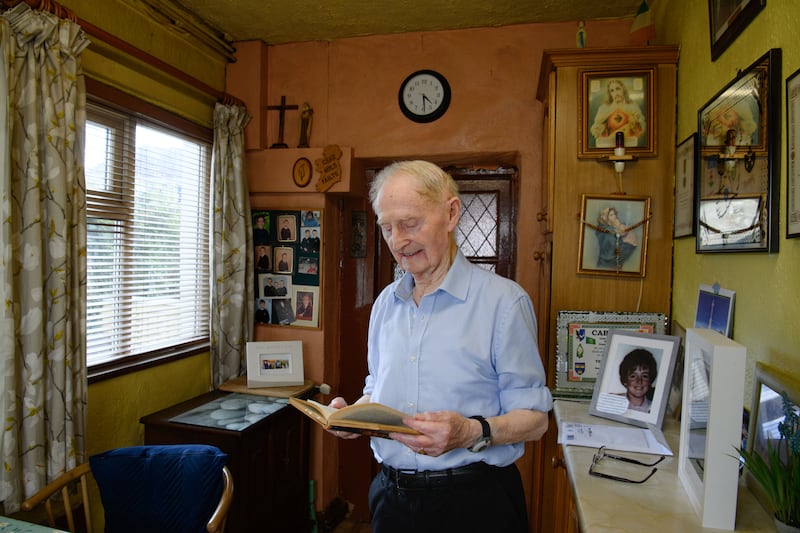
Still, officially, he remains excommunicated. Until last April he attended Mass daily. He turned 90 that month and stopped going to Mass, only “because of the driving”.
He has launched a campaign urging the Catholic Church to lift all decrees of excommunication imposed on Irish men and women “since 1169” – when the Anglo Normans arrived in Wexford.
He also wants an apology from Rome.
“Every time the Irish people stood up against the British, the church has condemned them. I never heard of any other group which was treated in the same way,” he says.
“The Civil War republicans were excommunicated and never readmitted.”
In 1922 this included his father, also Jimmy, “when bishop [Daniel] Cohalan excommunicated all members of the IRA in Cork”.
[ The history of the Irish Border: From Plantation to BrexitOpens in new window ]
In Linehan’s view “the God that I love is not a God of vengeance. He said nothing about excommunication. That’s a man-made law.
“A lot of Irishmen went to their graves with no absolution, going back centuries,” he says. “I’d like an acknowledgment from Rome that this is an injustice and that they express sorrow for it.”
Linehan was 14 when he joined the IRA in 1950 and was involved in an attack on a Royal Air Force station in Co Antrim in 1956.
The IRA unit was not aware it was at the centre of a major North Sea Nato exercise at the time. Nor did they know that, as a result, the area was saturated with security forces.
Linehan recalls in his unpublished book, A Rebel Spirit, that when he went off to fight for the IRA, he attended Confession and the priest told him the bishops had issued a letter about “illegal organisations”.
He was aware of the letter but believed it “was referring to groups whose intentions were to usurp or overthrow the lawfully elected government of the 26 counties”, he says.
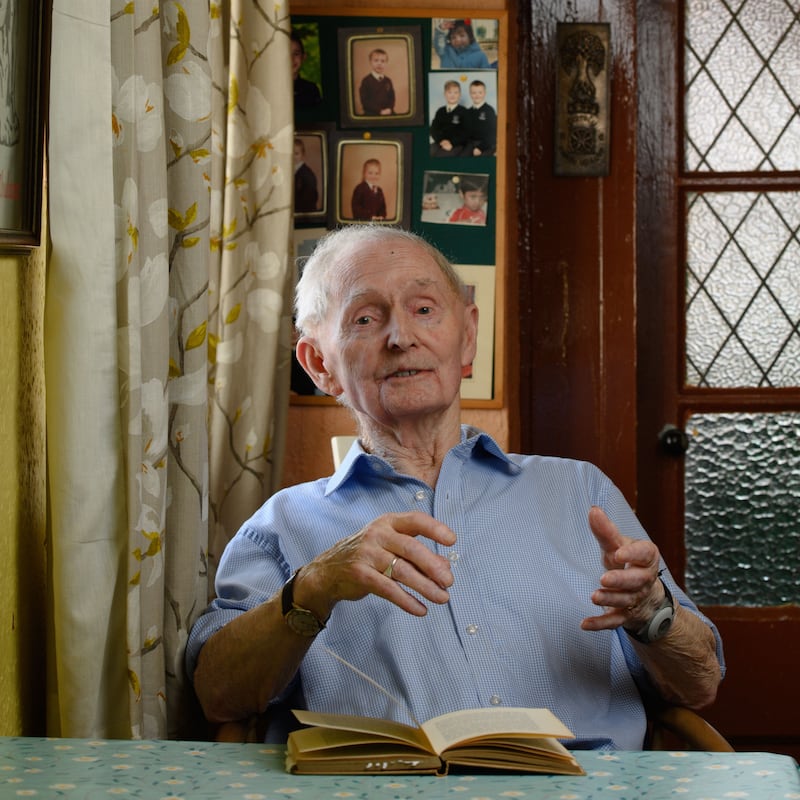
The priest “accepted my sincerity, agreed that I was not mad, heard my Confession and gave me general absolution”.
In Co Antrim, Linehan and his IRA unit, which included two other men from Cork, were captured after a brief gun battle.
An RUC officer “asked where I was from and when I said Cork he asked where was that, and two or three voices said ‘the Free State’.”
Linehan and his IRA unit were remanded to Crumlin Road jail in Belfast.
The Border campaign ran from 1956 to 1962, but – seven decades on – Linehan’s campaign against his excommunication continues.