
When European Union energy ministers gathered for an informal meeting in Dublin Castle this week there was much talk of the need to deliver electrification to meet the bloc’s long-term energy and climate objectives – and move away from fossil fuels from volatile parts of the world.
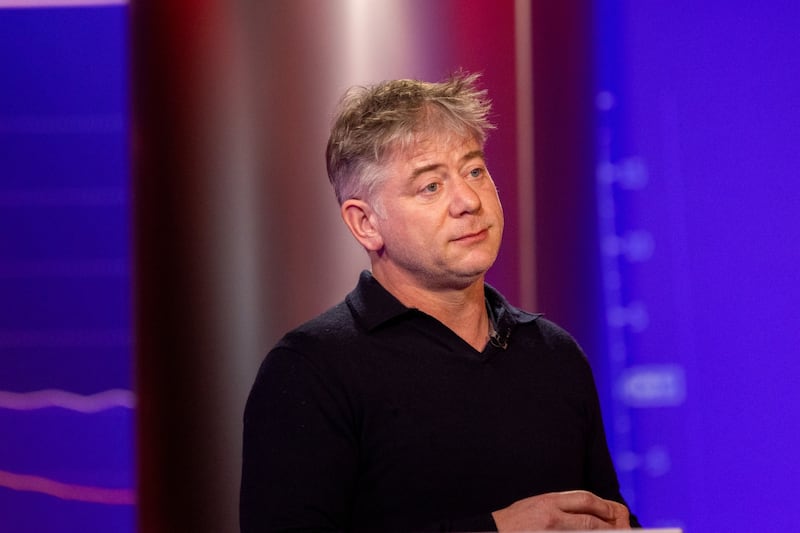
Among the non-politicians who participated was Greg Jackson, the founder and chief executive of Octopus Energy, the UK’s biggest household electricity supplier.
So what was Jackson’s message to the assembled ministers?
“I was the lunchtime entertainment,” he quips during an interview with The Irish Times afterwards in which he speaks of ambitions to do more business in Ireland and sets out how his company has discovered that while there are ‘Nimby’ objectors to wind farms, there can be ‘Yimbys’ as well.
RM Block


But on what he told the EU ministers Jackson said: “look, the big thing for me is we need to start saying how do we make electrification work for consumers and for industry?
“This can be the opportunity to drive down energy costs, and not just your home energy.
“Moving to an electric vehicle could be the cheapest transport you’ve ever had.”
Jackson says: “if we can ensure that the regulations and policies that govern our electricity systems are relentlessly putting consumers, families, businesses first – it’s a huge opportunity.”
Jackson was invited by the Government to participate in a session focused on innovation and market disruption alongside representatives of the Brussels-based economic think-tank Bruegel.
Octopus Energy boasts 8 million electricity customers in the UK but it also sells heat pumps and solar panels; leases out electric vehicles; and invests in renewable electricity generation in 27 countries including Ireland.
The company announced on Tuesday it has invested in three more solar farms here – two in Kildare and one in Cork – as part of a deal backed by the Ireland Strategic Investment Fund (ISIF).
[ Surging energy prices drive inflation to almost 4% in IrelandOpens in new window ]
It brings Octopus’ portfolio of operational and construction renewables projects in Ireland to more than 300MW across nine sites.
In recent days, the Irish Independent reported Octopus has put Ireland’s largest solar park at Ballymacarney, Co Meath on the market and that the sale price could reach more than €250 million.
It reported Octopus Renewables Infrastructure Trust (ORIT) paid around €225 million to acquire the complex over recent years.
ORIT’s website says it is an Impact Fund helping accelerate the transition to net zero but it also looks set to make money if a sale of the solar farm goes through.
“Yeah,” Jackson says, but adds: “I mean there’s every chance that money gets piled back into other projects. How exciting is that?”
Earlier, asked about Octopus’s latest investment in three solar farms he says: “I’d love to do more in Ireland. I mean Ireland’s particularly seen pressure on its electricity system because you’re already home to so many of Europe’s data centres.”
He adds: “If we can put more electricity through the system, we should be able to drive down costs.”
Is there any prospect of Octopus Energy becoming a supplier of retail electricity to Irish households?
“I would absolutely love to if the opportunity arises,” Jackson says.
He does not offer details of what the threshold or timescale would be for this to happen but says: “when we choose to do it, we do it quickly”.
Like in Ireland, wind farms in Britain have proven controversial amid communities objecting to their development.
Octopus Energy has what it calls a “Fan Club” where customers get cheaper electricity when they live near the company’s wind farms when the wind is blowing.
Jackson said: “we’ve had 36,000 individuals and communities have asked for wind turbines. So we accidentally discovered tens of thousands of ‘Yimbys’ who want this infrastructure in return for cheap power.”
Could something similar be replicated in Ireland?
“My experience has been people are the same all over the world and you know we do this in six countries and it’s equally appealing in all of them.”


