First came the gunfire, then the screams. As 24-year-old Dubliner Kayla Phelan strolled to her goodbye-to-Sydney dinner at Bondi Beach on a warm summer’s evening, she heard gunshots that she initially dismissed as fireworks.
The killing spree by two gunmen which left 15 people dead and 40 injured at the iconic Sydney beach had begun. Police said the alleged shooters – a father and son – opened fire at an event to mark the start of the Jewish festival Hanukkah.
“I never would have assumed there’d be gunshots in Bondi, it’s such a safe area,” Phelan told The Irish Times. “And then I saw everyone starting to run towards me. There was a lot of fear and panic and screaming.”
As the terrified crowd swarmed around her, she turned and began running back to her home, 10 minutes away.
RM Block


“I was sprinting as fast as I could to get clear of the gunfire but I kept thinking ‘Are the shooters and their guns behind me?’”
“Everyone was screaming at each other. They were trying to get into homes and on to buses to escape.”
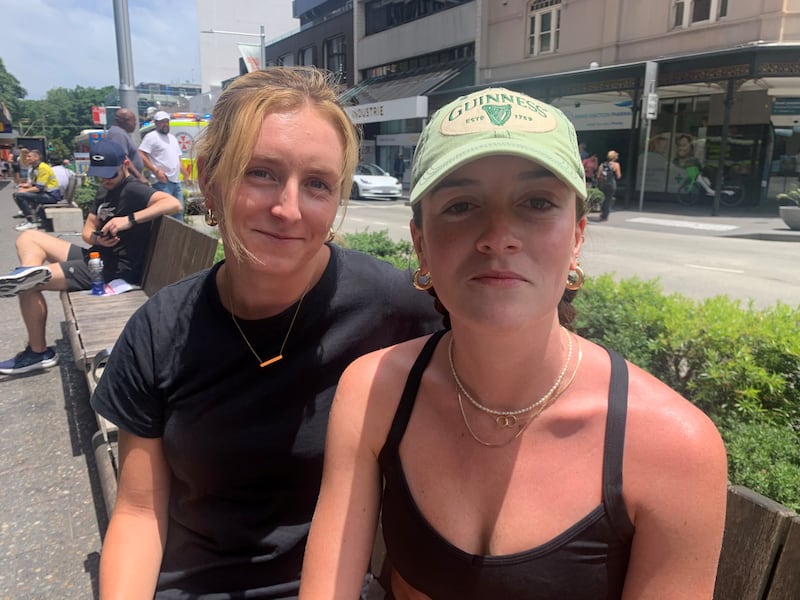
When she reached her home, she phoned her three schoolfriends from Dublin – Abbie Daley, Sophie Bouchur and Kate McMahon – who were heading to Bondi to join her for dinner.
“When they answered, I couldn’t speak,” she said. “I was so anxious, upset and overwhelmed. I just panicked.”
On Monday, the four women gathered in Bondi Junction for a low-key lunch to farewell Phelan who has spent the past two years in Sydney “living my best life”.
Her friend, 25-year-old Daley, said the group was saddened and shocked by the killings. Daley, who recently arrived in Sydney, lives in Randwick – a popular suburb for young Irish visitors. She said she and her friends had planned to meet at 7pm at the beach. The shootings began 20 minutes earlier.
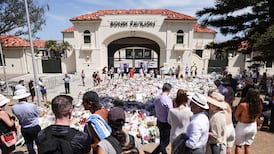
Back on Bondi’s beachfront, sombre rows of shuttered cafes and tourist-oriented shops faced an almost deserted beach on Monday.
Multiple police roadblocks barred traffic to the killing zone but pedestrians, many in activewear or beachwear and carrying bunches of flowers, were permitted to pay their respects at a makeshift memorial.
More details, meanwhile, emerged about the alleged father-son duo suspected of using legally obtained firearms to commit the massacre, according to police.
Naveed Akram (24) was arrested at the scene and taken to a Sydney hospital with critical injuries. His father (50) was shot dead by police. Police would not confirm their names.
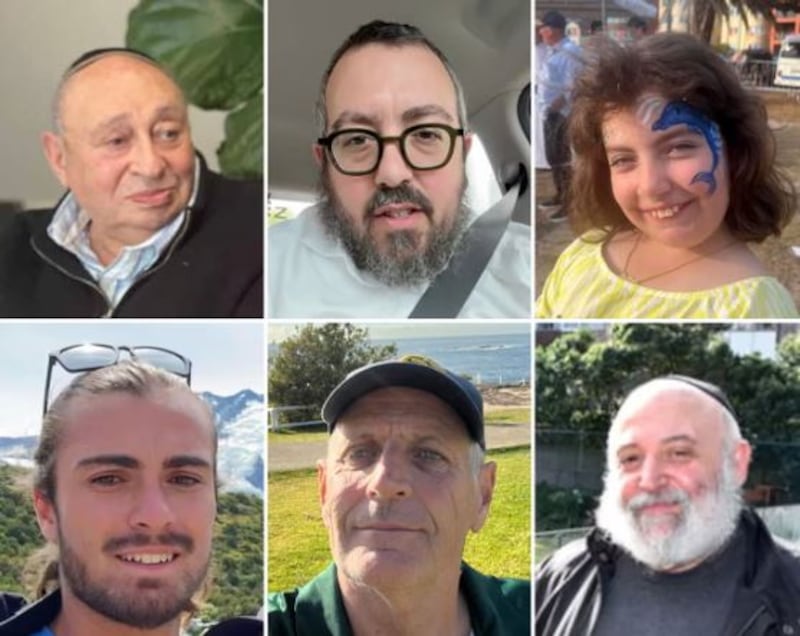
The pair allegedly killed 15 people, with dozens more injured in the shootings which took place on Sunday, during a gathering to celebrate the first night of Hanukkah.
The son was known to New South Wales (NSW) police and security agencies, while his father had a firearms licence with six weapons registered to him. All six firearms have been recovered, police said.
Four of these weapons, long arms believed to include a rifle and shotgun, were seized at the scene in Bondi, with other weapons also found during a police raid at a house in Campsie, in Sydney’s southwest.
Naveed Akram, who worked as a bricklayer, came under the attention of the Australian Security Intelligence Organisation in October 2019, according to the prime minister, Anthony Albanese. He was examined for six months because of his alleged associations with others.
“[Naveed Akram] was examined on the basis of being associated with others and the assessment was made that there was no indication of any ongoing threat or threat of him engaging in violence,” Albanese said.
The two men had lived at another house in Bonnyrigg, in the city’s west, which was also raided on Sunday night, said NSW police commissioner, Mal Lanyon.
He said there was nothing “to indicate that either of the men involved in yesterday’s attack was planning the attack”, and confirmed the older man had held a gun licence for a decade.
Back at Bondi, in bright sunlight with the soft boom of surf in the background, Alex Ryvchin, co-chief executive officer of the Executive Council of Australian Jewry, stood next to the growing display of wreathes and flowers and described the events of the previous evening.
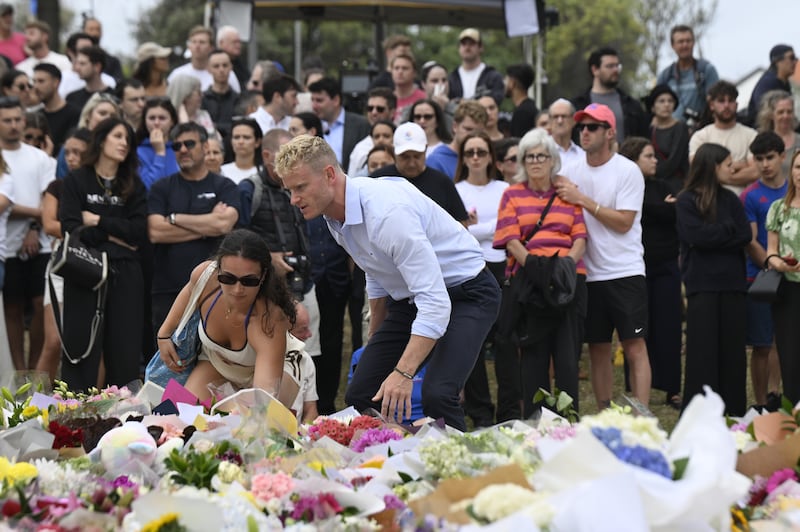
“It was a slaughterhouse,” he said, adding that the killers did not act out of impulse.
“It was planned, methodical and designed to kill as many people as possible for the crime of being Jewish.”
He pointed to past failures by authorities to “detect or disrupt” attacks on Sydney’s Jewish community including firebombings and anti-Semitic graffiti.
“And, as we see here, there was no ability to detect these individuals to see that they were on the cusp of mass terror,” he said. “The consequence is body bags by the sand.”
Among those being praised for their heroism during Sunday’s shooting was Bondi lifeguard Daniel McLaughlin who led a team of 10 to assist the wounded despite there being active shooters in the area.
McLaughlin, nicknamed “Beardy”, starred in the hit international TV reality series Bondi Rescue.
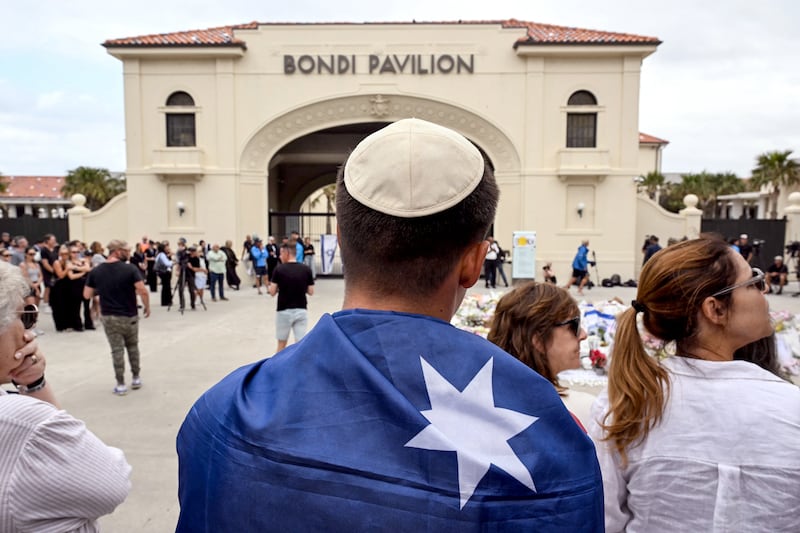
In the cosmopolitan suburb’s side streets leading off from the beachfront promenade, the few cafes and restaurants that were open catered to subdued locals and visitors. Three large Israeli flags hung from an awning outside a Greek restaurant.