

One of the biggest potential upheavals as a result of the widespread adoption of AI is its effect on employment; however, there is no consensus among experts on what this might be, with predictions varying from mass displacement and job losses to net gains as a result of its positive effects.
“It is very hard for research to answer this question precisely, because AI is moving so incredibly fast. Job market data can’t keep up. The latest research does point to some jobs being lost, but a larger amount of jobs being created. Also, it is highly likely that existing jobs will evolve significantly as we collectively get better at capturing the benefits of AI,” notes Peter Clifford, head of strategy at Research Ireland.
For now it seems that younger tech workers are feeling the first effects of an AI-led slowdown in employment. According to a Goldman Sachs report issued in August, unemployment among 20 to 30 year olds in tech-exposed occupations in the US rose by around 3 percentage points in the first half of 2025, notably higher than for that cohort in other professions or for technology workers in general. The report says this corroborates anecdotal accounts that generative AI is contributing to “hiring headwinds” facing recent college graduates in technology.
Worryingly for tech workers, employment growth in occupations such as computer system design, software publishing and web search portals has slowed sharply, with tech positions as a share of overall employment decreasing steadily since as far back as November 2022. While some of this can be attributed to over-hiring during the pandemic period, tech’s employment share has fallen below its pre-pandemic levels, a pattern experts say is most likely linked to AI automation.
RM Block



It’s not just tech workers who are being affected. The Goldman Sachs report shows that employment growth in industries including marketing consulting, graphic design, office administration and telephone call centres has fallen below trends, with reports of reduced employment demand as a result of AI-related efficiency gains.
Clifford says that among the sectors most likely to be affected are those that deal with processing information, in all its guises, but there are some caveats.
“If, in a particular sector, there is a large downside for making a mistake, that sector will be less affected,” he says. “The creative sector is vulnerable, worryingly, considering that their work is what was used to train GenAI.”
The effects of AI on employment will in any case be largely dictated by the progress of the technology in general. Ade McCormack, author and founder of the Adaptive Edge Initiative, takes a sceptical view of the effects of AI and the growing belief that AI will somehow save organisations from what is increasingly an unknowable future.
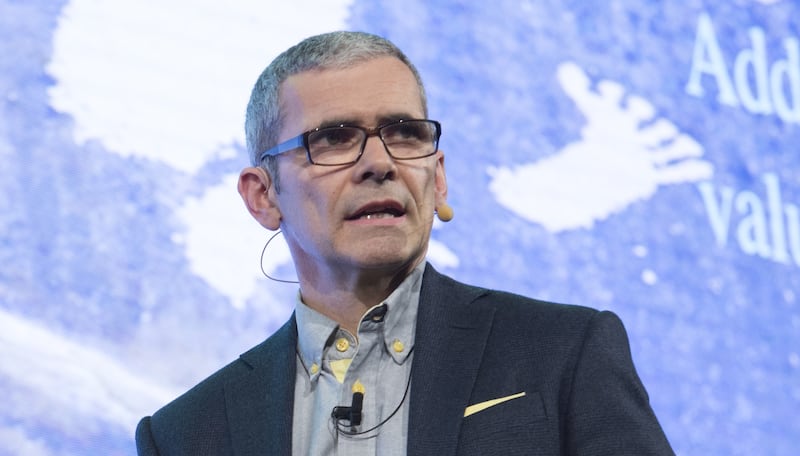
“This is misplaced for two reasons. Firstly, sprinkling one’s organisation with technology ‘pixie dust’ isn’t going to cut it, despite what we are told by the World Economic Forum. Organisations of any pedigree are built upon factory principles, mechanistic, process oriented and efficiency obsessed. This worked well during more innocent, steady state times. Unfortunately we are transitioning from an era of complexity to an era of chaos. The factory model is neither responsive nor adaptive enough to keep up with reality.
“Secondly, as a child of the 60s, I have seen very little development in the evolution of AI. Until the neuroscientists can establish how the mind works, how intention and attention work, we will be left with what I call ‘artificial, artificial intelligence’ [AAI]. Recent-ish developments in generative AI are in essence a maths parlour trick and not AI.”
McCormack says AI has become the “new shiny thing” for leaders in the way digital transformation was a few years ago. Generative AI tools are becoming progressively less impressive with each update. In some respects, we might have hit peak-AAI, he observes.
“Much like digital transformation, AI could soon enter the trough of disillusionment. Couple this to the imminent bubble burst in respect of the [major] AI players and this will be a hard landing for those who have overly invested, including the CEOs of end-user organisations.”
One thing is certain. Ireland will be hugely exposed to change brought about by AI, given our concentration of leading-edge multinational companies – those most likely to deploy AI rapidly and at scale.
“The high concentration of these leading-edge tech companies will absolutely play a role but the capacity and capability of people in Ireland will be the most important factor,” notes Clifford.
“Research Ireland has been investing in AI expertise for the last 20 years – for example, in the Research Centres Insight and Adapt. Our Centres of Research Training have also funded cohorts of PhDs in data science with a particular focus on transferable skills. All these research-enabled, critical-thinking, creative individuals put Ireland in a strong position to proactively drive this change.”

Research by the Institute of Directors shows that 21 per cent of members see digital transformation and innovation as the highest driver for business growth to aid competitiveness, with Generative AI cited as a key component of this. Training for directors is a key area the Institute of Directors is currently addressing.
“Directors cannot ignore that while AI brings opportunities and advantages to an organisation, it is also a governance and strategic risk area,” says Caroline Spillane, chief executive of the institute. “Regulators and stakeholders increasingly expect accountability for algorithmic decisions, and boards that fail to establish robust oversight for ethics, compliance and risk face serious regulatory and reputational consequences.
“An often-unrecognised challenge, however, lies in shifting organisational culture and equipping leadership to make data-driven decisions. Technology adoption must go hand in hand with investment in talent and change management to unlock the full benefits of AI and digital innovation.”


