Main Points
- River levels continue to rise in Co Wexford this evening
- Motorists have been advised to avoid Enniscorthy town as traffic is currently at a standstill
- Heavy rainfall due on Friday is expected to hit many of the same areas that were flooded on Tuesday, Met Éireann has said.
- A yellow rainfall warning is in place for Louth, Carlow, Kilkenny, Dublin, Wexford, Wicklow and Waterford until midnight.
- Gerry Murphy, a meteorologist with Met Éireann, has said places not covered by today’s rainfall warning are also at risk of flooding.
Met Éireann has just published rainfall statistics for the last week and they make for grim reading.
In the six days between January 22nd and 28th, parts of the south-east, usually the driest part of the country, got almost 80mm of rain, that’s more than four inches in imperial measures.
Dublin has received almost five times the average amount of rainfall in that six day period.
Unfortunately, the places affected worst by Storm Chandra will also get the most rainfall over the coming days.
Wexford, Waterford, Carlow, Kilkenny, Wicklow and Dublin will get between 30mm and 40mm of rain between now and Monday.
That’s on top of the rainfall that has already fallen.
A sinkhole has been discovered on Mount Bolton Road in Portlaw, Co. Waterford writes Brendan Furlong.
The hole was discovered on Thursday night while the county was under a status yellow rain warning.
Local independent councillor Declan Clune said that the Waterford County Council team received a report about the Mount Bolton road.
After carrying out an inspection, a sinkhole was confirmed, the road closed off, and will remain closed for the foreseeable future.
Cllr. Clune said that it could be “early next week” before the civil engineering team can make an assessment on the sinkhole.
He added: “There was so much rain and there’s nowhere for it to go in Portlaw. There’s going to be a big bill after this. The fields cannot absorb anymore water, they’re saturated with excess rainfall.“
Small businesses, community and sporting organisations affected by severe flooding may have the opportunity to apply for an increased €100,000 limit to the Emergency Humanitarian Flooding Scheme (EHFS).
The scheme will be increased from a previous limit of €20,000 to reflect significant damage caused in the wake of Storm Chandra and the Minister for Enterprise, Tourism and Employment, Peter Burke TD, will seek government approval to open the extension and expansion.
“This is about standing with those who, through no fault of their own, were unable to secure flood insurance and now face significant repair costs,” he said.
The Government will be asked to approve the measure to cover damage incurred from January 26th through early February 2026.
The Irish Red Cross will continue to administer the Scheme on behalf of the Department of Enterprise, Tourism and Employment, ensuring rapid and accessible support. Under the existing EHFS, initial payments of up to €5,000 will be made quickly to assist with urgent repair costs, usually within one to two days.
The second tier of support, subject to professional assessment, will bring total assistance available up to €100,000 per business or organisation.
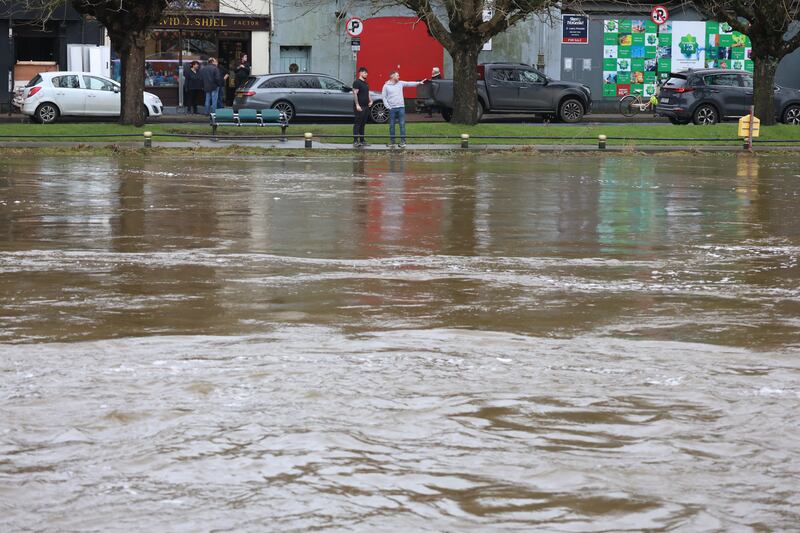
The river Slaney has burst its banks again, but Wexford County Council says that the quays are still accessible.
“They are at reduced capacity currently, heading towards one lane at the minute,” a spokesperson added.
River levels rose quickly on Friday afternoon, and conditions are expected to worsen over the next 24 hours.
Cruagh Road near Rathfarnham is closed until further notice, South Dublin County Council has said.
“Rain run off associated with Storm Chandra has resulted in a section of the retaining wall on Cruagh Road collapsing. The collapsed section of wall is 150m south of Cruagh Cemetery.
“This road is closed and traffic diversions are in place until further notice, to allow a full assessment of the road be undertaken and repair works carried out.”
Met Éireann’s latest forecast says temperatures will drop to between 1 to 6 degrees, with continued warnings for potential further flooding.
River levels continue to rise in Co Wexford this evening and surface water is building on all routes across the county.
Motorists have been advised to avoid Enniscorthy town as traffic is currently at a standstill.
Wexford County Council warned that there is a “very significant risk of flooding” in Enniscorthy town again tonight and over the next 24 hours.
Council teams are on site in Enniscorthy and around the county where there is an imminent risk of serious flooding and river gauges are constantly monitored.
Share your experience of Storm Chandra using the form below:
The Irish Red Cross has launched a dedicated phone helpline (01 642 4648) today to support those who have been impacted by flood damage.
“We are very aware that people are of course feeling distressed as a result of flood damage to their home or business caused by Storm Chandra,” said Deirdre Garvey, Secretary General, Irish Red Cross.
“Compassionate listening combined with practical guidance and support are important elements of the immediate humanitarian response. While this won’t fix the structural damage it can be a valuable support to people as they try to recover from such traumatic events.”
Leinster Camogie has announced on X, that all U16 Championship games due to take place this weekend have been postponed.
The Connolly-Belfast train line is set to reopen after closing due to flooding.
The train service will operate for the entire route on Friday evening (bus transfers had been in operation earlier to/from Newry to Belfast).
When asked about criticism over the lack of preparedness for flooding in some areas during Storm Chandra, Mr Leonard said “there’s always lessons to be learned”.
“After every response, we always do a review and a look back to see what can be improved, and there are always improvements that can be made to the response.”
He said, in some circumstances, there will be levels of rainfall that “push us beyond what any response capacity can do to prevent flooding in areas”.
The National Emergency Co-ordination Group met again this afternoon to discuss plans for the coming days.
Keith Leonard, national director of fire and emergency management, said local authorities are monitoring the situation and making sandbags available to people living in areas expected to flood.
He said Wexford County Council had issued at least 15,000 sandbags in recent days.
Speaking on the News at One on RTÉ Radio 1, he said “it’s hard to pinpoint exactly” where will flood, but that many areas all along the east of the country are at risk.
He said the Barrow and Slaney rivers are expected to burst their banks again, just a few days after flooding during Storm Chandra.
“Along the Liffey basin, I think, is a key risk as well,” he said.
As well as the seven counties impacted by the yellow rain warning, he said parts of Cavan, Monaghan, Laois and Offaly could also experience flooding.
‘There’s going to be a big bill after this’ – sinkhole discovered in Portlaw
Caroline Spencer reports: A sinkhole has been reported on Mount Bolton Road in Portlaw, Co Waterford. The hole was discovered on Thursday night.
Local councillor Declan Clune said Waterford council’s outdoor team received a report about a potential sinkhole and went to inspect the area.
After confirming the sinkhole, the road was closed off and will remain closed “for the foreseeable future”.
Mr Clune said it could be “early next week” before the civil engineering team can make an assessment on the sinkhole.
“There was so much rain and there’s no where for it to go in Portlaw. There’s going to be a big bill after this. The fields cannot absorb any more water, they’re saturated with excess rainfall.”
With Waterford under another yellow rain warning on Friday, there are legitimate concerns the sinkhole could expand as soil erodes.
Mr Clune, an independent councillor, warned it is the responsibility of landowners to dispose of excess water.
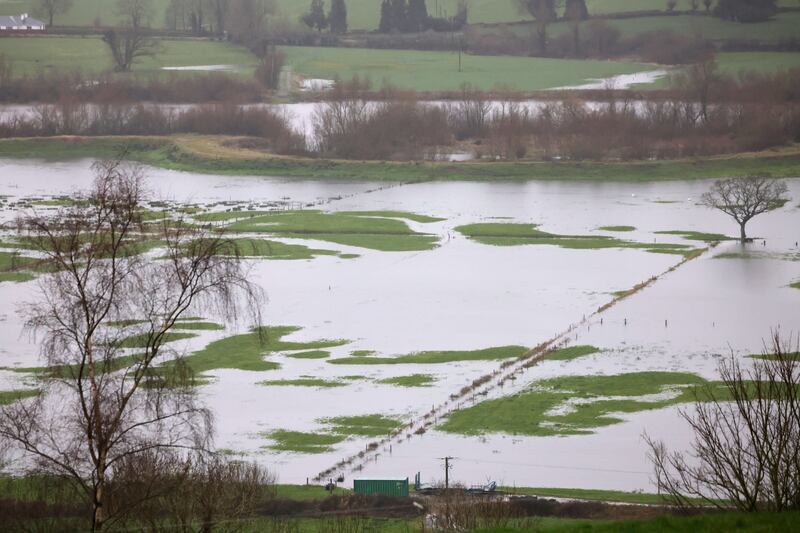
Speaking about the level of rainfall in January, Mr Murphy said it has been “a very, very wet month over much of the country”.
The official rainfall figures for January will be released next week, he said, before noting that, over the last seven days, some areas have seen up to 450 per cent more rain than average.
“Some parts of the southeast have [had] almost 100 millimeters of rainfall,” he said.
“There is certainly the possibility the records may be broken, and details of that will come next week.”
Gerry Murphy, a meteorologist with Met Éireann, has said places not covered by today’s rainfall warning are also at risk of flooding.
Speaking on the News at One on RTÉ Radio 1, Mr Murphy said: “Many, many places are at risk of flooding, even those that are not included in the yellow rainfall warning.”
He said, since early on Thursday, between 15 and 40 millimeters of rainfall have fallen in many areas.
A further 30mm of rain is expected in some areas on Friday, landing on already saturated ground and increasing the likelihood of flooding.
Mr Murphy said many places in the eastern half of the country - including Co Monaghan, which isn’t covered by the rain warning - is at risk of flooding.
He said it’s “very hard to pinpoint” exactly which rivers will burst their banks.
“People need to be prepared, really, for the possibility of further flooding right across the southeast region, but really right through Leinster, the midlands, on up into the east, the Cavan/Monaghan region and county Louth as well.”
In Kilkenny, flood waters are rising in Graiguenamanagh and Thomastown.
A barge that had being moored in Graiguenamanagh has broken free from it moorings, Sarah Slater reports.
Gardaí and emergency services are appealing to the public not to venture near areas affected.

People can track the river levels in their local area by using the OPW’s Water Level website.
River levels in county Laois have not risen as much as anticipated overnight, Laois County Council said in a statement on Friday afternoon.
However, the local authority warned that more rain is forecast over the next 24 hours.
“Laois County Council will continue to monitor river gauges overnight,” a statement said.
“Please drive safely on the road network over the weekend, noting that sections of the road network may be flooded and/or damaged as a result of recent rainfall.”
A status yellow rain warning - which impacts Carlow, Dublin, Kilkenny, Louth, Wexford, Wicklow and Waterford - came into effect at noon.
It will remain in place until midnight.
Heavy rain will be falling on already saturated ground in these seven counties in particular, following Storm Chandra earlier this week, Met Éireann has said.
This, combined with high river levels, will lead to localised flooding, river flooding and difficult travel conditions in several areas.

As several counties brace themselves for more heavy rain, many people are still dealing with the aftermath of flooding caused by Storm Chandra earlier this week.
Sarah Redmond is one of them.
She was woken in the early hours of Tuesday by her daughter who could hear water running through the family’s kitchen in Kilternan, Co Dublin.
The 38-year-old, who has five children with autism, said: “I can’t cope, I really can’t. Everything is destroyed.”
Read the full report from Sarah Burns here.
Johnny Brunnock, Trails Officer with Waterford City and County Council, has advised people to take extra caution if they out for walks in Waterford over the long weekend.
“We’ve had a lot of heavy and persistent rainfall in recent days, the ground is saturated,” he told Today with David McCullagh.
Mr Brunnock said there is an increased risk of subsidence, loose rocks and mud on many hiking and walking routes, particularly those near rivers or streams.
He said this will continue to be the case tomorrow, after a yellow rainfall warning is due to elapse.
“It takes a while for that saturated ground to dry up, and with only some dry spells forecast over the weekend, there’s not much likelihood of that,” he said.
“So, we are asking people to practice caution.”
Updates from Carlow and Wicklow
More from our reporter Sarah Slater:
Carlow County Council continues to monitor water levels in Tullow as the river Slaney is close to bursting its banks. The river is rising quickly again after over 50mm of rain fell on the Wicklow Mountains.
In Wicklow, the council is advising that several roads have been closed due to “structural damage” from the flooding.
In the Tinahey Area, the L7251 Gowle Road between Killabeg and Clonmore (Co Carlow), Coolkenna is closed, along with the L7245 Ballynultagh Road between Shillelagh and Ballynultagh, and the L7740 Killinure to Money Road, Coolkenna.
The L7235 Money to Parkbridge Road at Moylisha and Newry, Parkbridge; the L7744 Tomnafinoge Road, Coolboy; the L7233 Ballard Cross to Boley Road Shillelagh; and the L71331 Ballysilloge Lane, Knockananna are all currently closed.
The R749, Quarry Street, is also closed between Shillelagh and Ballynultagh.
“Other high risk locations are being monitored. Please use alternative routes until further notice,” the council said in a statement.
In Aughrim village, which was severely hit by the floods earlier this week, locals have organised a meeting in Lawless’s Hotel at 10am on Saturday to see what can be done to help those “impacted”, organisers of the Tidy Towns committee said.
Kilkenny flooding latest
In Kilkenny, motorists and members of the public are being advised to avoid the quay in the town of Graiguenamanagh as the river Barrow has burst its banks for a second time this week.
Sarah Slater reports:
Kilkenny County Council has said the quay is now closed and “to avoid the area if possible and plan extra travel time and reduce speed”.
A flood relief scheme in Kilkenny has been in the planning for more than a decade. The €10 million project, which was approved last year, is not expected to be complete until at least 2030.
The promised works are expected to start next year and 2028.
The water level in a second river in the town, the Duiske, is currently high.
Several householders and businesses were hit by the flooding on Monday with a large part of Main Street and the quay closed.
The town’s Barrow Valley Activities Hub has also been swamped from the heavy rains overnight with all campervan areas now under feet of water.
In a statement, management said: “Unfortunately it is now clear that we will have to remain closed for the remainder of the weekend. Our optimism about the receding water levels was short lived.
“The Barrow river level is dropping slowly and with more rain forecast for today and tomorrow there is a significant risk that we will be flooded again in the coming days.”
In nearby Thomastown, the council has closed the quay area as it too has been flooded from flood waters in the river Nore for a second time in three days, while the Gowran to Bennettsbridge road is impassable. Parts of Inistioge village are also flooded.
Warning for Waterford
Waterford City and County Council’s severe weather management team convened on Friday morning and is “actively monitoring the situation”.
Ground crews are on standby “to deal with any issues that may arise” such as localised flooding, blocked drains and gulley overflows, a statement from the council said.
In the event that sandbags are required, they will be available at the local authority’s machinery yards in Dungarvan and the depot in Carrickphierish in the city.
Members of the public can contact the council by calling 0818 10 20 20.
The council has issued the following advice:
- Stay away from swollen rivers, streams and flooded riverbanks – banks can collapse without warning
- Avoid open riverbanks and canal paths in flood conditions – water levels and currents may be far stronger than usual
- Avoid contact with floodwater where possible; it may be contaminated with sewage, chemicals or sharp debris
- Ensure your mobile phone is fully charged to enable communication
Andrew Doran Sherlock, a meteorologist with Met Éireann, has said there is “some uncertainty” regarding where the rainfall will move throughout the day, but the southeast is set to get “the largest amount”.
Speaking on Today with David McCullagh, Mr Doran Sherlock urged people to “pay attention to what the local authorities are saying, because they’ll have a better idea of which roads might be impassable or the on-the-ground conditions”.
He said that while there will be “some drier spells developing over the weekend, it’s not going to be settled by any means”.
“The latter half of Sunday is looking like the best of the weather for the weekend. But then, unfortunately, on Monday, while it will start out mostly dry, it looks like there is going to be further rain pushing up from the south.”
Roads are closed in a number of counties, including Wicklow, Wexford and Laois.
The latest updates will be on the social media pages or websites of local authorities.
If your home or business is impacted by flooding, you may be entitled to financial support from the Government.
The Emergency Response Payment is available to provide support to those living in properties directly affected by the storm.
This payment provides “immediate financial support to people whose homes are damaged by flooding or other severe weather events and who are not able to meet costs for essential needs, household items and, in some instances, structural repair”.
Separately, the Business and Community Flooding Support Scheme has opened to help small businesses and community groups impacted by flooding.
Read more details about both schemes here.
Flood warning in Laois
Laois County Council has issued a flood warning as the county braces itself for more heavy rain.
Simon Walton, director of services at Laois County Council, said: “We have high river levels throughout the county but obviously our key vulnerable areas are Mountmellick and Portarlington.”
Speaking to Morning Ireland, he said there is “a palpable fear of flooding” in these areas in particular.
“I haven’t met one person yet who doesn’t want to see the flood relief scheme introduced, and the council holds similar views,” he said.
Mr Walton encouraged people to not attempt to drive on closed roads.
“We had to deploy the fire and emergency services to rescue two vehicles who ignored the road-closure signage, sought to drive through the flood and put themselves and, thereafter, our own fire and emergency crews at danger in terms of having to go in and rescue them.”
The National Emergency Co-ordination Group (NECG) is expected to meet again today.
“The NECG and response agencies will be closely monitoring the situation and preparing for the risk of further flooding over the coming days,” a statement from the group said.
“More heavy rain is forecast over the next few days and localised flooding will continue to be a risk due to saturated ground conditions and high river levels. The east, north-east and southeast of the country remain particularly at risk.
“The public should be aware that situations can change very quickly and even small amounts of rain could result in significant impacts in areas where river levels are high and/or where the ground is already saturated.
“Local response teams are monitoring the ongoing situation very closely, ensuring resources are in place and crews are on standby, and preparing necessary interventions.”
Wexford on ‘high alert’ for more flooding
Wexford County Council is on “high flood alert” in Enniscorthy and Bunclody in particular, the local authority’s CEO has said.
Eddie Taaffe told Morning Ireland the “period of danger” will continue for about 48 hours.
He said the council have distributed around 10,000 sandbags to homes and businesses since last Saturday.
As well as bracing for the impact of potential flooding on properties, Mr Taaffe said drivers need to take extra care as “there is going to be rainfall everywhere and difficult driving conditions”.

The council’s CEO said he was “very disappointed” by long-running delays in setting up a flood relief scheme in Enniscorthy, noting the process has been beset with planning issues.
Mr Taaffe said the council has been working with the Office of Public Works for years in a bid to get planning permission.
“We’ve broken the scheme up into two phases. We’ve tried to de-risk it in as much as possible from environmental concerns,” he said.
“Realistically, we are still even two years away from having planning consent for the first phase of the scheme.”
The Enterprise train between Belfast and Dublin is operating on a reduced timetable due to flooding on the line.
Bus transfers are in place between Newry and Belfast.
More flooding is expected, particularly in the east, southeast and northeast, as heavy rain moves across Leinster and east Munster on Friday afternoon and evening.
“Some thunderstorms are possible too,” Met Éireann has said.
“Scattered showers will continue in other areas. With saturated ground conditions and high river levels, further localised flooding is possible.”
Highest temperatures will range from 7 to 10 degrees.
Warning for drivers
There will be an increased number of Garda checkpoints on the roads over the bank holiday weekend.
Garda Supt Liam Geraghty has encouraged road users to take extra care and for all drivers to slow down.
“This weekend is going to be very, very challenging, right across the country, even if you’re outside of the counties which have yellow rain warning,” he told Morning Ireland.
“Everywhere around the country at the moment is very, very wet. Our roads are very wet and, because of that, there will be additional muck. There may also be debris from wind and trees and branches on our roads.
“So, the starting point is for everybody to slow down. If you’re driving at a slower speed, you have a better capacity to react to dangers on the road as they happen in front of you.”

Supt Geraghty also advised against driving through roads blocked with water.
“If you’re coming across a road that is blocked with water, don’t take the chance ... At very least, you may damage your vehicle with floodwater damage. At the very worst, you may not have to be rescued by the emergency services, who are already quite busy this weekend.”
Supt Geraghty warned people against using their phones while driving, saying this is a big distraction which can cause accidents.
He said gardaí have in the past also come across “men shaving, women applying makeup, doing all sorts of things behind the wheel of the car, besides concentrating on the actual driving”.
More flooding expected
Linda Hughes, a meteorologist with Met Éireann, said more flooding is expected in some areas today.
Speaking to RTÉ Radio’s Morning Ireland, she said: “We’ve had very high accumulations of rainfall in the past couple of weeks. And obviously we’ve seen the severe flooding in some places as well.
“There’s been no break since Storm Chandra and another spell of rain is coming in. So, while rivers did decrease, further rain on top of that now, again, is going to cause some further issues.”
In term of Friday’s weather, Ms Hughes said “another band of rain is expected to move up from the south east, and that will spread across most of Leinster and into eastern parts of Munster as well”.
The seven counties which will be under a status yellow rain warning from midday until midnight - Carlow, Dublin, Kilkenny, Louth, Wexford, Wicklow and Waterford - are expected to be worst impacted.
“Thirty or 40 millimeters in these areas, possibly a little bit higher than that, particularly over higher elevations,” Ms Hughes said.
“In mountainous areas, we could see some accumulations higher than that. This spell of rain will be a quite persistent spell of rain, rather than showers. So, it is going to be really a wet afternoon and evening right across the region.”
Yellow rain warning issued
Met Éireann has issued a status yellow rain warning for seven counties: Carlow, Dublin, Kilkenny, Louth, Wexford, Wicklow and Waterford.
The warning will be in effect from noon on Friday until midnight.
Further heavy rain and showers falling on already saturated ground, combined with high river levels, will lead to localised flooding and difficult travel conditions.
A yellow rain warning for Antrim, Armagh, Down, Fermanagh, Tyrone and Derry has been in effect since midnight. It will remain in place until 6pm on Friday.
Spells of heavy rain will lead to some transport disruption and flooding in places, the UK Met Office said.
As we brace for more rain today and over the weekend, researchers at Maynooth University have given some insights into Storm Chandra.
Climate change made the flooding earlier this week almost three times more likely to occur, analysts have told Caroline O’Doherty, our Climate and Science Correspondent.
The researchers said the high volume of rain that fell in the seven days up to and including Storm Chandra turned the heavy but “not particularly remarkable” rainfall into a “devastating” flood event.
They found the magnitude of the rainfall over the full week was 9 per cent greater than it would have been in the cooler Earth that existed before climate change.
“We would have expected similar seven-day rainfall to happen once in every 150 years,” they said.
Read their full insights here.