
Herzog Park is not just a name on a sign. It is a visible reminder that Jewish life has deep and vibrant roots in Dublin.
It sits in the heart of the neighbourhood where much of Ireland’s small Jewish community has lived for generations, beside the only two Jewish schools in the country. For those who walk through it every day, and especially for the Jewish families who have grown up beside it, the park is a place filled with memory, identity and belonging.
The names we give to public spaces often tell us who we value, whose stories we honour and who we include as equals in our society. To remove the name “Herzog” from the park would be a shameful erasure of Irish–Jewish history and would send a painful message of isolation to a minority already experiencing rising hostilities.
Chaim Herzog was shaped by this city and he loved it in return. Dubliners loved him too, not only his childhood friend, Cearbhall Ó Dálaigh, later president, but also all who saw in him a local boy who rose to become a head of state and yet never lost his connection to Ireland.
A 34-year secret shrouded in shame paved the way to teach children about the horrors of our past

George Clooney interview: ‘I’m not a guy who lives with regret’

‘No new gifts, please’: Meet the parents who swap rather than shop

Dublin’s Herzog Park set to be ‘denamed’ by city councillors over Israel connections

During the second World War, Herzog fought with the Allies against Nazi Germany, helping to liberate concentration camps. He later helped build the State of Israel, taking part in the fight for independence from British rule.
[ Plans to remove name of former Israeli president from Dublin park suspended ]
He opposed political extremism and believed in a future where Israelis and Palestinians could live side by side in peace and security. He went on to become president of Israel, widely regarded as one of the most influential Irish-born figures on the world stage.
When he returned to Ireland in 1985 on a state visit, he was greeted with a guard of honour. His presence was a moment of great national pride. Newspapers celebrated the fact that he was the only visiting head of state to speak Irish.
Chaim’s father, Isaac Herzog, was a remarkable figure who served as Ireland’s first chief rabbi, arriving in Dublin from Belfast in 1919 and quickly becoming a respected national voice.
A close friend of Éamon de Valera and a passionate advocate for Irish nationalism, he was affectionately known as the “Sinn Féin rabbi”. His life came to symbolise the deep bond between Jewish and Irish identities: two spirited nations seeking freedom, dignity and the right to chart their own future.
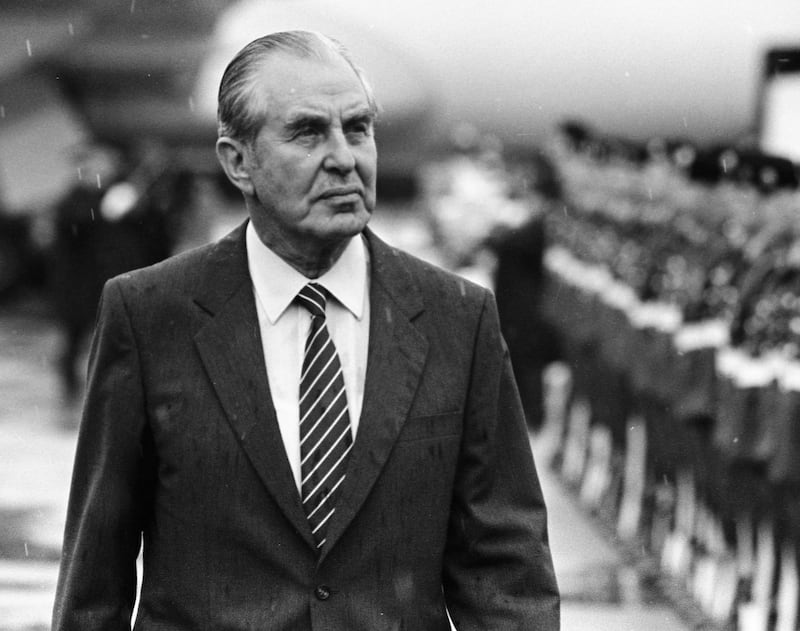
This kinship was once recognised proudly in Ireland, most clearly in 1995 when the park was named after his son, Chaim Herzog. That dedication was more than a gesture to one man. It affirmed that the Herzog story, and the wider Irish–Jewish story, formed part of Ireland’s national tapestry. It signalled that Jewish history in Ireland mattered, that it belonged in the public landscape and that the role of Irish Jews was woven into the life of the State.
None of this history has changed; what has changed is the willingness to acknowledge it.
When I took up my role as Chief Rabbi two and a half years ago, I inherited a community that was deeply proud to be both Jewish and Irish; a community many of whose families have lived here for generations, contributed greatly to Irish society and felt that this country had – albeit with occasional exceptions – given them the respect and space to flourish.
Yet over the past two years I’ve seen a marked change and a definite sense of hurt and isolation rapidly take hold. The voices of many in our community have been increasingly delegitimised and a growing number now feel that their place in Irish society is fast being eroded.
The rise in incidents of hatred towards Jewish people has been sharp and painful, felt not only online but also on our streets, in schools, universities and the workplace.
Against this background, the move to remove Herzog’s name lands as a cruel hammer blow. It signals that the story of Jewish people in Ireland is disposable and can be wiped from public life without a second thought.
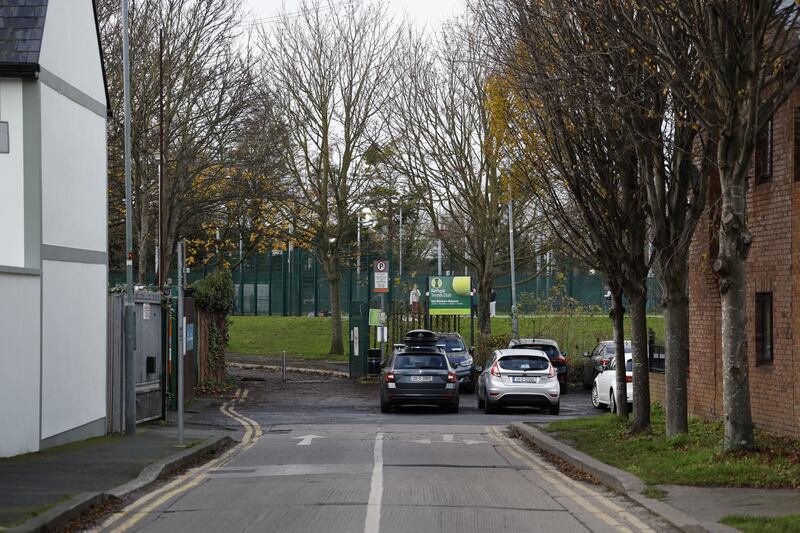
The Dublin City Council Commemoration Committee’s recommendation to remove the name “Herzog” was given with complete disregard to the neighbouring Jewish schools and the local Jewish community. Apparently, no one thought to consult the children who play in the park every day or the people who see it as a quiet marker of their presence in this city.
This raises a troubling question: what steps, if any, were taken to understand the significance of this park for those connected to it most deeply? What assessment was made of the impact such a motion might have on people already facing growing aggression?
At a moment when Jewish belonging in Ireland is more fragile than it should be, this is an alarming failure.
When decisions with real meaning for a minority group are made without thought or reference to that group, it casts a shadow on the assurances of safety and inclusivity. The Programme for Government 2025 includes a commitment to “fostering Jewish life”, presumably recognising that Jewish life in Ireland now feels less secure than it once did.
[ Herzog Park denaming opposed by Micheál Martin and Simon Harris as ‘wrong’ and ‘divisive’ ]
Is this what fostering Jewish life looks like? Striking out one of the few public Jewish landmarks in the country and erasing one of the most recognised Irish-Jewish names from view? Is Jewish life and legacy to be determined by others, consigning us to invisibility?
At its core, the debate around Herzog Park is about what kind of city Dublin wants to be. Ireland takes much pride in being inclusive, welcoming and multicultural; a country that embraces diversity and stands up for minorities. Allowing the divisive deletion of a piece of Irish-Jewish heritage from a neighbourhood park would betray those values and embolden those who seek to further marginalise Jewish people in this country.
Despite the hardships of recent times, our community has remained resilient and positive. We will continue to thrive, no matter what. But symbolic acts matter and echo far beyond signage. Keeping the Herzog name on this park would not only honour a central chapter of shared history, it would also affirm something vital: that Jewish heritage, Jewish belonging and Jewish life are still welcome in Dublin.
Yoni Wieder is Chief Rabbi of Ireland


