I know, I know, thoughts of next summer are very possibly the last thing on most gardeners’ minds as we continue to grapple with one of the hottest, driest growing seasons on record. But hear me out, because if you love the thought of growing hardy flowering annuals that will be taller, bigger, more drought resilient, deeper rooted, earlier into flower and longer in flower, then there’s method to such madness.
Unlike their spring-sown equivalents, these kinds of early autumn-sown hardy annuals enjoy the many benefits of one of the most essential elements in any garden, which is the luxury of time. It’s time that affords their root systems the precious opportunity to bed down properly in the soil – with their consequent larger, deeper, more extensive root systems then acting as well-oiled engines to generously fuel leafy growth and vigorous flowering the following year.
If you’ve ever had the chance to compare autumn-sown larkspur (Delphinium consolida), Argentine forget-me-not (Omphalodes linifolia), cornflower (Centaurea cyanus), pot marigolds (Calendula officinalis), orlaya, Californian poppy (Eschscholzia californica), opium poppy (Papaver somniferum), field poppy (Papaver rhoeas), honeywort (Cerinthe major purpurascens), bishop’s flower (Ammi), and love-in-a-mist (Nigella damascena) with their spring-sown equivalents, then you’ll know they’re like chalk and cheese.
I say this with some bitterness. After complaining this summer about the miserly dimensions of my oh-so-pretty but petite Argentine forget-me-nots, I was gently informed that a fellow flower-farmer florist’s plants were three times the size of mine as a result of being autumn-sown. Harrumph.


In a normal year, I’d suggest the possibility of either direct-sowing seed of these hardy annuals into the ground, or into a well-prepared seedbed for transplanting into their final growing positions in late autumn. But the soil in most Irish gardens is now so parched and sun-baked that it would require the addition of very generous amounts of high-quality, ideally peat-free seed or potting compost plus very diligent watering to ensure successful germination.
Given those challenges, much better instead to sow into 3-litre plant pots filled with a good-quality seed compost, with the top 3cm of compost further lightened with fine vermiculite to help retain moisture and air.
Thankfully there’s no need to mollycoddle these freshly sown pots indoors under cover. Just bottom-soak them in water for a few hours and cover them with an upturned large freezer bag to lock in humidity, using an elastic band to seal the edges of the latter around the pot rim. Then place them in a bright, sheltered spot out of direct glaring sunshine and wait.
Keep a beady eye out for signs of germination, gradually removing the plastic bag over a period of days once you spot emerging seedlings. Make sure to keep these regularly watered, doing so very gently to avoid bruising their fragile stems.
Once the baby seedlings develop their first set of true leaves, carefully prick these out into deep root trainers (available from fruithillfarm.com) and grow them on until late autumn, at which point they can be planted in the ground.

Another alternative is to sow the individual seeds directly into root trainers, thus skipping the first step as outlined above. While this has the benefit of saving time, there will inevitably be gaps, while without the upturned freezer bag acting as a protective, waterproof dome, it’s much harder to maintain the high levels of humidity necessary for good germination.
Bear in mind also that some of these hardy annual species benefit greatly from a process known as cold stratification, with exposure to colder temperatures acting as an important trigger for germination. The easiest, most space-efficient way to do this is to pre-chill the seeds by placing them between a few layers of damp kitchen paper sealed in a freezer bag and then popping it in your fridge. Once the chilling period is complete, the seeds can be sown into pots or root trainers as described above.
A good example of a hardy flowering annual which benefits hugely from this process is larkspur. Fussier than most, its seed should be refrigerated (not frozen) for a week. It also won’t germinate well in temperatures above 15 degrees and needs complete darkness to do so. For all these reasons, it’s best to cover the freshly sown pots and place them in a dark, cool shed or an old, unused fridge freezer until germination occurs. An exquisite hardy annual whose tall, graceful flower spires come in shade of white, pink, blue, purple and pale lavender, it’s one of the glories of the summer cutting garden.
Orlaya grandiflora, also known as white lace flower, is another hardy annual whose seed benefits from a period of pre-chilling (1-2 weeks) to encourage good germination. Unlike larkspur, the seed of this very pretty, drought-tolerant, white-flowering umbellifer also needs light to germinate (this is equally true of all the poppy species listed above), so just barely cover it with a very thin layer of compost and/or fine vermiculite. Slow to germinate, this tap-rooted species resents disturbance so it’s especially important to quickly prick the baby seedlings out into root liners as soon as they’ve developed their first set of true leaves.
Larkspur is similarly tap-rooted, as are the Californian poppy, opium poppy and field poppy, so their young seedlings should be treated in the same way.
[ Want to live a longer, happier life? Take up gardeningOpens in new window ]
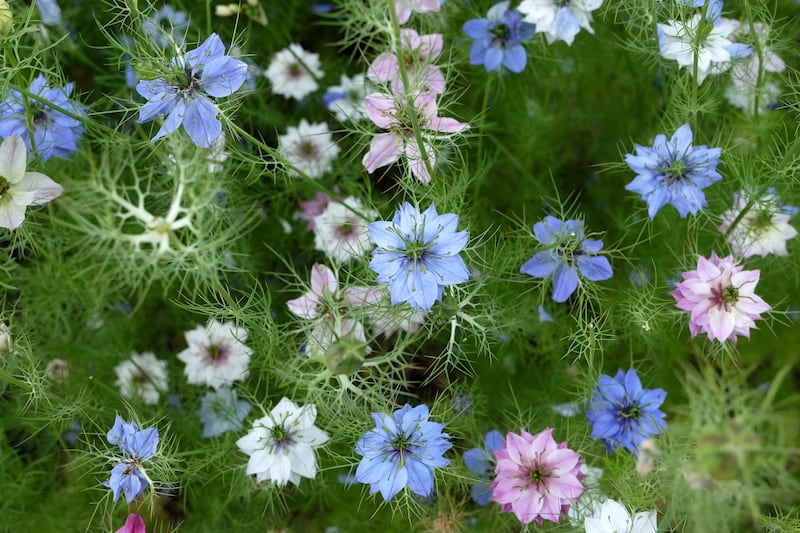
Finally, love-in-a-mist (Nigella) is the only species of those listed above that so deeply resents any kind of root disturbance that there’s zero point in attempting to sow it into pots or cellular trays. Instead, direct-sow it where you want it to grow, bearing in mind that it generally germinates best in gravel paths. Once established, it typically self-seeds generously from year to year, forming pretty clouds of its distinctive flowers in early summer. These are followed by gorgeous balloon-shaped seed heads from which you can then home-harvest yet more seed.
With the exception of any hybrid varieties with F1 or F2 after their name, this is also true of all the other hardy annual species listed above, meaning – rather wonderfully – that you can very soon be self-sufficient as regards a reliable supply of fresh, viable, organic seed.
In the meantime, recommended suppliers include Galway-based seedaholic.com, gardenblooms4u.ie, irishplantsdirect.ie and all good garden centres.
This week in the garden
- Use your phone to make a video record of your garden, identifying its planting strengths and weaknesses as well as any jobs you feel need doing over the quieter months of autumn and winter, from dividing and transplanting to filling gaps and pruning.
- If your compost heap was left uncovered over summer, it will benefit from being watered to rehydrate it and kickstart beneficial microbial activity. If it’s very dry, try removing a portion and leaving it to soak in a barrow of water for a few hours before replacing it on the heap. Turning the heap and adding fresh nitrogen-rich material will also help to aerate and reactivate it.
Dates for your diary
Delgany & District Horticultural Society’s Annual Dahlia Show: St Patrick’s National School, Greystones, Co Wicklow; Saturday, August 29th (2.30pm-5pm). All entries welcome, contact the show secretary at ddhs.showentries@gmail.com before August 27th for details. A full schedule can be viewed on the society’s Facebook page.
Howth & Sutton Horticultural Society’s Autumn Show & Plant Sale: Scoil Neasáin, Baldoyle, Dublin 13; Saturday, August 29th (from 2.30pm). All welcome, see hshs.ie