Conor McCarthy’s role as both a key kickout target and in the Monaghan attacking shape gives a real insight into the Monaghan game plan. The Scotstown man was the fulcrum of Monaghan’s win over Roscommon on Saturday. The number seven on his back belies the advanced role he plays in the team.
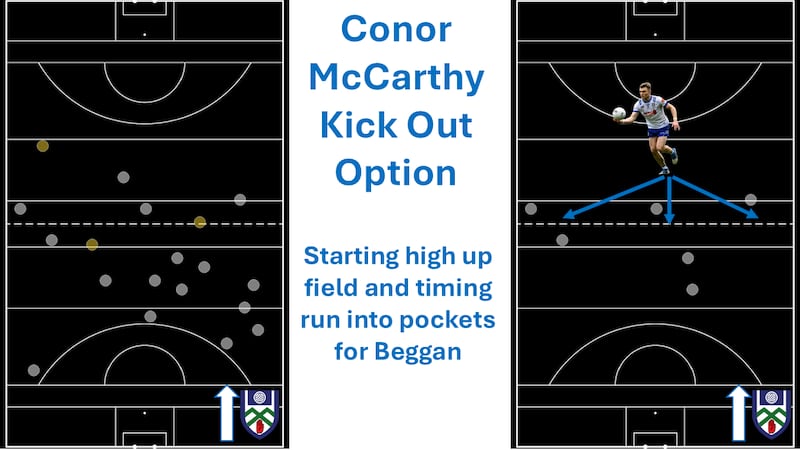
He was an option for his clubmate Rory Beggan’s kickout all through the game as he started high up the field and moved into pockets created by the selfless movement of others. In total Monaghan’s kickout was a huge platform for possession, as they secured 16/19 of their kickouts, making for 84 per cent retention.
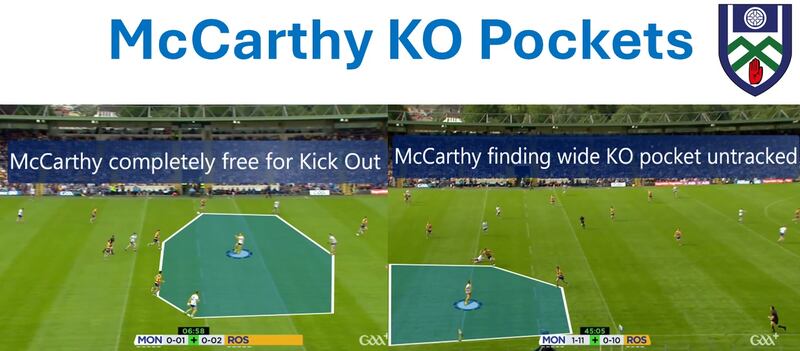
McCarthy was targeted and won six of these – the locations of those wins and the freedom he managed to find shows an extremely well drilled kickout plan. No surprise maybe, given the understanding he has with his clubmate, and knowing the range Beggan has with the ball on the tee.
His seventh-minute kickout win led to a Stephen Mooney point; his 46th-minute kickout found McCarthy as well and led to a score that was converted by Mícheál McCarville, after a McCarthy assist.
RM Block


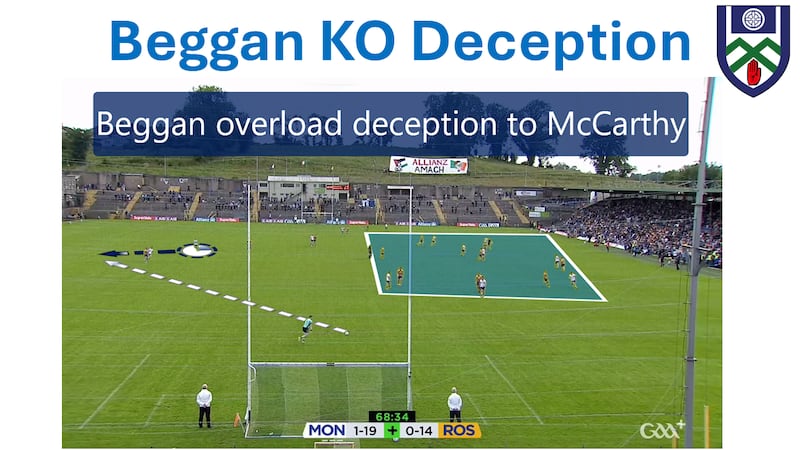
In the closing stages of the game, Beggan orchestrated an overload before deceptively chipping the ball nonchalantly out to between the 65s to reward superb McCarthy movement. The ability to hit this kickout is scarcely believable considering Beggan’s body position as he approached the ball. After McCarthy secured the ball, it was a kick pass to Mícheál Bannigan and on to Ryan McAnespie, who split the posts.
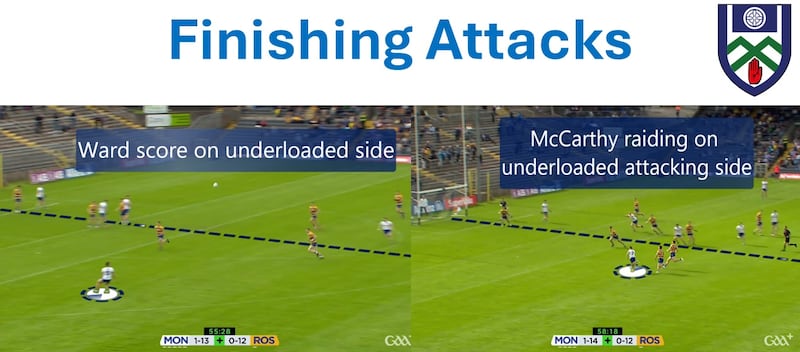
Monaghan’s profligate shooting in the first half was addressed at half-time, as the Farney men brought a much more measured shooting approach in the second half against the wind. They utilised overloads on the right-hand side of slow attacks before eventually punching holes on the left side through the likes of McCarthy and Dessie Ward.
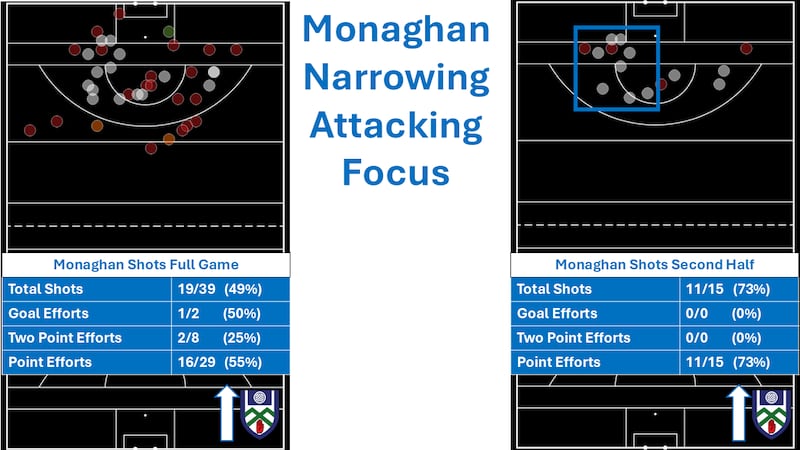
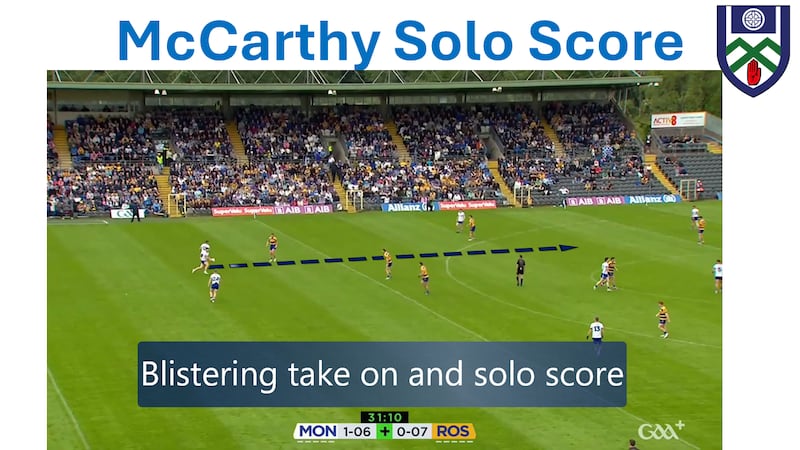
Monaghan managed four of their five first-half points on the left of the D. The pick of these scores was a solo effort by McCarthy in the 32nd minute, when he razored through two Roscommon defenders and stroked the ball over off his left foot.
Monaghan really focused on this zone in the second half, looking to penetrate on the left side, as the rest of their attacking structure held width on the right side, exposing Roscommon’s frailty on switched attacks – 10 of their 15 attacks eventually found a gap on this side. Roscommon will be disappointed they weren’t able to fix this in-game as it is a simple principle of play that teams are using across many levels. The pace of McCarthy, Bannigan and Ward were key in exposing this, while Monaghan kept their slower movers on the right-hand side of attack.
McCarthy also won three Roscommon kickouts, forced a high turnover on Roscommon in the first half and secured a late free (one of only two scorable frees Monaghan won all game) – all of which added to his scoring prowess and kickout role for Monaghan. A dominant performance.
It is likely McCarthy will receive considerably more attention in round three than Roscommon afforded him, and Monaghan will look to their other leaders to help them secure a quarter-final berth. They relied heavily on Jack McCarron in the second quarter in Clones as he hit two two-pointers when the majority of the Monaghan attack was faltering in terms of efficiency – with the exception of Stephen Mooney, who added 1-1 and had another goal effort (set up by McCarron) well saved.
It was interesting to note the positioning of McCarron inside as a target man in the first half when the Farney men had the wind, while he operated on the outside of attacks in the second half, when Monaghan controlled possession that bit more, and he managed to occupy Roscommon defenders allowing attacks to finish on that left side of attack when he held his position on the right.
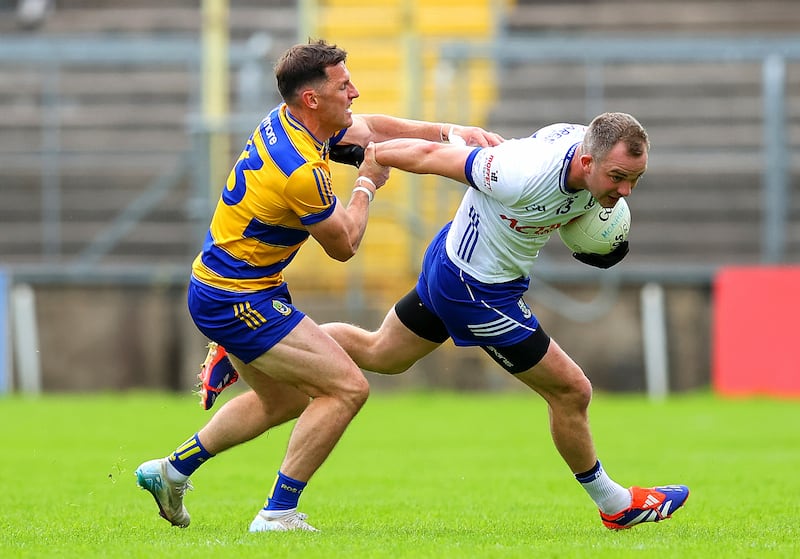
Monaghan are not short of leaders back in the field. Ward showed considerable attacking threat from deep with three points from play, the pick of which came in the 44th minute at the end of an attack that started when he snuffed out a Roscommon goal chance. Ryan O’Toole and Ryan Wylie added their usual combative defensive performances, alongside unerring discipline, as shown by Roscommon not scoring from any placed ball.
A continuation of the Jekyll-and-Hyde performances that Gabriel Bannigan’s men have shown against Derry, Mayo and Roscommon would probably lead to them being caught at some stage, but a full 70-minute performance would make them a match for anyone. Their opening 20 minutes, which saw them trail 0-2 to 0-5 after scoring a mere two points from 12 shots (17 per cent shooting efficiency), simply won’t suffice.
Paul O’Brien is a performance analyst with The Performance Process