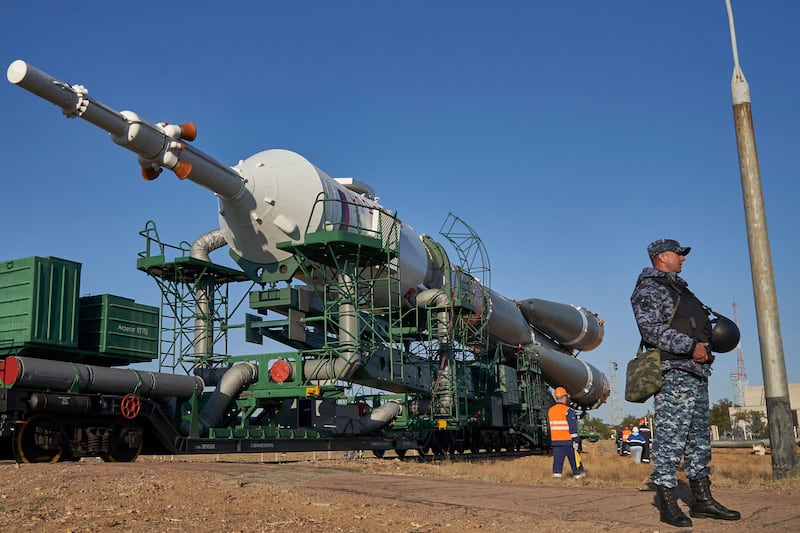

Though it sounds like the plot to an old Bond movie, the warning that Russia may be planning to launch a nuclear satellite into orbit appears to be real.
The leaked report by the German foreign intelligence service mirrors a growing body of similar western intelligence assessments.
In October, the US military intelligence agency (DIA) renewed its warning – first issued in 2023 – and said any efforts to launch a nuclear weapon in space would violate the 1967 Outer Space Treaty.
Some analysts believe it is the next logical step for Russia, four years on from its launch of a dummy satellite shortly before the invasion of Ukraine.
HSE board faces crisis as political support dwindles in wake of Anne O’Connor sacking

Sports pitch development in Wesley College generates local objections

Why has the Irish citizen who denies murdering ex-wife in Budapest changed his story?

Glovers Alley restaurant review: Two-star ambition on show in Adam Nevin’s magic flavours

It’s believed the aim of that exercise was to test the effects of heavy nuclear radiation in space.
North Atlantic Treaty Organisation (Nato) secretary general Mark Rutte says the defence alliance “will defend against any threats in space”.
But why would Russia want to do something that could be as potentially damaging to its own satellite network as that of its enemies? What do we know about the alleged plans to launch the warhead in December? And what, if anything, can world leaders do to prevent it?
Berlin correspondent Derek Scally joins the In the News podcast to discuss this extraordinary story.
You can listen to the conversation on the player above or search for In the News wherever you get your podcasts.