
I could bang on forever about the endless charms of trees. These infinitely useful, supremely nature-friendly mitigators of climate change aren’t just crucial to the survival of the planet and all its countless life forms. They’re also the most theatrically beautiful signifiers of seasonal shifts, with the capacity to lift our mood on the darkest and drabbest of winter days. With the latter in mind, here’s a shortlist of species or varieties worthy of a spot in any Irish garden.
Snowy mespil
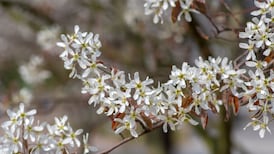
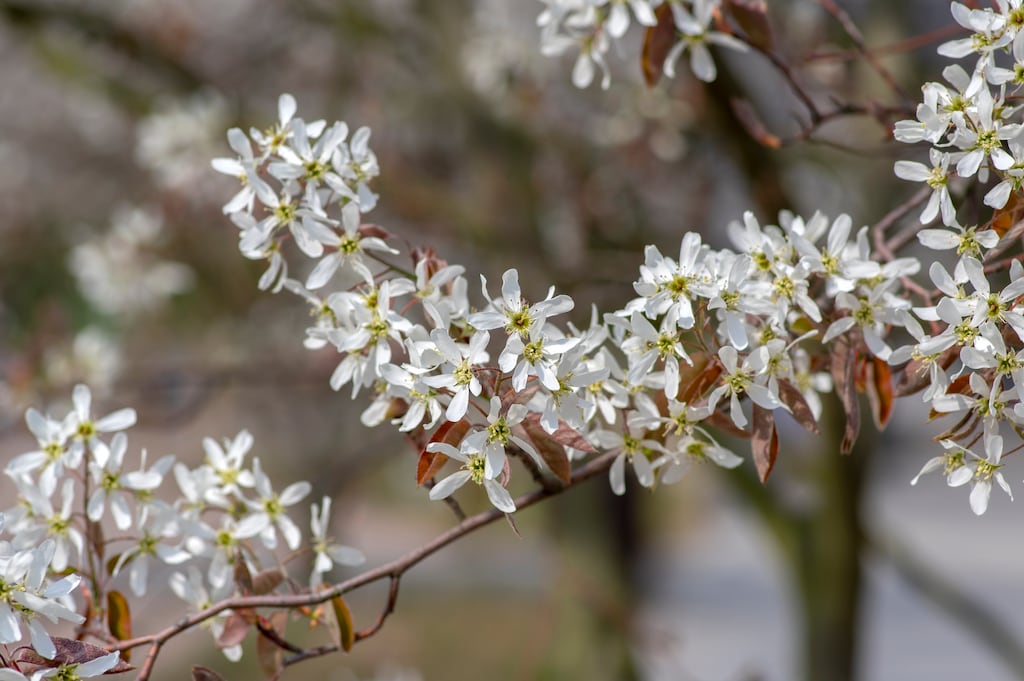
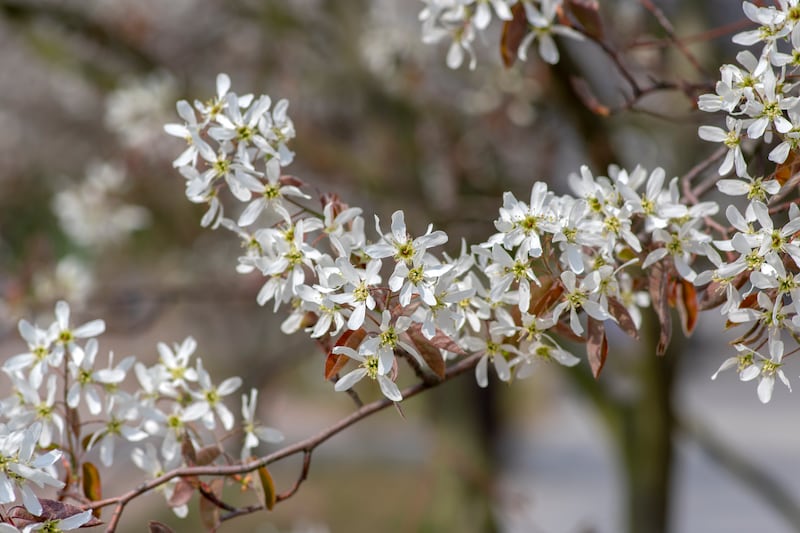
Amelanchier lamarckii (multistemmed)
Living proof that deciduous species can pack a powerful punch even in the depths of winter, this hardy, resilient, versatile small tree is a favourite among garden designers for its oh-so-elegant silhouette of sculptural branches and delicate tracery of twiggy stems. Underplanted with ferns, grasses and spring-bulbs, it can bring even the dullest of urban courtyards to life, plus it also provides multiple seasons of interest, from its pretty spring blossom to its rich autumn foliage colour. Tolerant of light shade but best in full sun, snowy mespil likes a moist but well-drained, slightly acidic soil.
Himalayan strawberry tree
Cornus capitata
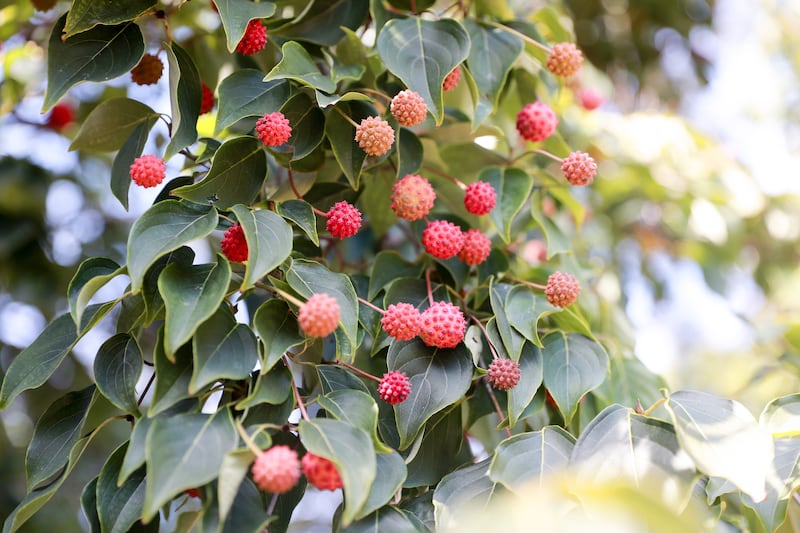
Although technically only suitable for the mildest, most sheltered of coastal Irish gardens, I have a soft spot for this most decorative of dogwoods. Climate change has also extended its range to somewhat cooler parts of the country where this small evergreen tree would once have struggled, as have the efforts of plant breeders to introduce new, hardier varieties. Its exceptionally decorative, strawberry-pink fruits ripen on the branches in late autumn and then persist into winter, while the Himalayan strawberry tree’s distinctive pale dogwood flowers, which appear in spring, are also very decorative.
Birch
Betula
While many varieties of birch are worthy of a spot in the winter garden, I’m a fan of two in particular, one of which is Betula ‘Kansu’, while the other is Betula ‘Fascination’. Both are hardy deciduous trees that have exceptionally beautiful, subtly colourful, peeling bark in shades of cream, cinnamon, pink and copper, are happy in soils of average fertility, and will tolerate exposed growing conditions, reaching an average height of 12m x 6m-8m after 20 years.


Paperbark maple
Acer griseum

The huge maple family is home to some of the very best garden trees for winter interest and this is one of them, with a strikingly beautiful, peeling bark the colour of a Negroni cocktail. Yet another plus is its outstanding display of colourful autumn foliage. Fully hardy and tolerant of most soils, this small to medium maple likes a sheltered spot in full sun. Alternatively, seek out its close relative, Acer davidii ‘Viper’ (also known as ‘Mindavi’), which also makes a fantastic addition to the winter garden. Commonly known as the snakebark maple, this medium-sized tree is prized for its distinctively striped and mottled trunk.
Tibetan cherry
Prunus serrula
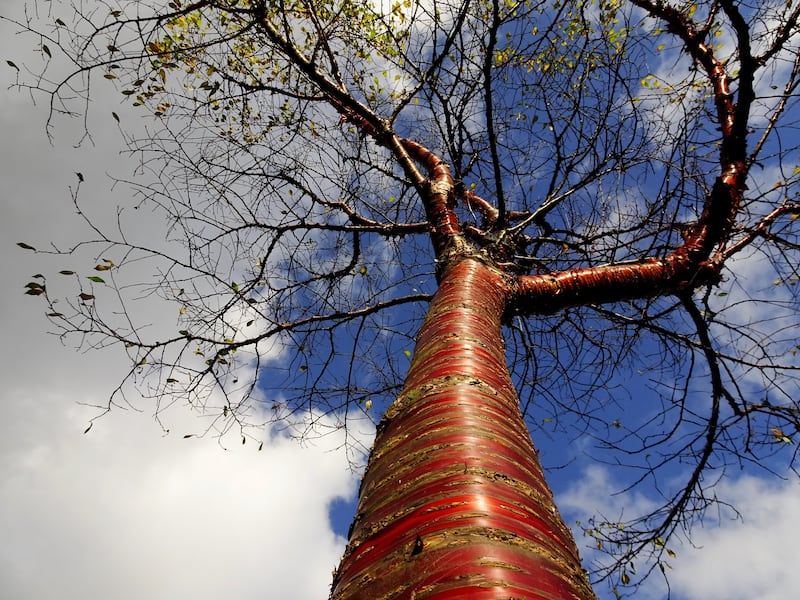
A gardening classic, this small, hardy, deciduous tree is prized for the glimmering beauty of its conker-brown peeling trunk. To see it at its best, position it against a contrasting background and in a bright, sheltered spot where low shafts of winter sunshine can reach it. Tolerant of most soils except those prone to winter waterlogging, the Tibetan cherry is also loved for its pale spring blossom as well as its fiery display of autumn colour.
Coral bark maple
Acer palmatum ‘Sango Kaku’
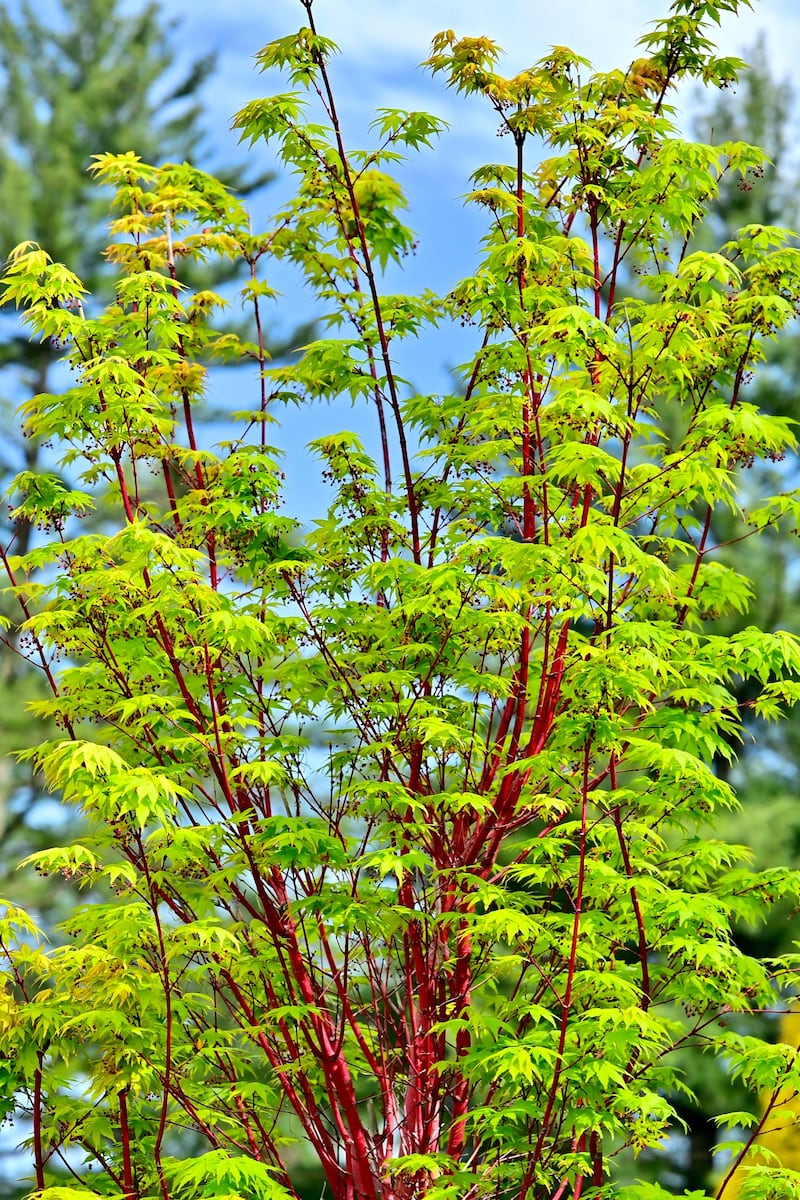
A tree that looks exquisite no matter what the season, this Japanese maple shines brightly in the winter garden when, stripped of its cloak of golden autumn leaves, its coral pink branches have a luminous beauty all their own. Slow growing, it needs a sheltered spot in dappled shade and a deep, humus-rich, moist but free draining, neutral to acidic soil.
Box-leaf azara
Azara microphylla
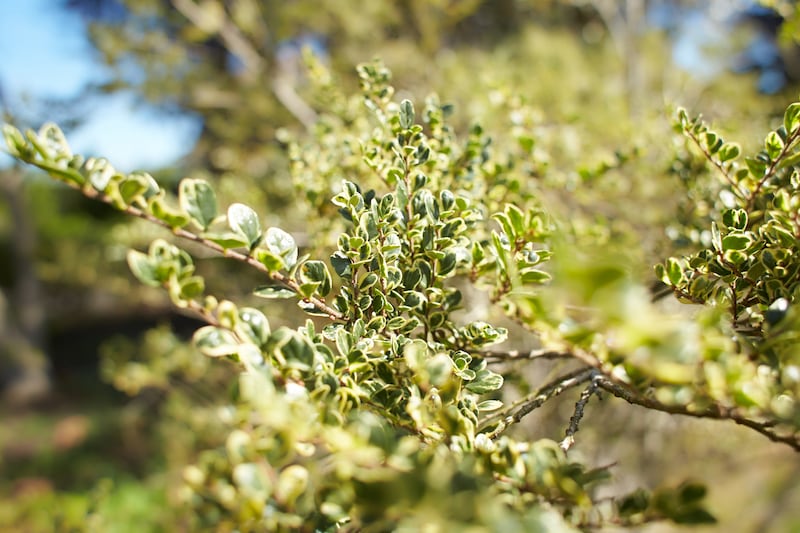
A woodland species native to South America, this ultra graceful, small evergreen tree looks completely at home in a chic town garden where it can enjoy the protected microclimate offered by the shelter of nearby high walls and fences. Its finely textured foliage and airy, elegant growth habit aside, its tiny, intensely scented pale yellow flowers in spring are another boon. Happy in full sun or light shade, its hardiness increases as it matures.
Sorbus vilmorinii
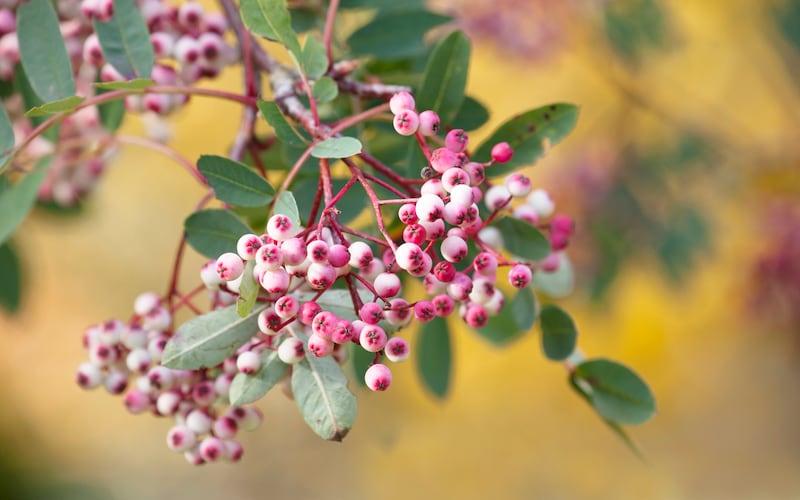
One of the loveliest of ornamental rowans, this small, deciduous, hardy tree produces a magnificent display of cloudy pink berries in autumn, which typically persist on the tree well into winter, fading to near white as they do so. Its pretty display of pink spring blossom and richly colourful autumnal foliage are otherreasons to grow it, as is its tolerance of a wide range of growing conditions.
This week in the garden
- Collect fallen leaves from garden ponds as well as any high traffic areas where they might pose a hazard and bag them to either add to your compost heap as carbon-rich layers (make sure to alternate these with nitrogen-rich layers of green waste) or to make into leaf mould.
- Sow seed of sweet pea for stronger, larger plants that will be earlier into flower next summer. Chit the seed first by putting it between layers of damp kitchen paper inside a clear plastic box, and placing this indoors in a bright, cool spot. Once sprouted, carefully plant the seeds 3cm-4cm deep seeds into root trainers or individual small, deep pots filled with a high-quality multipurpose compost lightened with vermiculite. Water well and then place in a bright, cool but frost-free spot to grow on. Sweet pea seed is very desirable to rodents, so cover the root trainers/pots with a layer or two of fine netting to protect them until the seedlings fully emerge.
Dates for your diary
Friday, December 4th, 9.30am-1pm and again on Saturday, December 5th, same hours: Christmas Wreath Workshop, RHSI Bellefield, Shinrone, Co Offaly, places limited, prebooking essential (€75-€85, lower price for RHSI members). rhsi.ie
Saturday, December 12th, 10am-4pm, and Sunday, December 13th, same hours: Annual Eco Christmas Craft Market, National Botanic Gardens, Glasnevin, Dublin 9. botanicgardens.ie