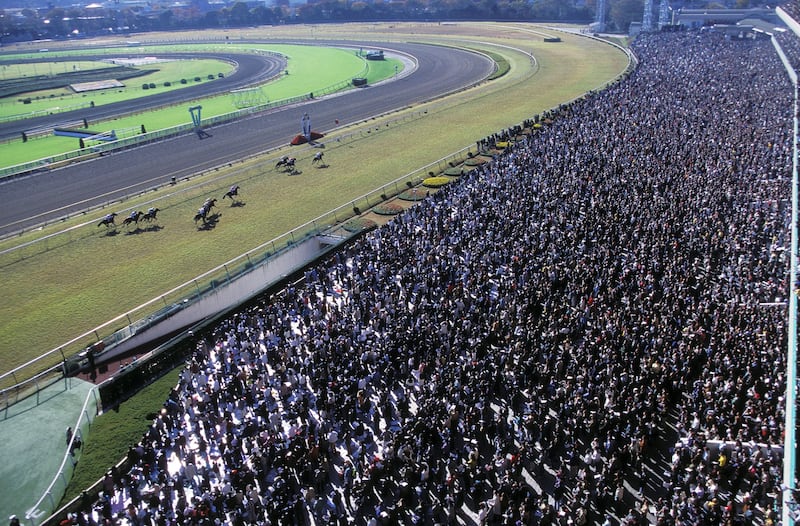
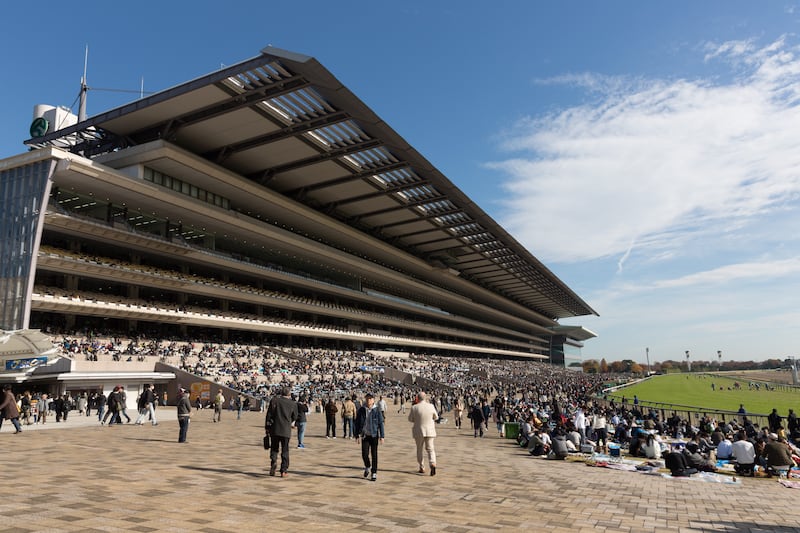
It’s back to the future in Tokyo on Sunday morning when a handful of European hopefuls contest the 46th Japan Cup. The line-up for a race off at 6.40am Irish-time underlines how one of the world’s great races has got its international mojo back.
The Japan Cup used to be all about attracting the racing world to Tokyo. In 1981 when the race began, a burgeoning but relatively insular Japanese thoroughbred industry wanted to test itself against the very best. It got a rude awakening of its place in the pecking order.
The 1983 winner, Stanerra, owned and trained by Frank Dunne in Co Meath, was among a catalogue of raiders that provided salutary lessons about how far Japanese racing had to go to rank in the elite. Stanerra remains the sole Irish-trained winner.
A superb European talent such as Pilsudski (1997) or a relative second-rater like Jupiter Island (1986) suggested for a while that visitors could plunder enormous sums of yen seemingly at will. But lessons were learned year on year by Japan’s racing professionals.


Proof of just how much is reflected in Japan’s status as world racing’s latest superpower. But much of it was forged in its greatest race, often by bitter defeat.
[ Aidan O’Brien and Willie Mullins chasing Japan Cup glory on Sunday ]
Ultimately, for two decades, beginning when Deep Impact stamped his status in 2006, no raider hardly came close to winning.
After a while, only “hit-and-hope” outsiders or top horses treating Tokyo as an international afterthought at the end of a long campaign even bothered taking on the locals. There seemed little point, such was the quality of the home team.
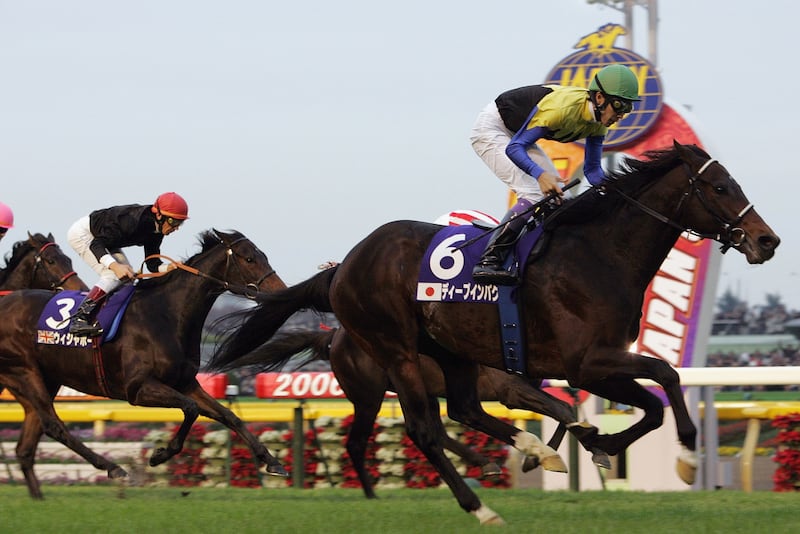
It meant the Japan Cup almost became a victim of its own success, forcing the Japanese Racing Association (JRA) to take the initiative in efforts to rejuvenate the Japan Cup’s international element.
Having repeatedly proven its credentials around the world, Japanese racing is secure enough to welcome some of the global best back into its own backyard – and the outcome this weekend is as good a race as has been run anywhere in 2026.
Crucial to this is Calandagan’s victory last year. It was a first European success in the Japan Cup for 20 years. Ruled out of France’s ultimate prize, the Prix de l’Arc de Triomphe, due to his gelding status, Francis Graffard’s superstar talent travelled to the other side of the world and emerged victorious.
Calandagan was a solo overseas raider last year. This time he’s joined by his stable companion Goliath as well as England’s Ombudsman, the highest-rated middle-distance talent in the world this season. There are two Irish raiders, Aidan O’Brien’s filly Minnie Hauk and the Willie Mullins-trained Ethical Diamond. There’s even a Chilean bred star in Teao, who runs for the US.
Up against them is a formidable collection of local talent. The trio of Masquerade Ball, Danon Decile and Croix Du Nord were just behind Calandagan a year ago and are out for revenge. Danon Decile and Croix Du Nord are the last two Japanese Derby winners.
It makes for a mouth-watering prospect, and one filling a singular slot in the global programme.
It’s where the world’s top-rated middle-distance horse in 2026, Ombudsman, can clash with the world’s top-rated talent of 2025, Calandagan, and Danon Decile, winner of the Tenno Sho, Japan’s equivalent of the Champion Stakes. The three of them are fully mature five-year-olds.
Calandagan is a gelding as is Goliath and Ethical Diamond, horses unable to line up in last month’s Prix de l’Arc de Triomphe. That ban will be lifted next year despite persistent industry voices essentially opposed to allowing the best of the best take each other on.
The race also takes place over a mile and a half, Europe’s traditional classic distance which in the modern bloodstock world is becoming an unfashionable stayers distance, apart from in Japan, which still views the capacity to carry speed over distance as class.
Such a deep field hasn’t been assembled through sporting altruism though. The JRA’s willingness to throw money at persuading the world to come back is noteworthy and not just in terms of €6 million prize money.
A tiered system of bumper bonuses for any horse that has won one of a selection of other major world prizes over the last two seasons, and then manages to win on Sunday, is a remarkable demonstration of Japanese racing’s financial power.
As winner of last year’s Breeders’ Cup Turf, Ethical Diamond will win a $5 million bonus (about €4.5 million) if he wins this weekend. Ombudsman will get the same having landed last month’s Champion Stakes at Ascot. Minnie Hauk will get a “mere” $3 million (€2.7 million) as she won last year’s Oaks. These are sums to turn the heads of even flat racing’s most affluent elite.
Focus in this part of the world has switched to the jumps. But on the last weekend of November, and on the other side of the world, the best race of 2026 might be being saved to last.
Something for the Weekend
Star studded as the Japan Cup is, 33/1 ante-post odds about GOLIATH (6.40) look way too big for a horse capable of shaking up the very best at his very best. The less heralded of Francis Graffard’s star geldings upset the odds in style in the 2024 King George and could hardly have had a smoother warm up for Sunday’s race than when dominating a German Group One on his last start. Christophe Soumillon on his back is a big plus, too. The Belgian won the cup on Epiphaneia in 2014.
Paul Nicholls has an outstanding record in Saturday’s Coral Gold Cup, still widely referred to as the “Hennessy”. He’s won it four times as a trainer and twice as a jockey. He has been making confident noises about REGENT’S STROLL (3.00) for some time and it’s hard to fault the horse’s credentials off what could be a very useable rating of 149.