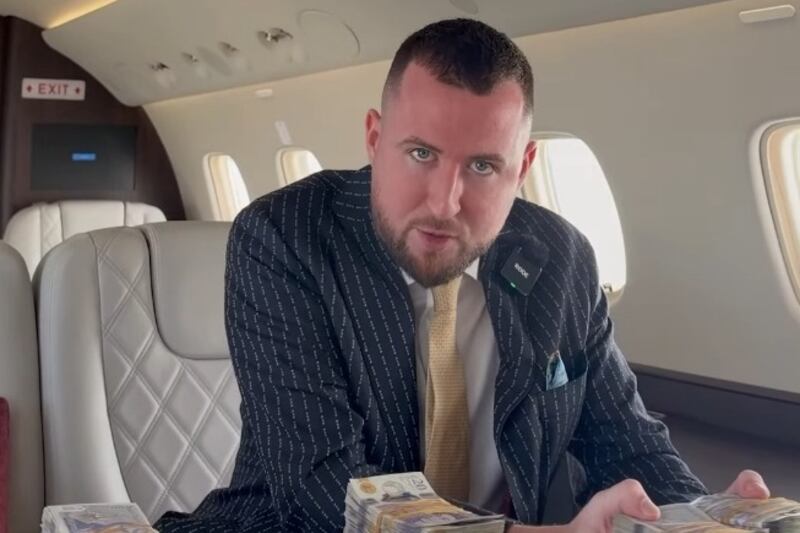
The decision of EU foreign ministers to sanction Moscow resident Chay Bowes as a Russian propagandist should give some pause for thought to those in the Irish media and public life who unthinkingly followed his lead in a long-running campaign against Leo Varadkar.
That campaign put Varadkar under serious political pressure and arguably damaged his authority and his ability to govern during his period as taoiseach and tánaiste between 2020 and April 2024, when he resigned from office.
During that time Bowes was widely hailed as a whistleblower, even when it became clear that he was a supporter of Putin’s Russia. He turned up at the United Nations in 2023 peddling what the legal justification for his sanctioning described as “anti-western and anti-Ukraine disinformation”. He now works for the state-backed Moscow media outlet Russia Today.
He ignited the Varadkar controversy by revealing that, in 2019, the then taoiseach leaked a document to the leader of a small trade union representing doctors. The document contained details of a new GP contract which had been provisionally agreed between the Department of Health and the Irish Medical Organisation.
How vulnerable is Minister for Health Jennifer Carroll MacNeill?

Gambling regulator takes enforcement action against tipster Rob Heneghan’s company
As Ireland celebrated beating South Africa, I was watching two players on the bench
Judge threatens to put solicitor ‘in a cell’ in row over not being ‘dressed properly’ in court

The initial report in Village magazine was perfectly legitimate, but the subsequent reaction of the wider media generated a controversy that ultimately dragged the gardaí and the Director of Public Prosecutions into a dead-end investigation.
[ Chay Bowes: who is the Dubliner sanctioned for peddling Russian propaganda?Opens in new window ]
What was obvious even at the time to objective observers was that the media reaction to the leak was wildly over the top. The indignation of journalists, who compete with each other on a daily basis to persuade politicians to leak information to them, was something to behold.
What was at issue was not the leaking of some state secret but an attempt by Varadkar to get the medical profession on side for an industrial relations deal whose success was important for the Government. In fact the bones of the deal were widely known and had been published in The Irish Times.
At the time one former senior trade union leader, who was no fan of the then taoiseach, told me he was aghast at the way Varadkar was being portrayed. In his view it was normal government practice to provide union leaders with confidential information to oil the wheels of potential agreements.
However, such was the head of steam that built up over the Varadkar leak that not only did the gardaí decide to intervene but the investigation dragged on for almost two years before they passed the file on to the DPP, who decided in July 2022 that there should be no prosecution. The Standards in Public Office Commission also declined to launch a formal investigation.
The entire episode turned out to be much ado about nothing but was an embarrassing distraction for Varadkar. He had to apologise to the Dáil and face being formally questioned by gardaí. His phone was seized and retained by the Garda for a considerable time.
While the episode demonstrated a lack of judgment on Varadkar’s part, it also highlighted the propensity of the Irish media to lose all sense of proportion at regular intervals. The combination of groupthink and the intense competition to come up with the most dramatic headlines regularly results in one-sided coverage of so-called scandals.
The Golfgate episode during the Covid-19 pandemic was another example. The media hype surrounding the dinner and controversy about his movements resulted in the resignation of Phil Hogan, Ireland’s best EU Commissioner in decades, and Dara Calleary, one of the most impressive members of the Cabinet, and it also damaged the careers of a range of other figures.
More than a year later, Judge Mary Fahy found that the event had been organised within the rules, with due care to public health. The court finding didn’t prompt the slightest bit of self-analysis from the media. If anything the judge aroused the ire of those who should have been embarrassed by her finding.
Ironically, it was Varadkar who, along with Micheál Martin, was panicked by the media frenzy into the forced resignations of Hogan and Calleary.
The tendency of the media to rush to judgment and demand heads is nothing new. Mark Twain summed up the art of popular journalism a long time ago. “Seize about the prominent events of the day and clamour about them with a maniacal fury that shall compel attention ... Hit every man that is down – never fail in this for it is safe.”
[ Message from the Editor: Our man in MoscowOpens in new window ]
Leading media personalities as well as politicians and public servants can find themselves in the crosshairs – as Ryan Tubridy and Kevin Myers have found out to their cost.
If some self-analysis by the media is warranted in the wake of the Bowes finding, there is also a lesson for Irish politicians. Far too often they cravenly bow to media pressure and make hasty decisions designed to protect themselves from attack rather than sticking to what is right in the long-term public interest.