
In much the same way that I love the process of seed-sowing in spring, I also love the ritual of planting bulbs in autumn. Both are love letters to the future, the key difference being that when it comes to the latter, you’re typically talking months rather than days or weeks before they appear above ground.
Which is not to say that those bulbs are just sitting there in the soil patiently waiting for spring. Instead, the slow, complex process of growth begins as soon as you bury them in the ground, the reason why it’s best to finish planting most kinds of spring flowering bulbs by mid-October (tulips being the exception) while conditions are still good. That initial contact with cool, damp earth, followed by prolonged exposure to winter cold, triggers a whole host of reactions at cellular level, rehydrating the bulb’s outer fleshy layers and – crucially – breaking dormancy. Most importantly, the bulb’s roots start to develop, allowing it to draw in water and nutrients as well as to anchor it in the ground.
Fascinatingly, that embryonic root system is already contained deep within each bulb long before you plant it, as are its embryonic leaves and flowers. Bulbs also come with their very own packed lunch, their fleshy structures acting as an important way for them to store starch as valuable energy. Crucially, this allows growth to continue below ground long before the bulb’s leaves finally emerge from the soil to start the process of photosynthesis. It’s also why planting spring-flowering bulbs in autumn is to some extent almost a foolproof method.
I say almost foolproof because there are still a few rules that should be followed to ensure optimum results. Firstly, bear in mind that bulbs are alive when you buy them – or at least they certainly should be – albeit in a state of dormancy. For this reason, always try to source plump, firm, healthy, undamaged stock from a reputable supplier that has been handled with care and not allowed to dry out. End-of-season bargains that have been left sitting in a warm, bright shop for several months are likely to struggle, or worse.


And yes, in the case of flower bulbs, size certainly matters, even if it costs a bit more. The larger the bulb, the stronger it is and the more likely it is to produce a large, resilient, productive plant and flowers.
Boring as it sounds, depth of planting also matters. Typically, the recommendation is to plant to a depth that’s three times the height of the bulb. Any shallower and you risk poor growth as well as an unstable plant incapable of properly anchoring itself in the ground against strong winds. Shallow planting also makes it harder for perennial kinds of bulbs to withstand extremes of temperatures and summer droughts, making it difficult for them to then fatten up after flowering and thus reducing the chances of them successfully reappearing the following year.
Growing conditions, of course, matter too. The great majority of spring and early-summer flowering bulbs prefer a moist but-well-drained, humus-rich, cool but not icy cold soil, in a spot where the emerging flowers have some protection from strong gales or icy winds. This includes most kinds of narcissus, alliums, snowdrops, crocus, erythroniums, camassia, grape hyacinths, fritillaries, scillas and chionodoxa. Plant them in a dry, stony soil and they’re unlikely to flourish, but in fact a wet or winter-waterlogged soil is far more likely to kill them outright. For this reason, it’s a good idea to sprinkle just a little coarse horticultural grit or even very fine pea gravel (but not sand) into the planting hole before planting if your garden is inclined to be poorly drained in winter.
Spacing also plays a role in terms of minimising the risk of disease as well as allowing emerging plants enough room to properly develop. So while they look best planted closely, it’s still a good idea to avoid bulbs touching. Bear in mind also that naturalistic drifts will almost always look much better than rigid lines or clumps, especially if planting into a lawn.
Smaller bulbs in particular should be planted in generous groupings (at least 20) to give any kind of impact. But with something like a crown fritillary (Fritillaria imperialis), a very tall, majestic, mid-spring flowering species whose bulbs are the size of grapefruits, a grouping of as few as five will still make a memorable statement.

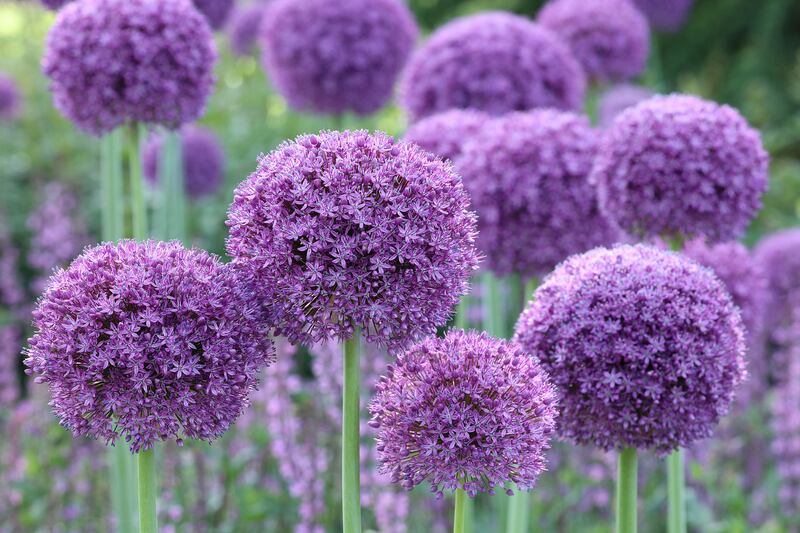
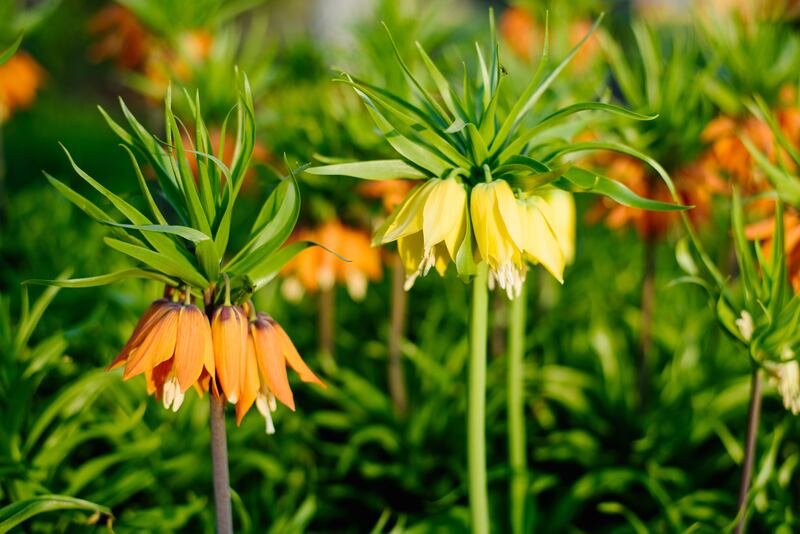
If you’re new to gardening, you may also be wondering, quite understandably, which end is up. Suffice it to say that bulbs should ideally be planted pointy-end up, with their flatter basal plates to the bottom, as it’s from the latter that their root systems develop. The smaller the bulb, the less important this is, as the emerging stems and leaves will still quite easily find their way up towards the light. But for species with larger bulbs, the more convoluted process of their emerging shoots righting themselves uses valuable energy that would otherwise go towards optimising growth and flowering.
[ Six things to do in the early autumn garden to prepare for winter and springOpens in new window ]
Guiding principles of horticulture aside, take time to consider the bigger picture. By choosing varieties carefully, it’s possible to create a seasonal display of bulbs that starts in late winter with snowdrops, cyclamen, early-flowering daffodils, crocus and aconites, then slowly segues into midseason daffodils, midseason tulips, anemones, imperial fritillaries and grape hyacinths, before finishing in very late spring or early summer with late-flowering varieties of tulips, narcissus, alliums, camassia, and snake’s head fritillaries. So, a display that will last for as much as 12-14 weeks, which is not to be sniffed at.
At the same time, tempting as it is, try not to go at it like a small child let loose in a sweet shop. When it comes to colour combinations in particular, less is more. Finally, for a truly unforgettable seasonal display that will prove your gardening credentials to the world, add lots of wallflowers and forget-me-nots to the mix. Heaven.
This week in the garden
- The recent rainy weather has resulted in a late flush of seedlings, many of which are annual weeds that will be killed off by the first harsh frosts. But others are hardy perennial weeds such as dock, dandelion and buttercup that are best tackled now before they get established.
- While late September to October is the best time to plant overwintering varieties of garlic and onions, these can often be sold out at that stage, so source them now and keep the bulbs in a cool, dry, dark place until planting time. Suitable varieties for autumn planting include ‘Sabagold’, ‘Messidor’, ‘and Germidour’ (garlic) and ‘Radar’ (onions). Stockists include most good garden centres as well as fruithillfarm.com and quickcrop.ie.
Dates for your diary
Talks at Altamont Plants: Saturday and Sunday, September 26th and 27th; The Walled Garden, Ballon, Co Carlow. A series of seasonal talks including “Future Gardens: Exciting opportunities in a changing climate” by Kilkenny-based author, gardener and garden designer Des Doyle (Saturday at 11am), and “The Joys of an Autumn Garden” by former head gardener of Altamont Paul Cutler and professional gardener Sharron Cutler (Sunday at 11am). See altamontplants.com for booking.