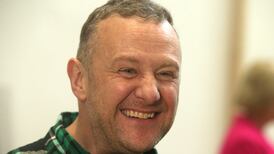
After 15 years of fighting the State and PTSB in the courts, Piotr Skoczylas, a long-time shareholder in the bank, has finally landed a major – if unexpected – victory.
The Polish-British investor, whose stake in the group was all but wiped out by its 2011 nationalisation, persuaded Judge Michael Quinn that PTSB had two distinct shareholder classes that required separate votes on its proposed takeover by Austria’s Bawag: the Government, which holds 57.5 per cent, and everyone else.
It marks the first time an Irish court has refused to approve a scheme of arrangement for the takeover of an Irish public company – outside an examinership rescue.
It is the most popular takeover route for Irish plcs, because 75 per cent shareholder approval forces all others to sell.




Quinn said the Minister for Finance’s extensive special rights under agreements tied to PTSB’s bailout – including access to information, consultation and influence over the bank – coupled with his commitment to back the deal before other shareholders even knew its terms, meant he should have voted in a separate class from other investors.
The snag for Bawag is that just 64 per cent of minority PTSB shareholders who voted at July’s extraordinary general meeting (EGM) backed the €1.62 billion deal – well short of the 75 per cent threshold. With Minister for Finance Simon Harris’s stake included, overall support for the €2.97-a-share deal topped 91 per cent.
Bawag and PTSB may appeal. But this will take time and carries risk.
Bawag could also walk away, but that looks unlikely. The deal is transformative. It helps explain why Bawag has been one of Europe’s best-performing banking stocks over the past year, climbing as much as 65 per cent since emerging as the front-runner to buy PTSB when the lender was put up for sale. Bawag’s shares slumped 8.4 per cent in the last two hours of trading in Vienna on Thursday after the ruling – wiping almost €900 million off its market value.
The Austrians could switch to a conventional takeover offer. With the Government still on board, it would still secure a majority. But reaching the 90 per cent threshold needed to squeeze out remaining shareholders looks a much taller order.
This approach throws up other complications. Any attempt by Bawag to return with a higher offer for holdout investors in a year or so could be embarrassing for a Government that backed the original deal. It would also have a bearing on the efficient use of group capital and funding.
The ruling may have put PTSB back in play. Goodbody Stockbrokers analyst Denis McGoldrick said it potentially reopens the door for a corporate advisory firm cofounded by Mark Duffy, former chief executive of the now-defunct Bank of Scotland (Ireland).
Duffy’s Doras Capital, formerly Axis Capital, flagged last month the possibility of mounting a €3.20-a-share bid, backed by a large, unnamed “global investment manager”. Sources have said the firm he has courted is New York-based Fortress Investment Group and that discussions – as of a few weeks ago – have been only “very high-level” and “exploratory”.
“The breakdown of the existing scheme could also attract fresh interest from other parties, particularly given PTSB’s positive operating performance since the launch of the formal sales process (in October 2025),” McGoldrick said.
The Bawag offer – while the highest to emerge from the months-long sale process – was at an almost 20 per cent discount to the balance sheet value of PTSB’s assets, and viewed by many analysts, investors and shareholder advisory firms as disappointing.
[ Is Bawag deal to buy PTSB dead in the water after court ruling?Opens in new window ]
A surge in PTSB’s share price since the ruling – by as much as 7.7 per cent to €3.20 – tells its own story.
UBS analyst Mate Nemes, who conducted deep dives into the implications of a PTSB takeover for Bawag in reports before and after the deal was agreed, has gone back to his spreadsheets.
Nemes now reckons Bawag may have to raise its offer to win over minorities. He estimates a 20 per cent improvement, to €3.56 a share, or €1.94 billion, would shave only 1-2 percentage points off the 20 per cent earnings-per-share boost Bawag forecast that a takeover would deliver within three years.
Bawag could easily bridge the gap by diverting a chunk of the money it was building up in the second half of this year to pay dividends, or carry out smaller share buy-backs than envisaged post-acquisition, he said.
“From [a return on investment] perspective the transaction would continue to offer substantial upside against the alternative [share buy-backs],” he said.
But there’s a catch. Under the current proposal, Bawag would be able to book the almost €400 million gap between its offer and PTSB’s net asset value as an accounting gain – known as negative goodwill, or badwill – effectively part-funding the acquisition.
A 20 per cent bid increase would erase most of this windfall. This could have knock-on consequences for the Irish business, too. Bawag chief financial officer Enver Siručić said earlier this year that the group ultimately tries to “reinvest most or all parts of the badwill typically into tech investments, integration costs, if necessary, restructuring costs”.
Nevertheless, if Piotr Skoczylas’s intervention in the case ultimately helps to extract a better price for PTSB, he will have done all shareholders – including the State, his adversary for the better part of 15 years – a service.
As for Skocylas himself? Even a deal at €3.56 a share would put just €19,000 in his pocket.