
Looking for a designer handbag, some fine jewellery, a luxury car or even a house? You could find a bargain in an unlikely place. The Criminal Assets Bureau (Cab) seizes millions of euro in property and high-value items every year, the suspected proceeds of crime. And when they do, the public can buy them.
Cab handed over almost €15 million to the exchequer last year from asset seizures, auctions and the proceeds of crime, according to its 2025 annual report published this month.
Some €10.8 million of this was tax on criminals’ wealth and just over €655,000 was money recovered or saved from social protection. Eighteen properties seized across nine counties were sold for more than €4.4 million.
Cab also froze 137 assets worth more than €10.2 million last year. These included almost half a million euro in cars, €66,000 worth of jewellery and designer goods, and over €7.5 million in property.


You might feel queasy about buying these assets, but there are upsides. Your purchase is converting something that has come from crime into a return for the State. And if you want an interesting anecdote about your new home or handbag, it would be hard to top.
Homes under the hammer
How would you know if the house you’re bidding on was the former crib of a criminal? Well, the selling agent will tell you. Buyers are made fully aware of the back story of seized property, says Cab chief bureau officer, Michael Gubbins.
There may be other signs too. Bullet-proof windows, wrought iron fencing, electronic gates, secure doors and shutters will signal an uncommon need for security. If the home looks like a fortress, then it probably was.
Seized residential properties are sometimes located on the criminal’s home turf, where they have an established power base and connections, says Cab. This can mean a seemingly modest home, but with a lot of money spent on it.
Rather than use their substantial funds to move to a bigger house in a more upmarket area, criminals often stay in the area where they grew up, and signal their wealth.
“The house is done up over and above everyone else on the road,” says Gubbins.
“It won’t make financial sense to put the amount of money into the renovation that they have done. The house physically stands out,” he says.
“You’ll find there is a big extension out the back. The garden is small and the extension will take up all of it. There could be a shed with a bar and a hot tub set up.”
The property may originally have come to Garda attention through a “good citizen” report.
“A person might send an email, DM us or write a letter saying, ‘X is involved in drugs in my area and he’s got the following properties’.”
A lengthy investigation can culminate in a search of the home. A quantity surveyor will attend, valuing the house, as well as the cash sunk into it.
“The criminal might have bought the house for €300,000, but they put a €400,000 extension on to it,” says Gubbins.
“Sometimes there is as much spent on the renovation as there is on the purchase of the house, and that creates a problem for the individual because they have to explain where did this money come from. They can be taxed on this unknown income,” says Gubbins.
Take a two-storey, three-bed semi-detached home in Clonshaugh, Dublin 17, which was seized from a member of a transnational crime group. Purchased in 2013 for €125,000, a quantity surveyor concluded an estimated €440,894 was spent on the renovations.
Marketed by Wilsons Auctions for €295,000, it sold in November last year for €308,000. This was well below values on the road, where another house, unrenovated, sold for €420,000 at about the same time.
The Clonshaugh property is one of six that Cab sold in Dublin in 2025. There were also three sold in Leitrim, two each in Louth and Longford, and one each in Clare, Kerry, Kildare, Laois and Monaghan.
One of the properties, near Drogheda, the former home of a leader of a transnational crime group and his family, was purchased in 2014 for €190,000. A quantity surveyor estimated that €1,093,775 was spent to bring it to the standard found on the morning of the search.

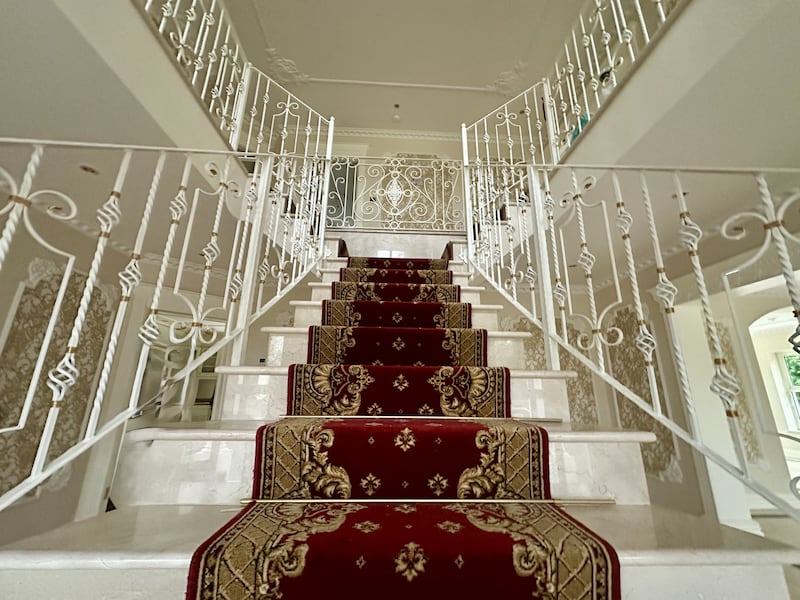
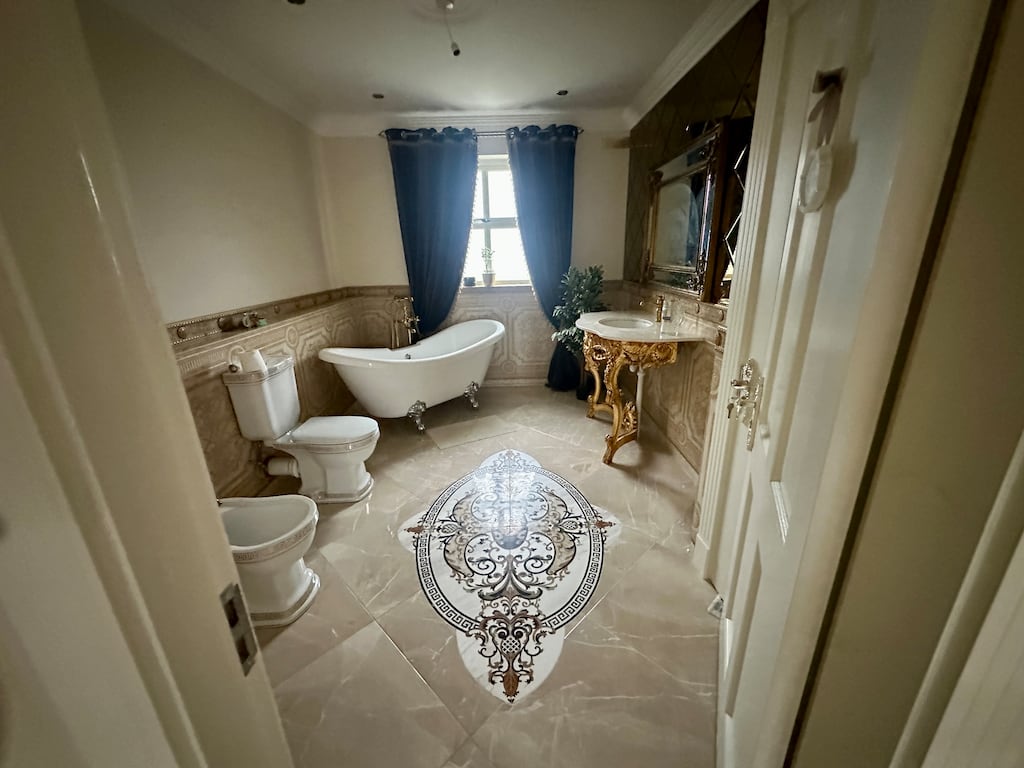
Standout features of the five-bed, 3,000sq ft property included marble floors, an opulent staircase, a baroque-style family bathroom and even a mural of Al Pacino’s turn in the movie Scarface painted in the home gym, according to reporting from Louth Live.
The back garden comprised a checkerboard patio, an all-weather tennis court, high-end dog kennels, a large detached garage and a partially completed outdoor bar and fire pit.
With a guide price of €475,000, the property was sold by public auction in March 2025 for €649,000. This is similar to values for five-bed homes in the area.
But with the renovations in this case having cost over a million euro, the buyer may have got a whole lot more house for their money.
“Dilapidated and vacant houses have a value as well because of the grants – they add value. We are able to sell everything,” says Gubbins.
Luxury goods
Is it too soon to talk about Christmas? If you’re thinking of gifting a designer handbag, jewellery or a watch this year, keep an eye out for the annual Cab auction at the end of November. It’s usually advertised on Cab’s social media in the middle of that month.
‘We’ve had vans, trucks, motorbikes, camper vans, a couple of caravans, mobile homes, boats, jet skis, trailers, horseboxes, quad bikes, a helicopter and a small plane’
— Michael Gubbins, Cab
“Bid on seized luxury” is how auctioneers Wilsons billed last year’s “exclusive online event”, which included 135 lots of luxury items, watches, jewellery and designer goods.
Cab has items of interest professionally authenticated and valued as part of its legal proceedings against criminals. The auction house may further authenticate them, says Gubbins.
Auctions such as these tend to garner public interest, helping Cab to publicise its work to “deny and deprive”, says Gubbins.
Items in last year’s catalogue included Christian Louboutin sandals, wedges, trainers, Gucci kids’ loafers, Louis Vuitton men’s loafers and Chanel trainers.
“These people have wealth and an availability of cash that they need to expend, so they will buy high-value items, and it’s all about ‘look at me and how well I’m doing’,” says Gubbins.
Luxury watches included two Rolex Submariners, a Rolex GMT-Master II, a Rolex Day-Date, a Cartier Balloon Bleu and an Audemars Piguet 18ct Rose Gold Royal Oak.

“They are making a lot of money from this. It’s not just the criminal, it’s their whole family and network around them that are benefiting from their actions,” he says.
An investigation into a woman suspected of assisting her spouse as a driver in relation to his membership of an organised crime gang travelling around the State committing burglaries is also noted in Cab’s annual report.
The bureau secured orders over five Chanel handbags valued at €13,700, a Cartier silver watch valued at €2,000, a Chanel quartz watch valued at €900, three 14-carat white gold bracelets valued at €1,900, €2,300 and €2,500 – and a house in Portlaoise.
Watches have various functions in the criminal world aside from telling the time, Gubbins says. “They can be used as currency, they are easily transportable and transferable.”
Sometimes a watch is purchased or received in part-payment while a criminal is abroad. The individual can then walk back in through the airport with anything from €5,000 to €40,000 sitting on their wrist – the box and paperwork having been posted home in advance.
Transiting the same amount in cash would be much more risky.
The 18 watches in last year’s auction sold for a total of €156,870, with the Audemars Piguet Royal Oak selling for €38,020 and a gent’s gold Rolex watch for €21,060.
[ Cab recoups more than €1m following sales of properties linked to criminalsOpens in new window ]
Other highlights included a 1oz Krugerrand gold bullion coin valued by Cab at €2,000 which sold for €3,700.
It had been seized from an individual using the services of a Chinese organised crime group to launder money from the sale and supply of encrypted phones to criminals and from drug trafficking, according to Cab’s annual report.
Three pieces of jewellery achieved €10,235, including a yellow and white gold zirconia set chain selling for €7,070.

Four designer handbags realised a value of €4,650, with a Chanel wallet bag selling for €1,785 and a Louis Vuitton George’s Bag selling for €1,010.
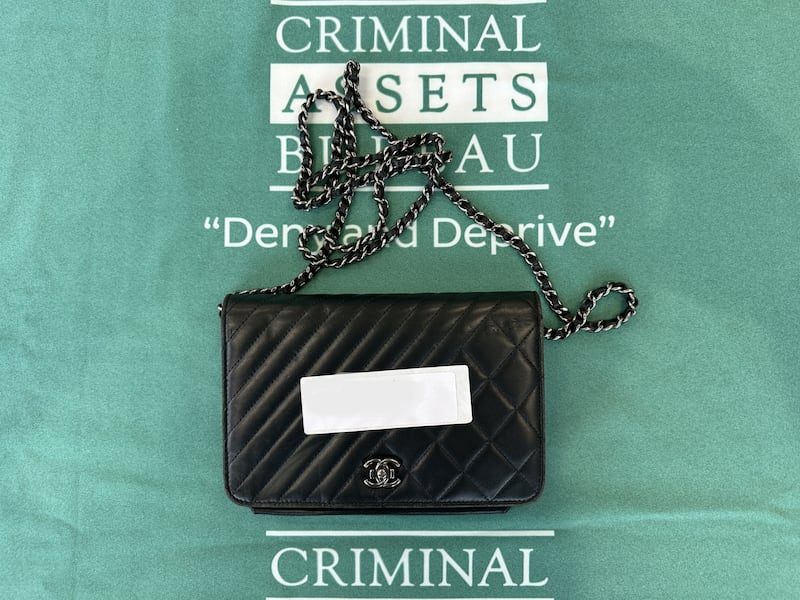
A Hermes handbag sold for €8,400. A Hermes Birkin bag at the 2024 auction sold for €18,250.
“There might be the glamour of those items and the bit of sparkle, but behind each of these items there are any number of crimes,” says Gubbins. “A Rolex watch with loads of diamonds may look glamorous, but remember what allowed them to purchase those items.
“The majority are engaged in drugs, so it’s addiction, intimidation, violence, communities being divided and pressure being put on people all the way up to murder,” he says.
But despite their provenance, and maybe sometimes because of it, these items sell well.
Buyers in the online bidding room tend to know what they are bidding for, says Gubbins. So you may not always get a bargain.
“There is huge interest in them, particularly the watches. Without hesitation, I can say they will make market value,” he says.
[ Cash, houses and bling: The Criminal Assets Bureau’s bumper yearOpens in new window ]
Owning the watch or handbag of a gangster or a “gangster’s moll”? That’s part of the appeal for some, says one insider.
“They want to show their friends on a Friday night, ‘I got this bag at a Cab auction.’ There is a bit of a story and an intrinsic value, and people are prepared to pay for that.”
Cars
Cab sold €500,000 worth of vehicles last year, including Mercedes and BMW models.

Cars, like homes and jewellery, are used to sink cash and to signal wealth.
“They want to show people in their community how well they are doing, how good they are at being a criminal, so it’s to show off,” says Gubbins.
Cab seized and sold Hyundai, Skoda and Volkswagen models too. “These cars aren’t cheap either, so we don’t overlook them. We’ll take them,” says Gubbins.
And it’s not just cars.
“We’ve had vans, trucks, motorbikes, camper vans, a couple of caravans, mobile homes, boats, jet skis, trailers, horseboxes, quad bikes, a helicopter and a small plane,” says Gubbins.
Vehicles are bought with cash and sold between criminals themselves; some are imported without paying VRT.
Some are bought on personal contract purchase (PCP) or hire purchase agreements, but the purchaser can’t show where they are getting the money to pay the instalments. This money becomes taxable.
“We’ll have done our investigations to prove they didn’t have the legitimate means to purchase the vehicle and it will become one of the assets that we go after,” says Gubbins.
Vehicles are sold as quickly as possible after they are seized, online and throughout the year, to limit storage costs and avoid depreciation.
From the sale of all seized items, a portion of funds returned to the State goes towards funding local projects and is aimed at building stronger, safer communities, says Cab.
The taking from criminals of their assets has a significance beyond their monetary value, however.
It removes the visible rewards of crime and weakens the influence on those who use wealth to intimidate or impress, says Cab. Seizing and selling these items sends the message that criminality is not a legitimate route to status, power or success.