

You guide the machine, you don’t build it from scratch. That’s how one Brussels-based official from Cyprus described the job of the government holding the rotating Council of the European Union (EU) presidency.
And the EU’s decision-making system is quite the machine. You have the European Commission, the executive arm in the Berlaymont that proposes laws and has assumed more and more power, the European Parliament of 720 MEPs, and then the Council of the EU, where national diplomats and ministers represent the 27 governments.
Knocking together compromises that each constituent part of the EU beast can agree to is a laborious process.
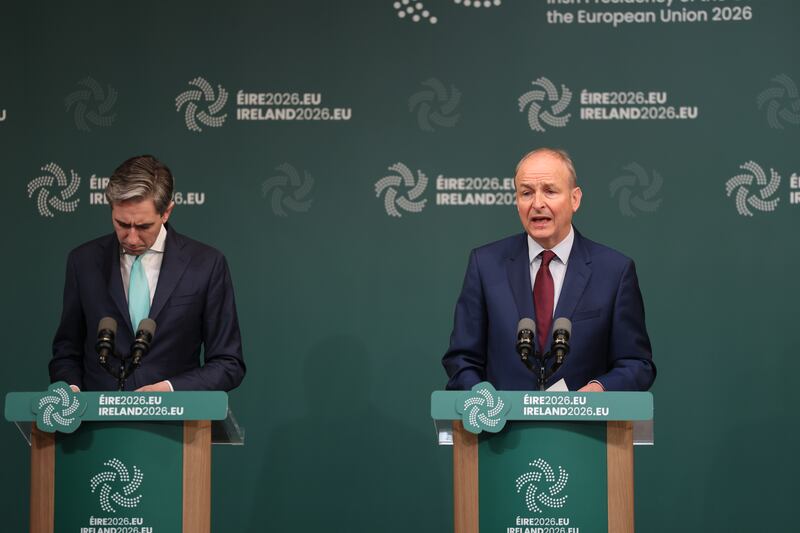
The Irish Government will be bang in the middle of that back room politicking from July 1st until the end of the year, when it takes on the EU presidency.


The gig involves getting the member states to agree on common positions. In some areas, say health, climate, finance, or trade policy, that means building a sizeable majority behind a certain change or reform.
Questions of foreign policy, sanctions, EU enlargement, the bloc’s budget, or tax, need the unanimous support of all governments. That can be a high bar to vault.
The EU presidency rotates between member states every six months. Ireland takes over from Cyprus and will offload the ball to Lithuania at the beginning of next year.
You want to be running on to that pass with momentum rather than receiving it flat-footed. The view inside the EU institutions is that the Irish system has prepared well.
[ Ireland’s EU presidency: How it works and what to expectOpens in new window ]
Civil servants in the Department of Foreign Affairs and other arms of Government moved up another gear after Easter.
Diplomats posted to Ireland’s expanded “permanent representation” to the EU have already started working on Sundays. That’ll be the norm for the rest of the year.
The 280 staff working in the Brussels mission will be at the coalface of the EU presidency. Officials will chair preparatory meetings where they and their counterparts from the other 26 states will lay the groundwork for political discussions at ministerial level.
You can plan all you want but you have to be prepared for what you can’t really prepare for. The experience of Cyprus, an island on the far end of the Mediterranean Sea with a small public administration, drove that point home.
The opening days of their EU presidency were overshadowed by a corruption scandal involving the president’s top aide that rocked domestic politics. A week later, US president Donald Trump’s threats to take Greenland by force prompted the biggest crisis in transatlantic relations in modern memory.
The following month saw the US and Israel launch their war against Iran, sending global energy prices spiralling upwards. Amid the barrage of missiles launched in retaliation by Iran and its proxy forces, several Iranian-made drones were fired at Cyprus, targeting UK military airbases on two pockets of land treated as sovereign British territory.
[ Drone wars: Irish Defence Forces watching the skies as EU presidency set to beginOpens in new window ]
Officials in Dublin will be hoping they don’t have to contend with any Shahed drones fired in their direction during the presidency. Ireland has picked a shooting star for its EU presidency logo - one that, ideally, carries no darker foreboding.
The deal-making role has limitations. Irish Ministers won’t get to tell “Europe” what to do. The country in the presidency chair is supposed to put national interest to one side, to be seen as an unbiased broker nudging everyone else around the table towards a middle ground position. The resulting compromises are usually something that nobody loves but everyone can stomach.
Obviously there are subtle ways to shape the debate. You can put an emphasis on certain topics and slow-walk others, but largely the European agenda is set independent of the presidency. You’re responsible for driving the car from A to B, not setting the route.
So where might the Government’s diplomatic mettle be tested, when it’s behind the steering wheel?
It’s probably a safe bet that we’ll see fresh turbulence in the EU-US relationship. A row could spark on tariffs, defence spending, the Ukraine war, Greenland, regulation of American tech multinationals, or who knows what else. Ireland may prove to be an effective peacemaker as the EU state with the deepest ties to Washington, or instead find itself in an uncomfortable spot and forced to pick a side.
Revelations about the Co Limerick plant, Aughinish Alumina, producing raw material that ultimately supplies Russia’s arms industry will dog the Irish presidency. EU budget negotiations will consume a huge amount of bandwidth too.
One big known unknown is what will happen in Ukraine. Peace talks have stalled but could restart and move quickly.
Any settlement would rewrite Europe’s security architecture and possibly overhaul rules governing the enlargement of the EU bloc to speed up Ukraine’s bid for membership. They’ll have the poor Irish officials in Brussels working through Saturday too before you know it.


