
The chamber orchestra was playing the slow movement of Grieg’s Holberg Suite, a beautifully mournful interlude within an otherwise lively piece, when I felt a chill run through me. It could have been the music but it might also have been the icy air conditioning inside the sunken, vineyard-style auditorium of the Shanghai Symphony Orchestra Hall.
The concert was part of a series called Music in the Summer Air, and the air outside was 37 degrees when it began but already appreciably cooler by the time we left. We turned down a pedestrianised street of renovated, early 20th century buildings and found an elegant Italian restaurant almost full but still welcoming guests at 9.30pm.
“You wouldn’t find this in Beijing,” my friend said.
He lived in Beijing before moving to Shanghai seven years ago and remains fond of it, but he enjoyed pointing out the contrast in sophistication between one and the other. Shanghai is twinned with Cork and they share a sense of themselves as the more stylish, cultivated, second city that looks down on the capital.


Cork’s chauvinism may be a habit formed in the early part of the 19th century after the Act of Union when it remained a cosmopolitan port city after Dublin society had little left beyond the garrison. But Shanghai is still China’s commercial capital, a more outward-looking, innovative place than Beijing and these days, much more buoyant economically.
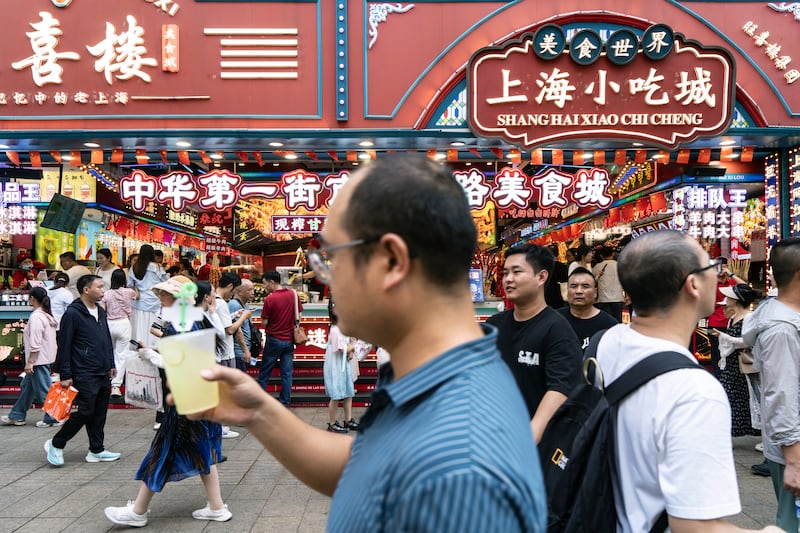
The bars and restaurants in Shanghai’s French Concession are busy, as is the gentrified shopping quarter of Xintiandi near the historic site of the First National Congress of the Communist Party of China. Western tourists who visit China usually prefer Shanghai, which is the most user-friendly city for foreigners, with English spoken in most bars and restaurants they are likely to visit.
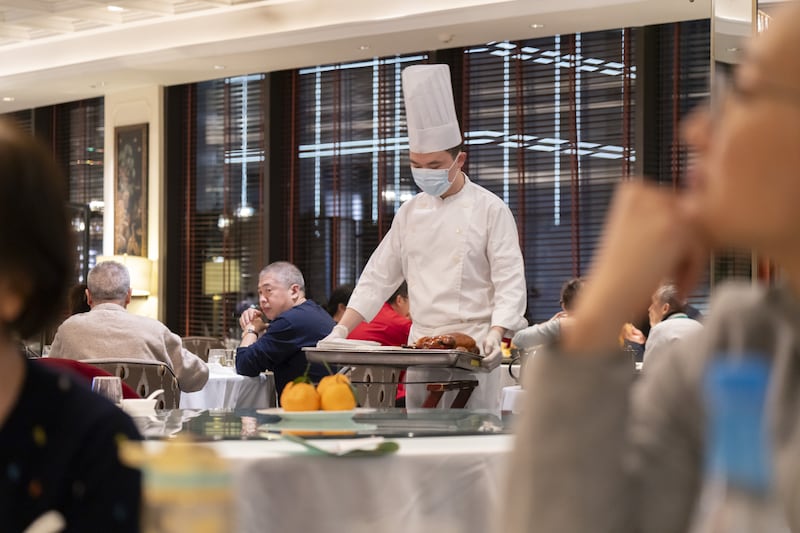
In Beijing last week, I went with a friend who owns a number of restaurants in the city to a high-end place near the Forbidden City that recently had a relaunch. Despite pitching itself further down the market with dishes at less than half the former price, the restaurant is still struggling, with nobody coming in for lunch, while evenings are only busy at weekends.
The figures show the overall economy in both cities growing at about the same rate but retail sales in Shanghai increased during the first half of 2026 while they declined in Beijing during the same period. But the difference in atmosphere in the two cities goes deeper and reflects diverging strategies for development as laid out in municipal master plans that run until 2035.
Both cities agreed to curb population growth, with Beijing setting a cap of 23 million and Shanghai aiming to limit its number to 25 million. But while Beijing has focused on moving people and functions into new, adjacent cities, Shanghai concentrates on managing economic growth rather than reversing it.
Beijing demolished many of its old neighbourhoods built around lanes called hutongs before the authorities came around to the view that redeveloping old buildings was a better idea than throwing up more skyscrapers. More of Shanghai’s older houses, streets and districts survived and the city is now restoring them individually and repurposing them in one way or another.
Xi Jinping was in Shanghai this week to make the opening speech at the World Artificial Intelligence Conference on Friday. The Chinese president has also conducted an inspection of the city. He visited some apartment buildings from the 1950s that have been reconstructed and renovated so that each flat now has its own kitchen and bathroom.
“Officials must firmly establish and practice a correct view of political achievement, think about what the people think, respond to what concerns them most urgently, formulate and implement effective policies and measures, persevere over the long term, and address the issues that matter most to ordinary people one by one, continuously improving public wellbeing,” he said.
Both Shanghai and Beijing have plans to become 15-minute cities where all essential services are available within a short distance and Beijing aims to limit commuting time to an hour. But while Shanghai feels like what Xi calls a “people’s city”, in Beijing the people and their neighbourhoods often seem to take second place to the capital’s official, political and administrative function.