

Britain is unhappy with the Commonwealth’s focus on slavery and reparations, blaming the debate for the organisation’s decline into irrelevance. The real problem is closer to home.
It’s not them, it’s you
When Ireland’s ambassador Sonja Hyland laid a green laurel wreath at the Cenotaph in Whitehall last Sunday, she followed more than 50 high commissioners from Commonwealth states who walked up to the monument to lay their red poppy wreaths in five groups.
More than three million people from what is now the Commonwealth fought in the first World War and more than 15 million in the second World War, including the 2.5 million Indians who made up the largest volunteer army in history.
The memory of the 1.7 million people from Commonwealth countries who died in those wars was for a long time one of the most powerful ties that bound the 56-member organisation after it was formed in 1949. But the Commonwealth is now in trouble and last week’s heads of government meeting in Antigua was just the latest demonstration of its slide into irrelevance.
Hundreds of thousands march in cities across France in latest round of protests

Dodging bikes, cars and culture wars on London’s newly ‘pedestrianised’ Oxford Street

Will right-wing Brazilians call time on the Bolsonaros?

Dangers on a train: Russia’s improved drones pose new threat to Ukrainian rail users

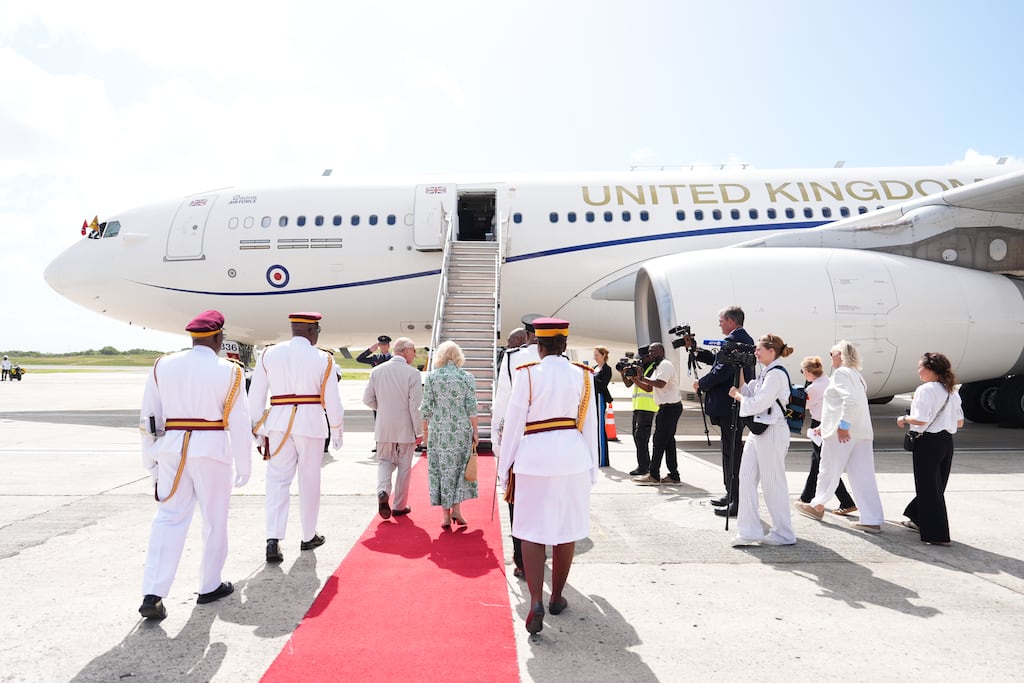
Much British commentary around the meeting blamed demands that king Charles should apologise for his country’s role in the transatlantic slave trade and that Britain should pay reparations. An outraged editorial in The Times captured the mood in London, dismissing the campaign as a public relations exercise designed to fleece the hard-pressed British taxpayer.
“The sad fact is that some Commonwealth leaders regard it as primarily a forum for bashing Britain. In doing so, they are shrinking their own global reach,” the paper said.
“A Commonwealth that becomes merely a vehicle for the attempted monetisation of synthetic victimhood has a short future.”
The king expressed “the most profound personal sorrow” about Britain’s role in the slave trade but he stopped short of making an apology and he spoke about the royal navy’s role in enforcing an end to slavery. To hear British public figures speak about abolition, you might get the impression that the only reason their forbears got into the business of slavery in the first place was in order to abolish it.
Andy Burnham said he wants a structured dialogue with former colonies that could lead to an apology, although he ruled out reparations. But as an editorial in the South African newspaper Business Day argued this week, Britain might be missing an opportunity to reset relations within the Commonwealth.
“The body, which comprises Britain and its former colonies, is becoming increasingly irrelevant, just like the UK in the wake of its departure from the EU a decade ago. An apology could have paved the way for a discussion of the future of the Commonwealth in the context of a rapidly changing world,” the paper said.
Britain’s post-Brexit governments hoped that increased trade with the Commonwealth would help to make up for some of what it lost by leaving the EU. But that trade has not grown as a share of Britain’s total while Brexit has robbed London of its role as a potential advocate for Commonwealth countries in Brussels.
Britain’s economic decline since then has seen it walk away from some commitments on climate action and cut its aid budget, with Commonwealth countries hit harder than others according to a Guardian report last week.
When the leaders of India and South Africa skipped the Commonwealth summit in 2024, they instead attended a meeting of Brics with China, Brazil and others, a sign of where power and wealth had shifted.
King Charles succeeded his mother as the head of the Commonwealth and Britain remains its central player, paying a third of the cost of running its secretariat, which is based in London, but as its economic power and global influence fades so does is authority within the organisation.
Apologising for slavery and embracing the debate about reparations could be the first step towards rebuilding the Commonwealth in a way that reflects more honestly how its member-states now view themselves and each other.
Please let me know what you think and send me your comments, thoughts or suggestions for topics you would like to see covered to denis.globalbriefing@irishtimes.com